Coastal Florida Builders Struggle in Flat Market
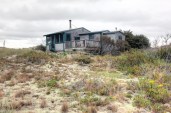
On paper, the U.S. economy may have entered a period of recovery (officially defined as two consecutive periods of economic growth), but the homebuilding sector is still mired in recession. Morgan Stanley economist David Greenlaw put the situation in perspective in a recent commentary on the investment bank’s website (“ Assessing the Growth Outlook”). Noted Greenlaw, “Homebuilding has shrunk by about two-thirds over the past several years relative to the rest of the U.S. economy. The weighting is now so small that residential construction activity can go up or down a fair amount and not really have a noticeable impact on the overall economy.” Bubble states like Florida, of course, are stuck in a particularly deep trough. Emblematic of the troubles facing production builders in coastal Florida is the case of panhandle-based St. Joe Company, which holds huge tracts of timber and has been working for years to turn some of its forest lands into housing developments. Barron’s magazine reported in March on a shakeup at the company’s board of directors, which gave control to investor Bruce Berkowitz of Fairholme Funds (“ St Joe Project: More Sinner Than Winner,” by Andrew Bary). St. Joe has 41,000 acres of land “entitled” for development, the magazine reports (a small fraction of its 574,000-acre panhandle forest asset). But, points out Barron’s, “It could take decades to develop it all, given the pace of sales. Last year, St. Joe sold just 3,000 acres.” One problem for any developer-builder in Florida, and particularly in the panhandle, is the backlog of bank-owned homes, along with bank-owned projects: half-developed land parcels festooned with half-built houses. Strewn along Florida’s coastline like broken bits of costume jewelry are scores of abandoned job sites where money ran out before work was completed. In that environment, developing new land or starting another house is a frightening prospect for any builder — or for any bank. On the St. Joseph peninsula, near the town of St. Joe a few miles east of St. Joe’s showcase WaterColor planned community, piling foundations for beachfront houses stand forlornly on weed-grown lots, fronted by fading “For Sale” signs (below). Great expectations at a St. Joe’s development near its WaterColor planned community as abandoned pilings loom over the sea oats and the sugar-white sands of Florida’s Emerald Coast. Likewise, on the Atlantic barrier islands near Daytona or Vero Beach, it’s common to see unfinished developments with a few bare foundations, or a handful of finished houses scattered like lonely sentinels, near the bare, roofless shells of the units that were meant to be their neighbors. A pile of disintegrating roof trusses in front of the concrete block shell below is graphic evidence of a business failure that came so fast that the builder couldn’t even finish the roof before funds for construction ran out. Across the 2-lane highway from the beach are developed sites for a dozen of the luxury houses; four finished homes sit empty around a neglected, algae-filled artificial pond. A large, prominent billboard supplies a phone number under the simple message, “Must Sell.” Finding funds to restart the project now will obviously be a tough challenge. Meanwhile, passing beachgoers treat the unfinished shell’s beautiful paver driveway as a good place to park, and the boardwalk across the dune as a convenient way to access the beautiful white sand beach that would have been the abandoned project’s most attractive amenity. A house shell among the sea shells has a million-dollar view but no millionaires to build or buy it. A luxury home sits empty adjacent to an algae-infested artificial pond on the Sunshine State’s Atlantic coast. With its spectacular beaches and mild climate, Florida’s coast remains a popular destination and a prime location. Some developers are still active, and some builders have found workable niches (see next story). But from being the driver of the national economy, housing has turned into a follower, in coastal states as well as in the rest of the nation. And economists say that the homebuilding economy, in coastal states as nationally, is likely to lag until the rest of the economy finds its way to full recovery — and until the huge inventory of unfinished, as well as finished, houses and developments can be absorbed.