Economists from McGraw-Hill have released an economic forecast for Florida — and the picture, while gloomy, offers some rays of hope (“Florida Construction Outlook 2010: Winter Issue,” by Senior Economist Jennifer Coskren – $345).
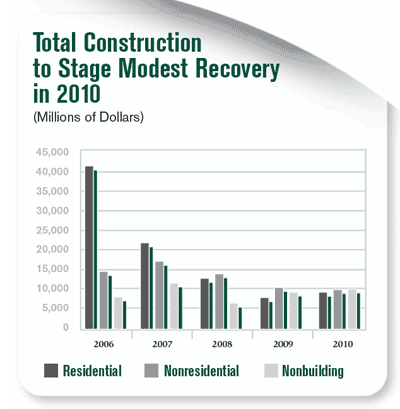
Florida is ground zero for the national housing market collapse, and heads into 2010 after several tough years. Says the McGraw report: “The housing market, which had buttressed the state’s economy in the early 2000s, is still deeply troubled. Foreclosures are among the highest in the nation, and prices continue to plummet. With no income tax, Florida relies heavily on the housing market for its revenues. Consequently, plunging home values and property taxes have put the state budget perpetually in the red. The housing collapse has also damaged consumer confidence and decimated retail spending.” But the housing market slide may be ending, says the report: “Hope is emerging that the bottom is close. One the single family side, home sales are finally beginning to stabilize after years of steep declines. Florida Realtors reported that single family home sales were up 26% through October 2009 and were up 46% over a year earlier.” McGraw-Hill projects a “modest recovery” for total construction in 2010 — led by “the first increase in single family construction since 2005.”
Source: McGraw-Hill Construction Instead of the word “modest,” however, economist Coskren could have used the term “tiny.” The report projects residential starts for 2010 at 42,491 — up about 6,000 or 15% from 2009’s 36,489 starts. But that number is still down more than 240,000 from the 2005 high of 286,684 starts, and will leave the state’s homebuilding industry languishing at barely 15% of its pre-collapse level. And the huge backlog of foreclosed homes in the state’s housing inventory — plus the impending wave of future foreclosures — means that the state’s builders are likely to continue to struggle.
Source: McGraw-Hill Construction
Florida’s state budget received a major boost from Federal stimulus spending in 2009 and 2010, with Federal dollars staving off far deeper cuts in state spending on education and other priorities. But that money is slated to run out by 2011; and while stimulus dollars allocated to public works construction will last longer, they fall far short of the amount needed to counterbalance the continuing shortfall in private construction investment. If Florida can’t manage to re-invigorate its own economy before Federal support fades away, builders and remodelers in the state will be facing a very tough decade ahead.