Kitchen islands have come a long way from the “permanent table with doors” that were common in older kitchens. Today’s kitchen island is often an appliance warehouse, housing cooktops, ranges, trash compactors, sinks, and dishwashers. But contractors need to be aware that when a sink is added to the island mix, the designer’s dream can become a plumber’s nightmare. Running the supply lines to an island sink is seldom a problem; it’s equipping the sink with a code-approved drainpipe that often presents the challenge.
Acceptable Venting Distance
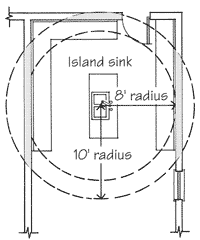
Plumbing vents are an essential part of a properly designed drainage system. The vent does two things: It allows makeup air to enter the system as the sink drains and enables sewer gases to escape outdoors. A plumbing vent must be located within an acceptable distance of the island sink. The maximum allowable distance will vary depending on your local code, but generally falls in a range of 8 to 10 feet. This critical distance can present a problem for island sinks. Plumbing vents are usually installed inside a wall, but because an island sink drain may already be about 61/2 feet from the nearest wall, the 8-to-10-foot distance often falls within a very narrow band of wall area (see Figure 1).
Figure 1. Most plumbing codes require that an island sink be no farther than 8 to 10 feet from the nearest plumbing vent. This may limit the location of the vent pipe to a small wall area. |
Whether you’re bidding a kitchen job from a designer’s set of plans or designing the kitchen yourself, it pays to verify the venting location early in the process. Retrofitting a vent after failing an inspection is both costly and embarrassing. There are a number of piping configurations that can be used to drain and vent an island sink. I’ve listed a few of the more popular types below.
S-Trap Not an Option
S-traps may seem like the perfect solution (Figure 2), but take my advice and cross them off your list.
Figure 2. S-traps are illegal because a large discharge of water from another fixture can siphon off the trap seal. |
Modern plumbing codes do not allow the use of S-traps, and for good reason: A large amount of water discharged through the drainage system can suck the liquid trap seal out of the S-trap, thus allowing sewer gases to enter the living space. Avoid the use of S-traps — even if there is no code enforcement in your area.
Single-Fixture Wet Vent
Some inspectors will allow the use of a single-fixture, double-sized wet vent for island sinks (Figure 3).
Figure 3. A double-sized single-fixture wet vent provides enough makeup air to allow the drain to flow freely. |
About the Author

More from Journal of Light Construction
-
Waterproof Gypsum Backerboard
1 MIN READ
-
Expansive Glass Wall
1 MIN READ
-
Interior Fire-Rated Plywood
1 MIN READ