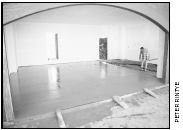
- Q. What causes a concrete slab to form a thin top coat that can flake off or, if something is dropped on it, chip off in big pieces? Some customers want a glasslike finish on their garage floors, but after screeding and power troweling, the surface often becomes a thin, flaky material that doesn’t adhere to the rest of the mix. Is this caused by too much troweling?
A.Carl Hagstrom responds: The situation you described is most likely caused by troweling the surface too soon, not by troweling it too long. After the slab is screeded and bull-floated, “bleed water” will find its way to the surface. This bleed water must be allowed to evaporate before troweling begins. Troweling the surface before the bleed water evaporates causes the bleed water to be troweled back into the concrete, significantly weakening the surface skin.
When bleed water is present, you will be able to see reflections on the surface of the slab. Begin troweling when you can no longer see any standing water or reflections.
In cool, damp weather, bleed water can stubbornly refuse to evaporate, and there have been instances where I “pulled off” the standing water by dragging a hose across the surface (the alternative was troweling the slab at midnight under the glare of my truck’s headlights). This method doesn’t get a five-star rating, but it is preferable to troweling bleed water back into the slab.
Carl Hagstrom is an associate editor at the Journal of Light Construction.
Q&A: Flaking Concrete
Deck Waterproofing
1 MIN READ