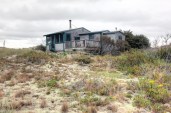
While sales may slump, cautious builders can benefit
A proliferation of spec construction has resulted in homes hanging around much longer than builders want. Yet economic experts say demographic trends will favor high-end retirement destinations, and established builders who can insulate themselves from a temporary slowdown will prosper.
The real estate slowdown will push speculators and part-timers out of the market, but career coastal builders will fare better — and some may even benefit.
That’s the still-optimistic consensus of industry observers trying to predict the fallout from the sagging real estate market in formerly hot East and Gulf Coast destinations stretching from Pensacola to Hilton Head to Ocean City.
“The doctors and lawyers who thought, ‘I think I’ll become a developer in my spare time’ — I think all those guys will go by the wayside,” says Brad Hunter, an economist at Metrostudy, a Houston-based housing market research firm.
But experienced coastal builders, especially those who have been in the business long enough to remember the lean years that preceded the recent housing boom, “are ready for it and planned ahead, and they’re going to be fine,” Hunter maintains.
Home and condo sales — and, in some areas, prices — were falling nationwide this past summer, with coastal areas often experiencing the most dramatic declines. In Florida, Naples faced the biggest drop of all the state’s Metropolitan Statistical Areas, with single-family home sales falling 51% this past July compared with July 2005, according to the Florida Association of Realtors. In New Jersey, the biggest percentage declines in this year’s second quarter compared with last year’s occurred at the South Jersey Shore and Cape May. The story was similar in South Carolina, where the Hilton Head and the Myrtle Beach areas had the sharpest drop in home and condo sales this past July over last July.
“Whenever you see a market heat up, that’s the area that’s going to feel the most pain when the market cools,” notes Phillip Neuhart, an economic analyst at Wachovia Corp. “And we know the coasts were the areas that saw the greatest sales volumes.”
Not surprisingly, coastal housing starts also appeared to be slumping. In Palm Beach County, starts declined 27% compared with a year ago countywide, but they declined 38% east of U.S. Highway One, according to Metrostudy’s analysis of that region.
Coastal builders everywhere are feeling the pinch. Al Zichella, president of the Collier Building Industry Association in Naples, confirms that sales, pre-sales, and inquires are all down for builders. The only number on the rise is cancellations of existing contracts. “Traffic was way down this season and continues to be sluggish,” Zichella reports. “Buyers are sitting back and looking for the bottom of the market.”
Despite the gloomy numbers now, he was optimistic about Naples in the long term, saying that all demographic trends point to its continued popularity as a high-end retirement destination. He believes the area will rebound once additional inventory is absorbed in what he predicted as one year. Builders, he said, can insulate themselves against the slowdown by discounting homes and condos and buying land as prices fall.
“They should look for land bargains for future replacement parcels and pick them up in a correcting market to offset land deals made at the top of the market,” he advises.
Hunter, of Metrostudy, agrees, saying builders who buy land at bargain-basement prices may wind up benefiting from the downturn. He says caution is the word in today’s market. “For seven or eight years, you didn’t have to study the market, you just built anything and it sold,” he notes. “The key [for builders now] is to do their homework.” — Aaron Hoover
Crime of Opportunity
Gulf Coast reels from copper shortage
A lack of skilled labor, a shortage of materials, chronic delays in the permitting process — as if Gulf Coast builders didn’t have enough challenges, some are showing up on job sites to discover they face another hardship: missing copper wire, pipes, and downspouts.
Copper theft from construction sites is a national problem, the result of the soaring price of the metal in recent years. But although no one tracks it geographically, the problem may be particularly prevalent in Mississippi and Louisiana coastal counties ravaged by Hurricane Katrina. There, an abundance of opportunity, a highly mobile population, and a burgeoning scrap metal market are making copper theft common.
“Copper is way up,” reports Kenny Hurt, chief investigator for the sheriff’s office in Mississippi’s Hancock County, home to Katrina-pounded Bay St. Louis and Waveland. “We’ve had instances where they’re going in and just cutting the copper out of the walls where the people have rewired their homes.”
The global demand for copper wire means scraps have instant resale value. This has ignited the theft of materials from job sites nationwide but particularly in the Gulf region devastated by Hurricane Katrina.
The price of copper has quadrupled in the past five years, adds Ken Geremia, a spokesman for the New York-based Copper Development Association. The cause has been high demand from domestic and Chinese building, with trading this fall at over $3 per pound, says David Behr, owner of MetalPrices.com. “It’s a robust economy definitely capped off with China,” he notes.
Although the value of other metals used in construction has also soared, copper is an enticing target for thieves because “it’s 100% recyclable, which means it has value in the marketplace as scrap,” Geremia explains.
The unique circumstances of the Gulf Coast appear to have exaggerated what Geremia describes as a worldwide problem. For one thing, there is a large amount of construction activity in the Gulf region. For another, because so much of the area is depopulated, builders often work on job sites where there are no neighbors to keep an eye on things.
“Most of the time it’s materials that are left on the job for installation that they [thieves] break in and take,” says Capt. Ron Pullen of the sheriff’s office in Mississippi’s coastal Harrison County. “It’s a crime of opportunity.
Although the amounts vary, some thieves make off with thousands of dollars of copper, according to Pullen and other law enforcement officials in the Gulf Coast area. While construction sites are common targets, other victims include electricity substations as well as telephone and CSX railroad facilities.
The thieves benefit from the abundance of legal scrap metal pouring out of Katrina-spurred demolitions, which can make the line between purloined copper and legitimate copper unusually fuzzy. In other areas of the country, showing up at a scrap yard with hundreds of pounds of copper wire might provoke some questions. But there is so much scrap on the Gulf Coast that all but the largest amounts often attract little attention.
“If I stole 2,000 pounds of copper and I drop 200 pounds off in Slidell, 300 in Gulfport, some in Mobile, nobody would say anything,” Hurt notes.
That, at least, may be changing. Recognizing that thieves can’t profit unless they have an outlet for their goods, authorities in the area have sought better cooperation from scrap yard managers and owners. The efforts, they say, are leading to some arrests.
“We’ve developed our way of tracking and arresting people,” says Capt. Mick Sears, of Mississippi’s Jackson County Sheriff’s Department, home to Pascagoula and Ocean Springs. “The No. 1 thing is the rapport that we’ve developed with local scrap yards from Mobile to Waveland.” — A.H.
Currents
New England: It’s Time to Prepare
According to a poll by the Insurance Information Institute for seven of the nation’s leading insurance companies, New England homeowners are underprepared for the next major tropical storm. The survey evaluated the “Hurricane Readiness Index” of homeowners along the Gulf and Atlantic coasts, asking residents if they had taken eight key preparedness steps, including whether they have an inventory of their possessions, whether they feel they have enough homeowners or federal flood insurance, and whether they have critical documents ready to go in case of evacuation. The steps are considered those that would best position homeowners to recover from a major storm.
A survey-wide index average of 48% indicates that the typical insured homeowner across the Gulf and Atlantic regions has taken half the preparedness steps. Respondents in coastal Louisiana topped the chart, having taken 60% of the steps. Coastal Mississippi, Alabama, and Georgia respondents have taken 58%, while Floridians also fared better than the national average, with index numbers from 52% to 58%. Those in Connecticut, Maryland, New York, Massachu-setts, and Maine have taken only about one-third of the steps, with index ratings from 36% to 39%.
Wall Bracing Simplified
APA – The Engineered Wood Association recently launched a new Web site for industry professionals that covers code-required wall bracing, a key component of home construction that helps keep walls square during high-wind and earthquake events. The new site is located at www.wallbracing.org.
The site provides descriptions of wall-bracing construction and the associated International Residential Code (IRC) requirements. Developed by wall-bracing experts at APA, the Web site helps people easily understand, design, build, and en-force braced wall systems. The wallbracing.org site includes links to APA’s free Wood University course on wall bracing and APA’s CAD Web site with downloadable CAD files of wall-bracing details.