Contractor Profile: Trouble is His Business ~
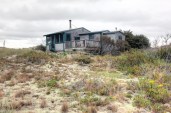
In a perfect world, David Festa, owner of David J. Festa Carpentry in Forked River, N.J., would have less work to do. That’s because a significant chunk of Festa’s business these days is stepping in to rescue projects that have gotten into trouble. You could say that trouble is Festa’s business — or at least part of it. Here’s one example from Festa’s website. This partially framed house (photos below) was abandoned in 2008 after not one, not two, but three different builders tried to complete it, but stopped before the job was done. “The first floor walls were built, and then it sat for a few months,” Festa explains. “Then the second floor walls were built, and then it sat for a few months. Then the roof was built, and it sat for a few months.” Festa’s not sure who to blame for any of that — the owner’s money troubles may lie at the heart of the matter, he says. Whatever the reason, the incomplete frame stood exposed to the elements for two years before Festa agreed to correct framing errors and button up the job. “I came in and we finished off the framing, we sheathed it, we roofed it, replaced a steel beam because the previous beam was installed incorrectly — and then he ran out of money again.” That story doesn’t have a happy ending, says Festa. The house continued to sit empty, and eventually squatters and vandals made a mess of it. “That house got foreclosed,” says Festa. “The neighbors complained about the smell of mold and other worse things, and then it finally got condemned last week.” But Festa made out okay, he says: “I made money on it, that’s for sure. I didn’t get beat.” In another case, a foreclosed house turned into an opportunity for Festa: a job doing extensive structural repairs. “The previous owner had an illegal bathroom, bedroom, and kitchen in the basement,” explains Festa. “The house got foreclosed, so the bank had to rip all that out in order to re-sell the house. Well, the company that came in and did it just ripped everything out and didn’t re-support the main girder of the house. And the house actually sank in the center — three inches. So we had to jack the whole center of the house up, rip out the existing girders, and replace them with a Parallam. But while we were at it, they asked, ‘Why do we have two living rooms upstairs? Why not make one big living room?’ So we ended up removing that partition and installing a new Better Header girder to open that room up.” But doesn’t Festa worry about liability issues for himself when he takes over a job already pre-loaded with defects created by previous owners or contractors? Festa says, “Typically, I get approval from an architect. I won’t even touch the job until I’ve sat down with an architect and an engineer and said to them, ‘Look, this is what I suggest we do to fix this. Is that okay?’ I have the engineer rewrite everything and say what we’re going to do. That way I am protected by the architect’s and the engineer’s liability insurance and I’m following their scope of work.” Not every engineer is familiar with the kind of work Festa does, however. As he points out, it’s important to work with an engineer who knows the territory. “The trick is to find a residential architect/slash/engineer,” says Festa. “You can’t just find an architect or just find an engineer. It’s gotta be a residential architect who’s also an engineer.” Festa consults the same professional on all his jobs: an architect-engineer named Scott Lepley, who does business in the Barnegat Bay area as Lepley Design Group. By using that cautious approach and relying on his own experience at solving problems, Festa has found that trouble can be an endless source of opportunity. “I’m actually about to sign a contract tomorrow with a customer where the previous owner of the house hired a contractor to do a second floor addition on their home,” he says. “They gave the money to the contractor, he built the second floor addition, the building inspector drove by and said ‘Where’s the permit in the window?’ … and after that, the general contractor was never to be heard from again. Well come to find out, he never pulled a permit. So they forced the previous owner to hire an engineer to have drawings made up and present them to the township. Well, come to find out, there is no foundation under this house. This is one of those bungalows built in the 1950s in New Jersey, and it’s literally just built on the ground. There’s four inches of concrete, and they built the house on it. So they built a whole second floor addition on this house with no foundation, and it’s already starting to settle. So the township condemned the house — they said, ‘You can’t live in it. It’s going to collapse.’ And I don’t know if the previous owners sold the house, or it got foreclosed, but the township is making the new owners rip the second floor addition off and put the roof back on it, the way it was.” For Festa, this horror show is more than just a good job — it’s also tailor-made for his marketing message: “Be careful who you hire — because you never know what is going to happen.”