Roof trusses have almost completely replaced hand-framing in residential remodeling, and for good reason: Framing a roof with trusses saves money. There’s simply no way a crew of carpenters working on site and being billed at $50 per hour — no matter how skilled or efficient they might be — can compete on cost with factory-built trusses dropped into place by a crane.
Design thinking, however, has not kept pace with construction technology. Although modern computer-designed trusses permit almost unlimited variation, too many trussed roofs are straightforward and boring when a more satisfying effect would have been possible for little added cost.
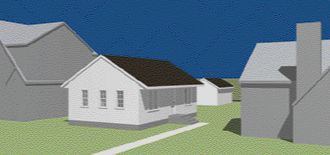
The remodeling project pictured here, for example, involved a tiny one-bedroom cottage in a very desirable neighborhood. The owners, recently married and anticipating a growing family, wanted to add a second story with three bedrooms and a bath and expand the kitchen on the main level.
The most economical way to accomplish that would have been to raise the walls to accommodate a second story topped off with a low-pitched truss roof. But visually that approach would leave a lot to be desired. Rather than fitting in with the surrounding houses in the older neighborhood, the resulting structure would look like a boxy prefab airlifted in from the outer suburbs.
One Roof, Two Truss Profiles
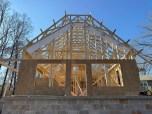
Instead, taking our key cue from the neighborhood, we worked out a design that includes a steep roof with dormers, giving the house a more cottage-like look. And while it looks hand-framed, it was actually easy to achieve with trusses.
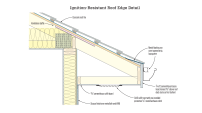
There are two different truss profiles: The first is a steeply pitched scissors truss over the bedrooms, which starts low before soaring to an unexpected 10-foot ceiling. The roof over the stairs, hallway, and bathroom makes use of a second, more conventional truss with a flat bottom chord and two separate pitches to create the shed-roof look.
CAD a Key Tool
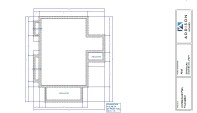
The key to mixing truss profiles is coordination. Computer drawings allowed us to accurately calculate plate and heel heights and confirm that the roof plane will be continuous from front to back across the different truss profiles.
The cottage look is further accented by switching siding on the new second story from a horizontal lap siding to a vertical board-on-board. We also switched colors to accent the design and added some appropriate shutters, window boxes, and brackets, all accented with a separate paint color.
These details definitely add to the overall cost of the project, but the key component — the trusses — is still much less expensive than hand-framing the same design would be. For the extra money, the clients get a house that fits into the neighborhood and has its own curb appeal and charm.