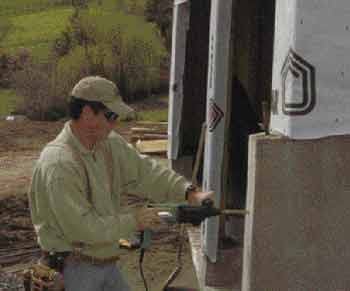
About 10 years ago, I bought a 1/2-inch hammer drill. It dependably drilled anchor holes in tile, mortar, block, and — usually — concrete. It also doubled as a regular two-speed drill. But the tool struggled with large bits and had a hard time with concrete that contained a lot of heavy aggregate.
Last year, I had the opportunity to test seven hammer drill-sized pistol-grip rotary hammers. For me, they took concrete and masonry drilling to an entirely new level. My decade-old hammer drill? I retired it from drilling concrete.
Test Criteria
Over the course of 12 weeks, I ran the seven pistol-grip rotary hammers in this group through a gauntlet of concrete and masonry drilling tests both on the job site and in a controlled environment — a Department of Transportation facility where I could drill and chip old highway barriers made of concrete with a known consistency. I tested the Bosch 11250VSR, DeWalt D25103K, Hilti TE 2-M, Hitachi DH 24PC2, Makita HR2450F, Metabo UHE 28 Multi, and Milwaukee 5383-21. All hammers use SDS (slotted drive system) Plus bits (Hilti calls them TE-C bits).
First, I conducted timed tests using new bits in each tool to evaluate speed, power, and vibration. Next, I addressed balance, grip, and triggering. Finally, I took a close look at the bit holders, depth stops, and clutches. For each tool, I evaluated the owner’s manual, toolbox, and multiuse features. The DeWalt, Hitachi, Makita, and Metabo have a chipping function, which I tested for power and performance with different bits. In the end, though, the ability to drill holes quickly — with power to spare — influenced my recommendations the most.
Power, Speed, and Vibration
I expect manufacturer specifications to be a solid indicator of performance, but some of the specifications told me little about how well these tools would perform when drilling concrete. Amp draw, rpm, blows per minute, and even impact energy failed to correlate closely enough with my test results to make them accurate predictors of performance.
The specs do include one very useful number, the capacity rating, which refers to the largest-diameter solid bit that the manufacturer recommends using in concrete. (Most of these tools, of course, will accept larger sizes than they are rated for — SDS-Plus bits go up to 11/4 inches in diameter.) The capacity rating is important because it tells you that if you drill a lot of holes larger than that size, you will shorten the life of the tool. If you are constantly drilling at maximum capacity, the tool is probably too small. Ideally, you should own a rotary hammer that is rated for a slightly larger hole than you usually drill. You wouldn’t want it to be rated much higher, because you’d be using a bigger, heavier tool than necessary.
A rubber-padded grip and a large, easy-to-activate trigger make the Hilti the most comfortable to operate.
Power and speed. I used brand-new 1/2-inch bits to drill uniform 3,000-psi concrete — an old DOT highway barrier — containing aggregate of up to 1 1/2 inches. This test material ensured reliable content made to strict government specifications.
Manufacturers say the best way to get effective results with a rotary hammer is to let the weight of the tool do the work, rather than pushing it too hard. That is generally true. Nevertheless, I see some guys pushing a tool to the limit, so I tested the hammers not only with recommended pressures, but also with hard and extreme pressures.
I explored drilling power through three separate tests. First, I applied what I call a medium or recommended force to each tool. I drilled four horizontal holes, 4 inches deep, timing and averaging the results. I then drilled four more holes with each tool, using what I consider a higher than recommended force. When none of the tools bogged out with higher pressure, I really pushed them to their limits by drilling one hole each with as much force as I could. It’s important to note that I don’t have a test lab with specialized equipment, but the times in the chart are as accurate as could be recorded in the field and reflect job-site conditions.
While pushing a tool hard all day is neither recommended by manufacturers nor realistic for users, my results indicate that the harder I pushed, the faster most of them went. However, this is not a measure of durability. I couldn’t test whether a tool would last very long being pushed hard day in and day out. DeWalt says its tool, which finished in the middle of the pack in the speed test, is specifically designed for high-pressure work, not speed. The company’s research indicates that because users overuse the tool, this design increases durability.
Vibration. For rotary hammers, vibration is surprisingly isolated by the way the hammer mechanism operates. Unlike a hammer drill’s system of two serrated discs rotating against each other — actually a vibration-causing mechanism — the rotary hammer’s impact comes from pneumatic force. A piston on one end of a cylinder compresses air, which slides a striking hammer at the other end into the back of the bit, limiting vibration in the tool body. All the tools operated comfortably except Milwaukee’s. It vibrated the most and was uncomfortable to operate, especially with larger bits.
Balance, Grip, and Triggering
Each tool was well balanced and easy to maneuver for straight-on or overhead work. If I had to nitpick, I’d say the Metabo was a little front-heavy. It was also the heaviest overall, which made it slightly harder to aim when starting holes on vertical surfaces.
Grip. You can hold these rotary hammers two ways: with a pistol grip or in-line. For the pistol grip, you hold the tool fully by the handle, pulling the trigger with your index finger. In-line, you grip the back of the motor housing, push in-line with the bit, and pull the trigger with your ring and pinkie fingers. All of the models except Metabo provide rubber surfaces and grooves for in-line gripping, which I like. The Metabo has grooves but no rubber grip.
The Hitachi (top) and the Makita have different selector switches, but both are easy to engage.
Side handles. All side handles were satisfactory. Hilti’s and Metabo’s are rubber coated and the most comfortable.
Triggering. The Hilti was by far the most comfortable to grip, with a large, easy-to-activate trigger accessible in both grips. The Makita and the DeWalt felt good, too. I could reach their triggers with two fingers in-line, even with gloves on. And, when you pull the Makita’s trigger, a handy work light comes on, which is great for dark spaces.
I have larger than average hands, but some of the triggers were hard even for me to reach when holding the tools for in-line operation. Hitachi’s reverse switch obstructs the trigger a little; with gloves on, I could reach it only with my pinkie. Bosch’s trigger was pinkie-only without gloves. Metabo and Milwaukee both have readily accessible triggers, but both handles felt much too wide, which made holding them in-line less comfortable. On the Milwaukee, I could really feel the tool vibrate when I held it in-line. Metabo’s trigger spring was stiff, which made using it in-line difficult, and the reverse switch hit my finger in the pistol-grip position.
Bit Holders, Depth Stop, and Clutch
A free-spinning collar on the bit holder’s nose helps protect the bit holder itself from impact, as when the tool thrusts into a cavity in block. More important, it protects the end seal. The end seal keeps abrasive dust out of the bit holder and helps keep the grease inside from escaping. Since an expensive bit holder is the most common replacement on these tools other than brushes, that detail is important to me. Metabo’s metal collar is the toughest. All the bit holders free-spin except Hilti’s.
Hilti acknowledges the importance of a good end seal, however, and is the only company to mention it in the manual, offering it as a replacement part for less than $10.
Depth stops. The Bosch, DeWalt, and Milwaukee depth stops have positive locking notches that stop the drill solidly every time. And their easy lever adjustment was quick and didn’t require loosening the front handle, as was necessary with the Hilti, Hitachi, Makita, and Metabo. I could defeat these four friction-held stops by pushing moderately hard or bottoming out hard a few times. If you crank them down tight and then watch carefully as you bottom out, they work fine.
Clutch. It’s an unwritten law that rotary hammers have a clutch, and for good reason: When bits stop in concrete, it’s sudden and it’s solid. A good clutch also provides peace of mind, because it means I don’t have to maintain a death grip on the tool to keep it from injuring me if the bit snags on a piece of rebar.
I tested the clutches by impacting a spinning bit against rebar inside a hole, and then doing a physical evaluation of reaction torque (again, no test lab equipment in sight). In other words, I felt how hard they twisted against my grip. The Makita, Bosch, and Hitachi had low reaction forces, while the Hilti and DeWalt had higher, yet manageable, forces. The Milwaukee’s motor slowed and strained, almost stalling before the clutch activated with high force.
Metabo’s clutch action is electronic and reduces power to the motor when a bit jams. At first, I thought there was no clutch action, because instead of the mechanical clutch clatter that is audible on the other tools, the motor slowed and made straining noises as the bit jammed. The tool put up a fight, requiring a high reaction torque to engage the electronic clutch. When I hit rebar on the job site, the Metabo was the only one in the group that spun out of my grasp. It gave me a good whack while wrapping its cord around itself and bending a 1/2-inch bit.
Hilti’s precision hammer setting is great for working in softer materials like brick.
Chipping
The DeWalt, Hitachi, Makita, and Metabo have a useful chipping function. I tested the demo capacity of these small tools with bull-point and cold chisels. The Metabo, Makita, and DeWalt were lighter-duty chippers, as expected for modestly sized tools. But the Hitachi amazed me — its superior piston effectiveness drilled a bull-point chisel 2 to 3 inches deep in the test concrete in mere seconds. Count on any of these models to pop up tiles and start holes, but expect more demo power from the Hitachi.
FORCE FACTOR | |||||
Medium Force | High Force | Low Force | |||
Manufacturer | Average Drilling Speed | Manufacturer | Average Drilling Speed | Manufacturer | Average Drilling Speed |
Hitachi Makita Hilti DeWalt Bosch Metabo Milwaukee | 11.08 13.14 16.36 17.27 17.87 19.11 20.67 | Hitachi Makita Hilti DeWalt Bosch Metabo Milwaukee | 10.52 12.00 14.53 14.80 15.07 16.35 16.79 | Hitachi Makita Hilti DeWalt Bosch Metabo Milwaukee | 8.85 10.08 12.22 14.15 15.60 15.65 31.71 |
Tool Cases
All the hammers I tested came with plastic cases that met my requirement of fitting the tool with the side-handle on. They all easily withstood my “stand on and bounce” test, too. I really like the long-bit storage compartments in the Bosch, Metabo, Hitachi, and Makita cases; they keep bits from rolling around in the box. The Hilti and DeWalt cases provide a dedicated area only for short bits. The Milwaukee case is limited to storing six short bits in slots. The one-piece Bosch and Hilti latches look upside down — I suggest labeling the top of the box to make it obvious which end is up. The Metabo case is the only soft, blow-molded model, which seems oversized and a little flimsier than the rest. Instead of an articulating hinge, it has thin plastic connecting the two halves at the bottom.
Manuals
I studied each tool’s manual, looking for recommended usage techniques, technical details, maintenance and warranty information, and an obvious toll-free number. Each manual was fine. Out West, where I work, a Spanish-language section is important, too, and all but Makita included it.
Multiuse Tools
The Hilti and Metabo models are the most versatile in the group. Hilti’s bit holder is easily removable and can be effortlessly replaced for maintenance without tearing down the tool, or it can be exchanged with a high-quality keyless chuck accessory ($95) for smooth-shank bits. It also has a unique precision hammer feature that reduces the percussive force output. While I had to refer to the instructions to figure out how to use the dial that engages this feature, it was perfect for drilling holes for Tapcon screws in soft brick on an old house remodel. The other hammers were too aggressive and oversized the hole in this material.
The Metabo has a lot of ambitious features like chipping and multiple speeds. It’s also the only tool to ship with a keyless chuck accessory for wood-boring bits.
The Metabo was the only hammer to come standard with an accessory keyless chuck — a nice feature that makes this tool capable of using both smooth-shank and SDS-Plus bits right out of the box. That, combined with its speed-selection dial, made it the right candidate for stirring a five-gallon bucket of paint at a nice slow speed. Both Hilti and Metabo have dual-speed ranges in drill-only mode that make them useful as multipurpose rotary hammers and drills.
While all the tools tested have a drill-only feature, and you can purchase an accessory chuck for smooth-shank bits, they’re not perfectly suited for heavy drilling and driving because of the clutch action. In fact, Makita’s directions say not to use it with a hole saw because the clutch may engage too frequently. I have a spare 1/2-inch drill, anyway — my 10-year-old hammer drill.
Makita’s well-placed work light turns on when you pull the trigger, which is good for dark spots.
Winners
On the job site, drilling and chipping performance are my top priorities. Performance in the timed drilling trials clearly determined the winners for me. For getting holes drilled with power to spare, the hands-down best performer was Hitachi. It won every single drilling trial and was great on site. Nothing I did could slow it down when it was drilling or chipping. Makita earned a close second, taking second in every one of the trials. Hilti gained third with solid performances and great comfort. Bosch’s dependable power took fourth, with DeWalt close behind. The Metabo, while the most versatile multiuse tool, was a little slower drilling and chipping. The Milwaukee model brought up the rear.
Michael Springer
is a designer-builder in Boulder, Colo. This article was reprinted by permission of Tools of the Trade.
| ||
Capacity Rating | 3/4 inch | 1 inch |
Rpm / Bpm | 0-1,350 / 0-6,000 | 0-1,100 / 0-4,200 |
Weight | 5.4 pounds | 5.7 pounds |
Amps | 7.5 | |
Impact Energy | 1.4 foot-pounds | 2.3 foot-pounds |
Modes of Operation | two | three |
Street Price | $175 | $199 |
Comments | This is the least expensive tool in the test and delivered dependable power and low vibration, even when pushed. It doesn’t have a chipping function, but I do like the dependable depth stop and the tough box, which stores long bits. Also, the tool feels extremely light in use. The tool body is tall, which makes holding it in-line and reaching the trigger a little difficult. The clutch engaged quickly when the bit jammed | The DeWalt delivered consistent drilling power all the way through the test. I like the trigger on this tool — it’s easy to reach and squeeze either in-line or with pistol grip. It also has a useful chipping feature that works for popping up tiles and light chipping. The box could be better: There is a compartment only for short bits. It took a pretty high resistance for the clutch to engage. |
| 877/267-2499 | 800/433-9258 |
| ||
Capacity Rating | 3/4 inch | 15/16 inch |
Rpm / Bpm | 0-930 / 0-2,400 | 0-1,150 / 0-4,600 |
Weight | 5.7 pounds | 5.5 pounds |
Amps | 5.2 | 6.3 |
Impact Energy | .4 and 1.3 foot-pounds | 2.1 foot-pounds |
Modes of Operation | two | three |
Street Price | $319 | $199 |
Comments | I really like this tool for its unsurpassed comfort and versatility, plus its good power. It has the best trigger — easy to reach and squeeze from any position — and the precision hammer feature is great for finicky materials. The selector dial sent me to the instructions to figure out what the icons meant. The box could be better, too: There’s a compartment only for short bits. Its clutch is less sensitive than that of the other tools. | This tool is a real winner. It was the fastest and most powerful in every drilling test. It is comfortable to hold, chips like crazy, and has a perfect clutch action. The only faults I could find were that the reverse switch obstructed the trigger somewhat in the in-line position and the depth stop could be better. |
800/879-8000 | 800/829-4752 |
| ||
Capacity Rating | 15/16 inch | 1 1/8 inches |
Rpm / Bpm | 0-1,100 / 0-4,500 | 0-950 / 0-4,400 0-2,600 |
Weight | 5.3 pounds | 8.1 pounds |
Amps | 6.7 | |
Impact Energy | 2 foot-pounds | 1.8 foot-pounds |
Modes of Operation | three | three two drilling speeds |
Street Price | $219 | $359 |
Comments | This tool is a powerhouse. It scored high marks in every drilling test, with plenty of power and speed. I really like how easy it is to reach the trigger and that I can chip effectively with the tool. Its clutch kicks in a little too easily for my work. It’s got a handy work light. | This is a sophisticated tool. If I could have only one drill for wood, concrete, and everything else, I’d pick this one. It ships with a keyless chuck accessory for smooth-shank bits. Two speeds in drill-only mode meant I could use it like a standard drill. It chips, which is very handy. It doesn’t have the most concrete drilling/chipping power, and the clutch takes high reaction torque to kick in. Its wide tool body makes it somewhat uncomfortable to hold in-line. |
800/462-5482 | 800/638-2264 |
| |
Capacity Rating | 3/4 inch |
Rpm / Bpm | 0-1,270 / 0-5,400 |
Weight | 5.7 pounds |
Amps | |
Impact Energy | 1.7 foot-pounds |
Modes of Operation | two |
Street Price | $180-$252 |
Comments | While the Milwaukee has a nice trigger design, tool body, and depth stop, the tool didn’t deliver the power I need. It really labored when taxed, and the clutch took a long time to kick in. It doesn’t chip, and the box has compartments for only a few bits. Its five-year warranty is the best in the group. |
800/729-3878 |