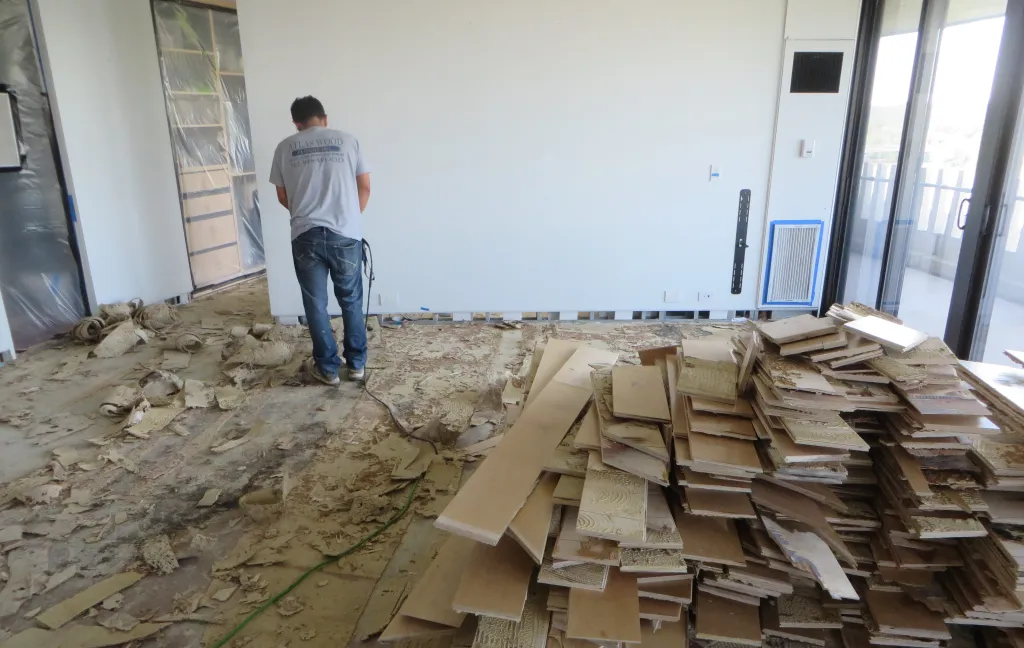
We started installing “engineered” wood floors years ago, expecting that their multi-layer construction would be more stable and show fewer shrinkage cracks in our dry winters. Unfortunately, we’ve seen enough of these floors fail that we are now very cautious about installing them at all. This past winter, two floors failed during a cold, dry month; one will likely need to be torn out and reinstalled, while only two boards were affected on the other, so that will be a straightforward repair. As with most callbacks, the worst part of these types of failures is disappointing our clients and the strains put on the project schedule and our company reputation— challenges we prefer to avoid. In this article, I give my perspective on what causes engineered flooring failures, look at the reality of manufacturers’ (non) warranty coverage, and share a couple of steps we take to minimize risk.
Built-In Problems
Engineered flooring is made of glued-up pieces of wood, usually with a top layer, known as a “lamella,” that’s thick enough to be sanded, just like a solid hardwood floor. Usually, below the lamella are layers of plywood-style veneers, or sometimes layers of solid wood glued together crosswise to the top layer. In some, there’s a bottom layer of the same species as the top; these are called “balanced” floors—the fact that the top and bottom layers move at the same rate creates a symmetrical, tension-neutral structure that prevents bowing, warping, and cupping.
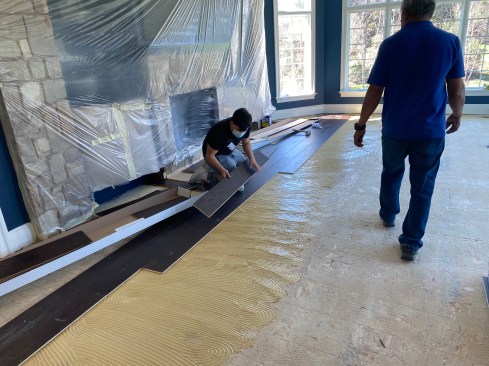
There are three main installation methods for engineered flooring: floating, nail/staple down, and glue-down. The problems we’ve seen occurred most often with glued-down applications when the indoor humidity was poorly controlled.
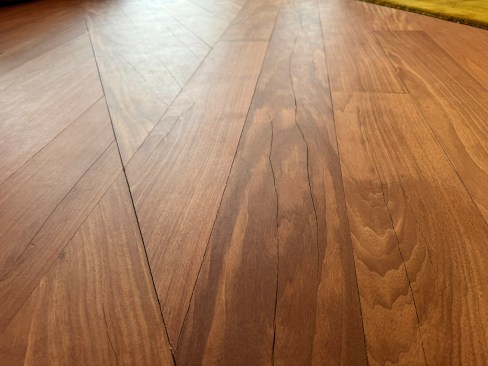
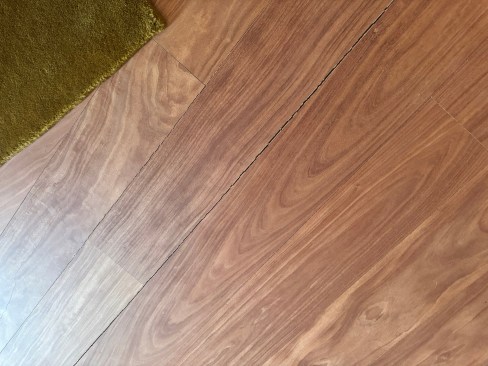
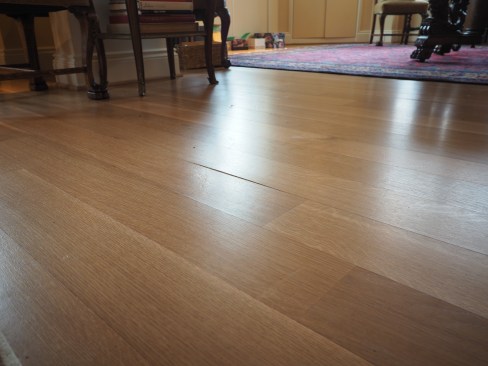
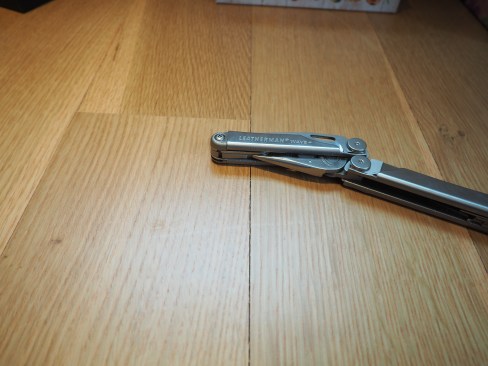
Doug Horgan
An engineered floor installed in a high-end condo in Washington,…
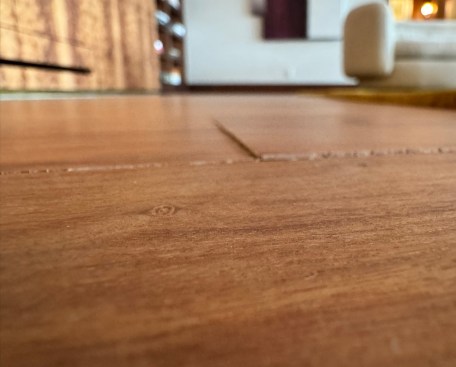
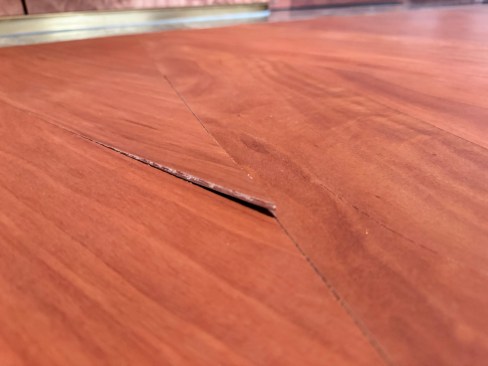
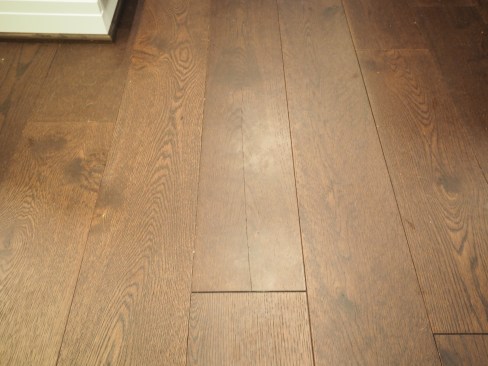
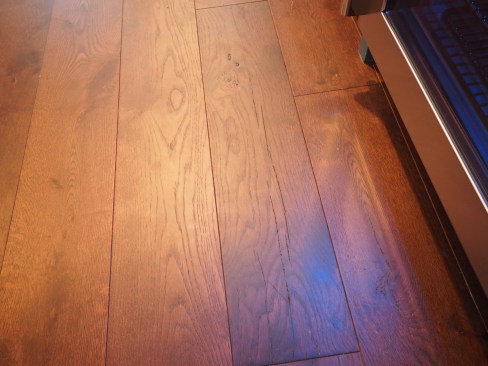
The problems come in winter, when indoor relative humidity in a leaky building in our area may go below 15% for several weeks, and stay in the low 20s even longer. In these conditions, the top lamella loses moisture to the dry indoor air and each piece of flooring becomes a bit narrower. Unlike a piece of solid wood, the top layer of engineered flooring is glued to layers below in a cross-grain construction. Wood shrinks across the width much more than along the length, so the layers below the lamella, with grain running perpendicular to the lamella, don’t shrink much at all. The top layer shrinks, but the layer below does not. Eventually, some pieces of the flooring fall apart from the stresses, and we get a call about edges or corners rising up, or large cracks appearing in the middle of the pieces.
There are four factors that make a failure more likely, in my experience:
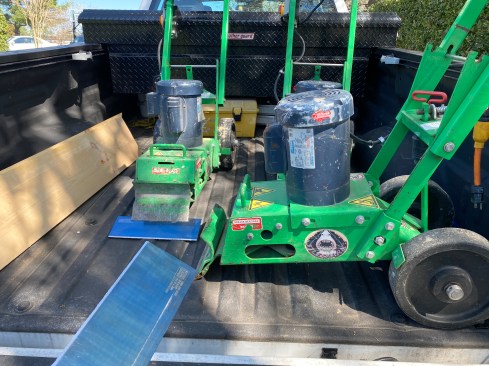
Strength of the glue. Today’s glues are incredibly strong, as you know if you’ve ever had to remove a glued down floor. We usually have to use chipping hammers or a power scraper. Glue seems to restrain the bottoms of the boards more than fasteners do, and the glue layer likely reduces the ability of the bottom layers to change moisture levels with ambient conditions (the glue is not very moisture-permeable). That can lead to moisture differences between the top and bottom pieces.
Width of the boards. With wider boards, there’s more total shrinkage of the top lamella and more stress on the joint between the top layer and layers below. Our worst failures were on 9- and 7-inch flooring, while flooring that’s less than 5 inches wide has only failed once for us.
Species and cut of the top layer. As with solid-sawn flooring, quarter-sawn oak shrinks less than plainsawn oak, and much less than plainsawn maple, for example.
Relative humidity in the space. All the issues we’ve seen can be traced directly to low humidity conditions. Some happened in buildings that were leaky and the wintertime indoor humidity was running very low; others happened when humidifiers were turned off or malfunctioning.
Most of the floors we’ve installed don’t have issues, but enough have had them that we instituted a warranty sign-off for engineered floors over 5 inches wide. Clients who want a floor with wide boards accept responsibility for delamination or cracking.
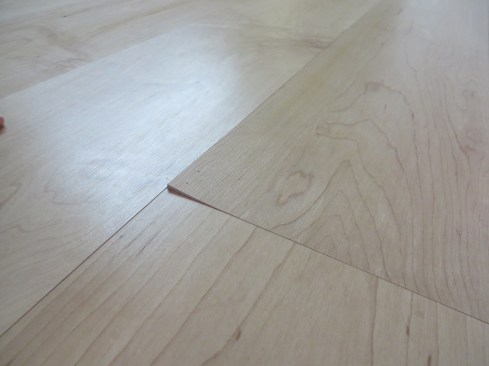
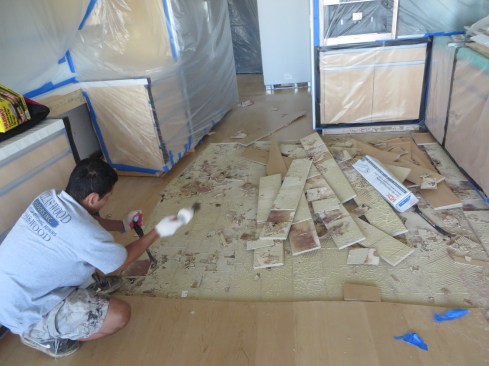
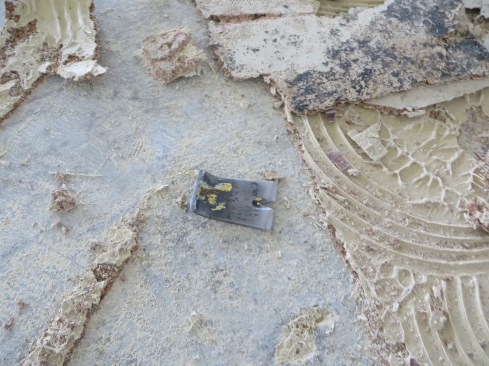
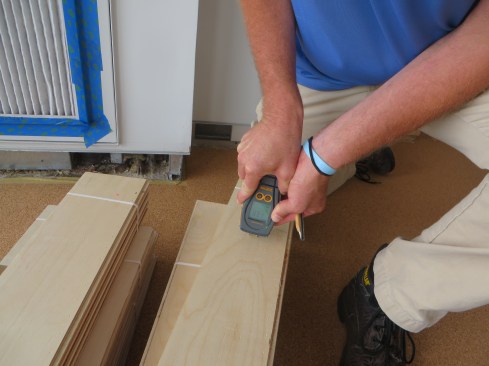
Doug Horgan
A 7-inch-wide floor with a maple lamella began to delaminate thi…
Manufacturer Warranties Fall Short
We contacted the manufacturers for the first couple of engineered floor failures. That’s when we realized the warranties essentially don’t apply to real-world conditions, and this is true whether the warranty is from a big national manufacturer or from one of dozens of mom-and-pop floor companies around the country. The written warranties I’ve checked all state that humidity must be maintained in a narrow range 100% of the time. Typically, this range is 45% to 55% RH, though some companies have a slightly wider range, such as 35% to 55%.
I have measured summer and winter indoor humidity in dozens of houses in our mid-Atlantic area, and it’s rare to find one that stays below 55% RH all summer, or above 35% all winter (much less 45%). In spring and fall when HVAC systems may not run much, RH readings above 70% are not uncommon. If a humidifier isn’t turned on, readings below 15% are normal in winter (in the large, poorly-sealed houses and condos we work in). It’s essentially impossible to meet the warranty requirements of any engineered flooring brand I’ve investigated.
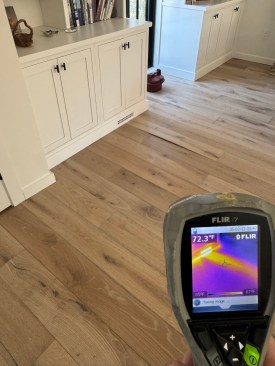
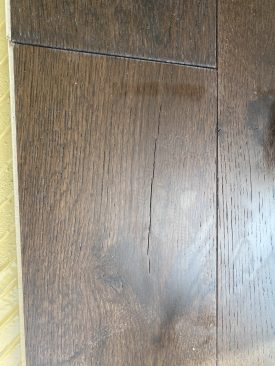
Doug Horgan
In a Maryland home, an engineered floor with a hickory lamella b…
Even if we think we’ve done okay with the indoor humidity, the few times we’ve reached out to manufacturers they have denied warranty coverage. The letters we’ve received basically state that the fact that the flooring delaminated is proof that humidity levels were not maintained. We don’t usually have recordings of the indoor humidity levels in each room on every project going back to the flooring installation date (who would?), so we can’t prove we did stay in the stated range.
The warranty on one brand of flooring we installed had an unusual requirement: In order to maintain warranty coverage, we would have to install a humidity monitoring computer in a recess in the subfloor! This contraption required hardwired power and an internet connection, which would send humidity readings to the flooring manufacturer. The device cost hundreds of dollars, and installation and maintenance would probably bring total costs to close to $2,000 over a few years—not a prudent investment since in all likelihood the device would just prove that the house went out of the 35% to 55% range. All it takes is one summer party with doors frequently opening for the house to go outside that range.
All in all, in our experience, manufacturers don’t cover cracking or delamination. We decided we would be happy to install engineered flooring, but since wider flooring is so risky, we discuss the issue with clients and have them sign a specific warranty exclusion for these problems. We also don’t install flooring with a moisture content higher than around 11%.
Wide floors are trendy right now and several clients have accepted a warranty limitation (only on cracking or delamination; we still cover finish issues or other problems). In the two floors we had problems with this year, we had discussed those exclusions ahead of time. It’s still unfortunate, but at least the responsibility was with the people who made the decision.
Keep the conversation going—sign up to our newsletter for exclusive content and updates. Sign up for free