
Download PDF version (756.4k) Log In or Register to view the full article as a PDF document.

Launch Slideshow

Soundproofing

Barriers and blankets

Soundproofing

Barriers and blankets

  • http://www.jlconline.com/Images/1231654803_1011_JLC_Soundproofing_00a_tcm96-1092078.jpg

    600

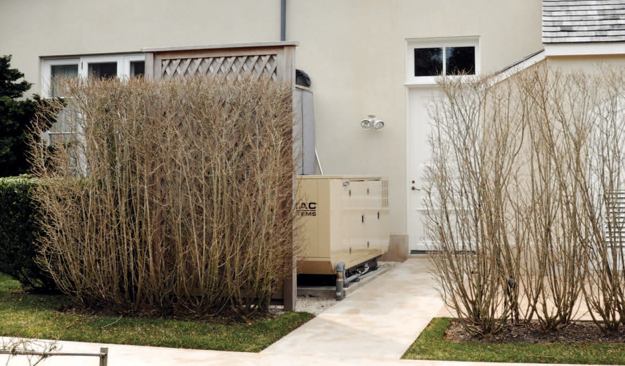
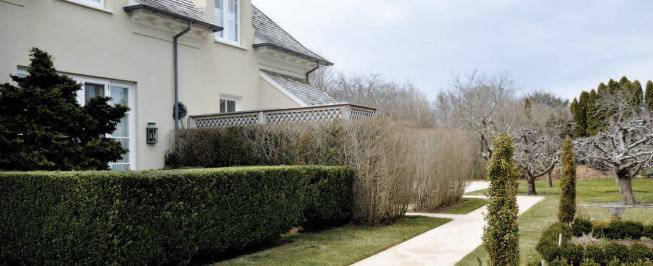
    An attractive wooden screen lined with a sound-absorbing accoustic blanket helps control sound pollution.

  • http://www.jlconline.com/Images/866437272_1011_JLC_Soundproofing_01a_tcm96-1092097.jpg

    600

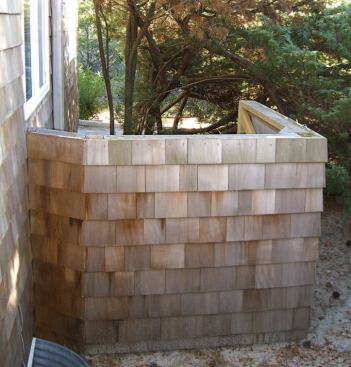
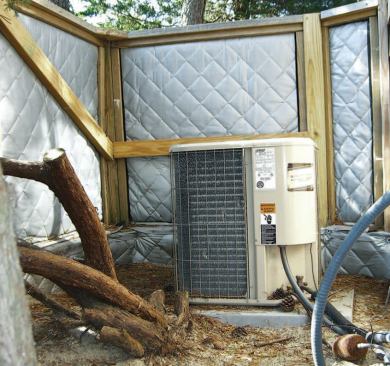
    A simple barrier lined with acoustic blankets will absorb and block most of the noise produced by this AC condenser.

  • http://www.jlconline.com/Images/194460379_1011_JLC_Soundproofing_01b_tcm96-1092117.jpg

    600

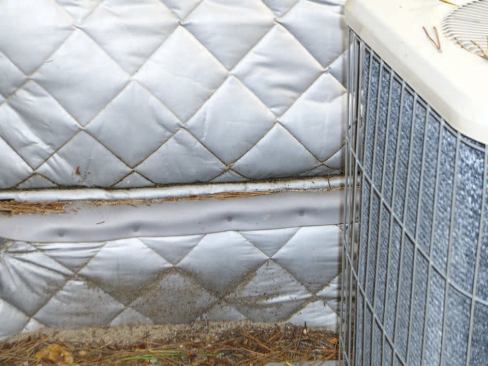
    The blankets consist of a UV-protected composite 1-pound mass-loaded vinyl barrier faced with a 2-inch-thick quilted fiberglass absorber.

  • http://www.jlconline.com/Images/1206198567_1011_JLC_Soundproofing_01c_tcm96-1092135.jpg

    600

    Note how the blanket extends below grade.

  • http://www.jlconline.com/Images/384303403_1011_JLC_Soundproofing_02a_tcm96-1092154.jpg

    600

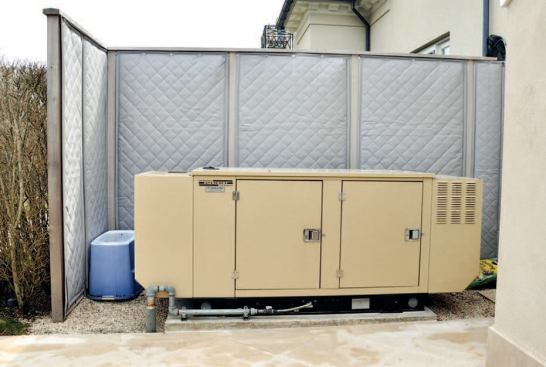
    This 10-foot-tall barrier will provide almost twice the noise reduction of a 5-foot-tall barrier.

  • http://www.jlconline.com/Images/752092204_1011_JLC_Soundproofing_02b_tcm96-1092163.jpg

    600

    The noice reduction is achieved even though clearances between the generator and enclosure are limited because of the existing landscape design and zoning constraints.

  • http://www.jlconline.com/Images/1644342784_1011_JLC_Soundproofing_03a_tcm96-1092182.jpg

    600

    Octave bands indicate a mechanical unit's noise levels at specific frequencies and are therefore more useful than single-number "average" sound ratings when designing barriers and enclosures. As this chart indicates, most AC condensers are noisier at lower frequencies.

Noisy mechanical equipment can be more than just a nuisance. In many locations, including the New York metropolitan area where my acoustic consulting company is based, building codes place legally enforceable limits on the noise levels produced by air conditioning condensers, backup generators, pool pumps, exhaust fans, and similar units. In response, we’ve developed some basic soundproofing techniques that ensure quieter installations in both new construction and retrofits.

Soundproofing a pool pump is relatively easy: We mount it on vibration isolators to block structural noise and build a complete enclosure around it to block airborne noise. But soundproofing a generator or AC condenser is trickier. Since these units require airflow, you can’t enclose them completely, so you need to equip the enclosure with sophisticated silencers and baffles, an engineered solution we typically use only in commercial construction.

In residential construction, we can usually get good results by putting an acoustically insulated barrier between the noisy unit and the neighbors, as we did for the two projects shown in this article. One of those jobs involved bringing a standby generator into compliance with local noise ordinances; the other was precipitated by a dispute between neighbors over a noisy AC condenser. We use the same general techniques to muffle other types of outdoor equipment as well. Keep in mind, though, that whenever laws or codes are involved, you may need to consult with an acoustic engineer to get accurate measurements and effective results.

Two Types of Noise

Outdoor mechanical equipment produces both structure-borne and airborne noise. Because there are fundamental differences in how sound waves travel through air and through structures, we use different strategies and materials to manage each type of noise.

Airborne noise. A conventionally framed and plywood-sheathed enclosure or barrier will block a certain amount of airborne noise. But with a sound transmission class (STC) rating of only about 21, 1„2-inch plywood generally won’t eliminate all noise, and in fact could add to the problem by reflecting and amplifying certain frequencies. So we add acoustic materials to the barrier that will both reduce and absorb sound.

The acoustic blanket we use is made with a fiberglass absorber bonded to mass-loaded vinyl, which is a limp and heavy material that looks a little like sheet vinyl (see slideshow). The blanket has an STC rating of 32 and a noise reduction coefficient (NRC) of .85 (for an explanation of these and other terms, see the glossary on the facing page). Lining the barrier with this material can provide as much as 15 dB of additional noise reduction, a decrease in sound energy of more than 90 percent. That means that a condenser shielded by this barrier will sound less than half as loud as a freestanding unit.

Acoustic materials tend to be most effective at muffling higher frequencies (1,000 Hz and greater), but most outdoor condensers are noisiest in the lower frequencies (60 to 250 Hz). Though acoustic blankets can help make a barrier more effective, it’s the barrier’s height that makes the biggest difference in its overall acoustic performance. Just a couple of extra feet can make a surprising difference. We have a simple graph we use to estimate the noise-reduction levels we can expect from barriers of various heights (see “Calculating Noise Reduction”). With it, we can quickly determine whether we can help clients achieve their noise-reduction goals and still meet zoning height restrictions. Later, if we end up doing a detailed analysis and design, we use mathematical equations to fine-tune the barrier height.

Structural noise. Even though we focus on airborne noise, we also address low-frequency structural vibration in outdoor applications. Structure-borne noise happens when the unit is rigidly connected to a structural base like a concrete slab. When the equipment vibrates, the structure vibrates too, creating the sound. If the slab isn’t already isolated from the building foundation, the most effective way to eliminate this sound is to create a flexible disconnect between the unit and the base with either neoprene pads or spring-type vibration isolators.

Vibration isolators are rated by deflection, which correlates to the amount of vibration the isolator can absorb. Neoprene pads are less expensive and therefore more widely used than spring isolators, but they typically have only a .03-inch deflection, while some spring isolators offer as much as 8 inches of deflection.

Vibration isolators are also rated by weight capacity. Neoprene pads are load-rated, typically in pounds per square inch (psi). Since the efficiency of a spring isolator is optimized when the spring is compressed almost completely, spring isolators must be correctly sized for each mechanical unit and application.


 

Locating the Units

In new construction, it’s obviously best to plan the installation so that the mechanical unit is as far as possible from neighboring windows. A certain amount of noise reduction can be expected when sound travels from the unit to the nearest bedroom window (if we are worried about the owner of the outdoor unit), or the nearest boundary line (if we are worried about the neighbor or code compliance). But other variables need to be taken into account as well: Topography, ground cover, nearby structures, and even atmospheric conditions can bend the acoustic wave up or down, making it louder or quieter.

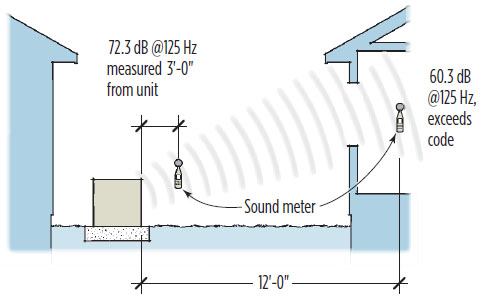
There are various formulas for calculating the net result of these ground and scattering effects, but for a quick estimate you can use what is called the inverse square law, which says that there is a 6 dB decrease of sound pressure level (SPL) per doubling of the distance. If the manufacturer’s SPL was recorded 3 feet away from the unit, moving 6 feet away from the unit would yield a 6 dB reduction; for an additional 6 dB reduction, you’d have to move 12 feet away.


Calculating Noise Reduction Based on Barrier Heights

Noise levels (measured in dB) vary depending on the source’s sound power level, site conditions, and the distance between the source and the receiver. In order to be considered a nuisance or noise code violation, noise levels must exceed a specified amount at a given location, typically 3 feet inside the nearest window, as shown in (A). Placing a high-STC barrier, such as a plywood-sheathed wall lined with an acoustic blanket, between an AC condenser or other source and the receiver will provide additional noise reduction, as shown in (B) and (C). To predict whether noise reduction levels from barriers of different heights will provide sufficient noise reduction levels at specific frequencies, the author uses the chart below. Because decibels are a logarithmic measurement, even a modest 10 dB decrease represents a 90 percent change in sound energy — which the ear will perceive as being half as loud as the original noise (see table at bottom).

Image

A "quiet" condenser that measures 72.3 dB at 3 feet will measure about 60 dB at 12 feet, according to the inverse square rule (doubling the distance yields a reduction of about 6 dB).

Image

Placing a 5-foot-tall barrier no more than 3 feet away frome the condenser will reduce noise levels at the window by 6.6 dB at 125 Hz.

Image

A 10-foot-tall barrier will reduce noise levels at the window by 14.1 dB at 125 Hz.

Image


Existing Installations

When an existing installation is causing a noise problem, I start by identifying the frequency and decibel level of the noise coming from the mechanical unit. We usually measure these levels with a sound meter, but you can sometimes get good acoustic data from the manufacturer. “Sound ratings” that don’t specify the weighting of the reading or the distance that the reading was taken from the unit (requirements of most noise codes) aren’t very useful. What we prefer to see are octave band levels that indicate which frequencies have the highest decibel ratings, detailed with information about weighting and distance, rather than a vague single-digit rating number. If I’m using information from the manufacturer, I keep in mind that its figures are only estimates and that on-site noise levels often are higher.

Image

Octave bands indicate a mechanical unit’s noise levels at specific frequencies and are therefore more useful than single-number “average” sound ratings when designing barriers and enclosures. As this chart indicates, most AC condensers are noisier at lower frequencies.

I also refer to the manufacturers’ specifications when I’m trying to determine the correct treatment for structure-borne noise, to find out the weight of the unit and the rpm of the motor.

If there’s a local noise ordinance, it will usually specify the acceptable noise level for different sources of sound. In New York City, the noise-level limit for a single AC unit is 42 dB(A) as measured from 3 feet inside the nearest open window. But most noise ordinances also require that noise levels don’t exceed ambient — or background — noise levels by more than a certain amount when the unit is turned on. So I use a sound meter to estimate ambient levels and refer to them when setting noise-reduction goals.

For example, if the SPL of a condenser is 73 dB(A), and the acceptable noise level is 42 dB(A), the theoretical target noise-reduction level would be 31 dB. Code officials in New York currently enforce a limit of 3 to 4 dB over ambient levels, which often can measure as much as 48 dB(A) in the city. That means that the acceptable noise level for the unit may actually be as high as 52 dB(A), and the target noise-reduction level would be 21 dB.

Cost

Costs for building soundproofing enclosures can vary widely depending on site conditions and noise-reduction goals. For instance, the materials to build a two-sided enclosure for the pre-existing AC condenser shown the slideshow cost only $1,300. We didn’t have to satisfy any noise codes, just a nearby neighbor, and the enclosure height was limited to 5 feet to avoid blocking the view out of the windows.

The cost to design and build the 10-foot-tall soundproofing barrier for the standby generator in the slideshow was about $15,000, including materials and installation. This barrier had to block enough noise for the generator to comply with local noise ordinances, yet not exceed zoning height restrictions.

Bonnie Schnitta is the owner of SoundSense, an acoustic consulting firm and manufacturer of sound-control products. Photos by Tara Israel.
