- Q. What’s the right type of mesh to use in a mud-bed tile floor? Should I use a self-furring lath (like the type used in stucco work) so that it centers itself in the mud?
A.Michael Byrne, a tilesetter and industry consultant from Los Olivos, Calif., responds: First, there are several mortar bed installation methods that require no reinforcing. These are typically for floors where you’re putting a bonded mortar bed over an intact slab-on-grade. These methods, which are based on ANSI A108 specification standards, are described and illustrated in the Handbook for Ceramic Tile Installation, available from the Tile Council of America (864/646-8453, www.tileusa.com).
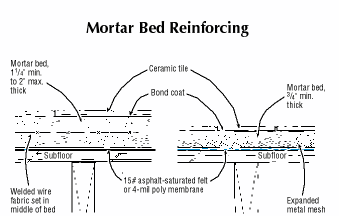
For thick mortar bed installations over wood floors (left), ANSI specs call for wire fabric reinforcing and a cleavage membrane between the subfloor and the mortar. For thin mortar beds (right), use expanded metal lath nailed or stapled to the subfloor.
I’ll assume you’re talking about laying a mortar-bed tile floor over wood framing. The tile industry recognizes two methods for reinforcing mortar setting beds for floor tiles over wood-framed floors (F141 and F145 in the TCA Handbook). The difference in the two methods has to do with the thickness of the mortar.
For thick bed installations — from 1 1/4-inch minimum to 2-inch maximum thickness — the ANSI A108 specification, A-2.1.7, calls for one of the following welded wire fabrics:
- 2×2-inch x 16/16 wire
- 3×3-inch x 13/13 wire
- 1 1/2×2-inch x 16/13 wire
- 2×4-inch x 16/16 wire
For this type installation, the thickness of the mortar requires that the reinforcing fabric be positioned somewhere in the middle of the mortar bed. When I set tile using this method, I’ll dump about half the mortar on the floor, lay the wire mesh on top of that, then spread the rest of the mortar. This works fairly well with mud-bed mortar because it’s fairly dry and will support the wire. It isn’t necessary to use any other supports for the wire.
The thin mortar bed method (3/4-inch-minimum thickness) calls for flat, expanded metal mesh weighing not less than 2.5 pounds per square yard. Painted lath is allowed, but galvanized lath is preferred. The TCA F-145 detail shows the lath fastened snugly to the subfloor, with a cleavage membrane installed between the two.In either method, a cleavage membrane, which can be 15-pound asphalt-saturated roofing felt or 4-mil poly, separates the mud from the wood floor and prevents the wood subflooring from drawing moisture out of the mix during the curing phase.
I prefer mortar beds for tile floor installation because they provide a smooth, flat surface for tilesetting, but they require specific detailing beyond the type of mesh to use. If you plan to use mortar setting beds, get a copy of the TCA Handbook for a review of all the details.
Q&A: Reinforcing Mud-Bed Tile Floors
2 MIN READ