
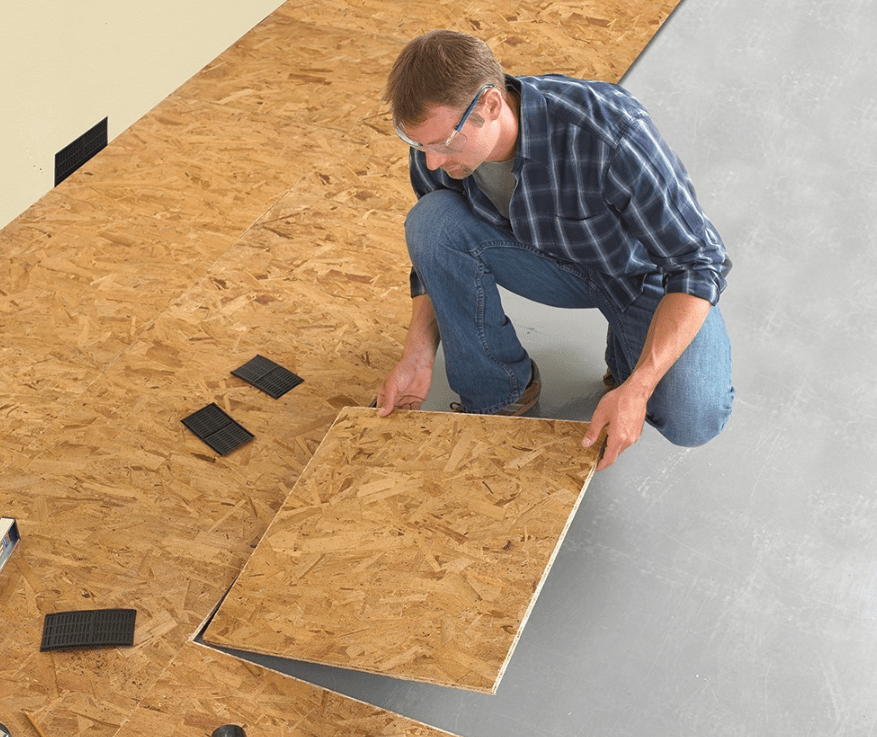
Q. My clients want to use as living space the new walkout basement of an addition I’m building for them, but they’re concerned about potential moisture-related problems with the planned carpet flooring. I’ve proposed installing a layer of rigid EPS foam followed by a screwed-down plywood underlayment on top of the basement slab, but I’m also considering a product called Dricore, a subfloor system consisting of engineered wood panels that have a molded polyethylene membrane on the underside. Which approach would be better at controlling condensation on the cool slab floor?
A. Paul Fisette, director of Building Materials and Wood Technology at the University of Massachusetts Amherst and a JLC contributing editor, responds: In any basement, your primary design objective should be to control surface water, so designing a good drainage envelope on the outside of the foundation that incorporates subslab drainage should be a priority.
According to code and good building practice, you will also need to insulate (either on the outside or inside) the basement walls. Then you can direct your attention to the floor.
While I have no personal experience with Dricore (see photos, left; 866-767-6374, www.dricore.com ), it seems like an effective approach, provided that the basement has a good moisture-control system in place and the installed cost works for the project budget. Rigid foam with a plywood flooring underlayment might supply better insulation and be cheaper to install than the Dricore panels, but you’d lose a little bit of headroom.
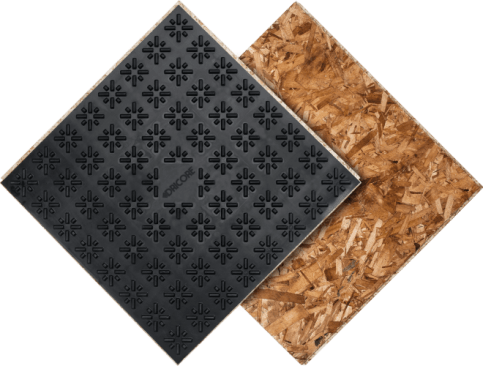
AGT Products
Dricore subfloor panels have a high-density plastic bottom. Other Dricore panels have EPS foam bottoms that reportedly provides R-2.7 or R-4, depending on the product.
However, if the house you’re working on is still in the planning phase, the best approach is to insulate underneath the slab: First, install a 6-inch layer of crushed stone in the bottom of the excavation, then cover it with a sheet of 6-mil polyethylene and at least 1-inch-thick rigid-foam insulation. The concrete slab is then poured directly on top of the foam/poly layer.
This arrangement will keep your slab on the warm (conditioned) side of the envelope, making condensation less likely to develop on the slab. The carpet pad and carpeting can then be installed directly on the concrete slab, without the additional expense of an interior foam/sleeper/underlayment system.


