Stabilizing Basement Walls with Steel
I-Beams, continued
When my holes are ready, I set an I-beam in each. I place each
I-beam tight against the wall, hold it plumb, and brace it in
place with a 2x10 block or a piece of 3x3 1/4-inch angle iron,
lag bolted into the joists above (Figure 4). The I-beam
contacts the wall wherever the wall is farthest out (usually in
the middle for block walls and at the top for poured
walls).


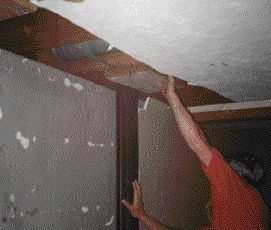
Figure 4.A worker braces the top of an I-beam
tight against the top of the leaning wall (top). The 2x10 brace
is fastened to the existing floor joists using 3/8-inch lag
bolts sunk into predrilled holes (bottom). Three-inch by
three-inch angle iron can be used instead of the 2x10 block.
This step is easier with two people -- one to hold the I-beam
and block in place, and one to set the lag bolts.
The top brace connection varies depending on whether the
joists run perpendicular to the wall or parallel. Perpendicular
joists supply strong bracing -- a single 2x10 or piece of angle
iron spanning one joist bay is plenty. But a joist parallel to
the wall is oriented sideways to the force of the wall pressure
and can't handle the load by itself. In that case, I place
solid blocking into the joist bays for three or four joists
back from the wall, then lag a 2x10 into the joists under the
blocking (Figure 5). This transfers the load of the I-beam into
the whole floor system instead of dumping it all onto the side
of one joist.


Figure 5.For bracing perpendicular to the floor
joists, the author places solid blocking into at least three
joist bays and lag bolts the brace to each of the joists
directly under the blocking. The joist nearest the beam could
not do the job on its own without this
arrangement.
When my beams are pinned at the top, I plumb them up and brace
them into the holes at the bottom. It's tricky to hold them
still while you grout the bottom and the space between the
I-beam and the wall. After years of struggling with that, I
started bracing the foot of each beam into the hole with scraps
of wood (Figure 6). It's quick and easy, and the wood gets
buried in the concrete base of the pier.
Figure 6.The author braces the base of each I-beam
in place with small blocks of wood. The wood blocks will be
encased in the concrete pier base when the hole is
grouted.
Next I grout the space between the I-beam and the wall with
stiff concrete (Figure 7). I mix a batch of sack concrete in a
wheelbarrow (dry enough to make a firm ball in my hands), put
on some rubber gloves, and just pack it into the gap and
whittle it smooth. That provides solid support for the wall
from floor to sill.
Figure 7.A worker grouts the entire space between
the I-beam and the wall with stiff concrete to provide full
support for the wall. Excess grout is smoothed away for a clean
finish (see photo at beginning of article).
Finally, I fill in the hole at the base of the I-beam, locking
it into the earth and the existing slab (Figure 8). That makes
the whole assembly one continuous, solid structure. In the six
years I've been doing it, I've never seen one of these I-beams
budge a millimeter.
Figure 8.The hole is filled with stiff concrete to
embed the I-beam firmly into the slab and subbase. The surface
is troweled level with the existing slab.
All I've described here is the wall stabilization. Many of
these basements also need exterior waterproofing or an interior
drain and sump system. As long as the water problems have been
dealt with, the basement space can be finished any way the
homeowner wants to once the I-beams are set (Figure 9). There's
no need to leave access to the I-beams -- they can be simply
painted, or boxed in and buried.
Figure 9.The completed I-beam installation (top)
supplies reinforcing for the wall from footing to sill at 3 to
6 feet on-center. In the example below, the author then applied
fiber-reinforced plastic panels to the basement walls. The
basement is now ready for further finishing.
Costs and Scheduling
Jobs that require excavating call for careful estimating.
There are dozens of factors to keep in mind -- access,
proximity to neighboring homes, attached steps or other
structures, landscaping, and possible low overhangs that can
impede the excavator, to name a few.
But estimating a basic wall stabilization job is simple. Given
a typical 30-foot wall to brace, I know I can break out the
floor, dig the holes, and place the seven or eight beams that
are needed in one day. I know it will take half of a second day
to do all the grouting and clean up.
The only materials costs are for the beams, grout, lag bolts,
and wood or angle iron for top bracing -- which comes to about
$50 total in materials for each 8-foot I-beam I install. I
price jobs to the homeowner for about $200 to $250 per beam,
which covers labor, overhead, and profit.
For small jobs, I don't take a deposit. I just put the house
on my schedule and call the owners a day or two before I start.
Once I do start, I stay on the job until it's done; when I
finish, they can pay me with a check or credit card. With this
arrangement, I don't feel under pressure if I'm a day or two
late getting started.
These small jobs often lead to larger jobs. Many of the people
whose basements I've fixed will call me back later to finish
out the space, or to do some kind of exterior grading or
concrete work. And they often refer me to their friends as well
-- I get most of these jobs through word of mouth.
That's especially true of the homeowners who like to watch.
Some homeowners don't want to know what we're doing, as long as
we get it done. Others will pull out lawn chairs, pack a lunch,
and sit and watch us for the whole time. Every few minutes, I
find myself stopping to explain what we're doing and why. But
that doesn't bother me a bit -- the way I figure it, that makes
them a little more educated. And it also means that when I'm
done, they're that much more likely to refer me to someone else
who needs my help.
Dave Cunningham is a remodeling contractor based in
Independence, Mo.