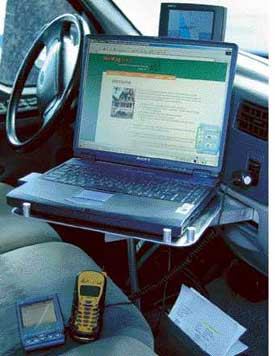
Almost 25 years ago to the day — in October of 1982 — I finally graduated from Newbie Remodeler U and began building my first start-to-finish new house for a paying customer (even if it was my sister). Reliable job-site information was hard to come by in those days, so when one of my fellow workmen pulled out a dog-eared newspaper called New England Builder, I couldn’t subscribe fast enough. It was the first publication I’d ever seen that had real information for builders about what did and didn’t work, written and distributed by people who were actually doing it.
What does my subscribing to NEB in 1982 have to do with you being a “connected contractor” in 2007? Ironically, quite a lot. In 1982, Mike Reitz, the original publisher of NEB/JLC, was a contractor in rural Vermont who was having the same kinds of problems finding information that I was having in rural Pennsylvania. There was no Internet, of course, but the ideas of “collaboration” and “community” were definitely incorporated into those early issues of the magazine, as they are today. And if there had been an Internet in 1982, I’m pretty sure JLC would have started as a community portal/social networking Web site, more on the order of today’s www.jlconline.com.
JLC was born (give or take a couple of years) around the time that the three devices we’ve long considered to be the “holy trinity” of home-builder technology started gaining widespread acceptance: the cellphone, the fax machine, and the personal computer. But until very recently, if builders wanted to take advantage of PC technology, they had to build and maintain their own island of hardware, software, and networking. That required learning a new trade — IT management — or hiring third-party help.
That is no longer true, largely because of all the resources available online. And so for this 25th anniversary retrospective, I’d like to add a fourth element to the builder-technology trio: the Internet.
The Pervasive Internet
The PC, the cellphone, and the fax machine certainly changed how we all did business in the ’80s and ’90s, but today’s Internet is even more influential — it’s changing the very nature of our business, from how we communicate with customers, subs, and suppliers to how we research products and manage our projects.
The small-business servers and local area network (LAN) desktop applications like SoftPlan, Microsoft Office, and QuickBooks are far from dead, but now, thanks to the Internet circa 2007, they’re all optional. As more and more kinds of applications become available online, much of the hassle of using technology has been pushed up into the Internet cloud, and the issues of hardware and software maintenance, backups, and file synchronization have been greatly reduced. Today’s newbie remodelers might never purchase a piece of software, electing instead to use only Web-based or shareware applications they find online.
The Dot-Com Boom — and Bust
It’s hard to believe, but what we now call the dot-com boom began 10 years ago. That’s a long time in technology years, yet builders and remodelers are still worried about the perils and limitations of working online, as if we were all still stuck back in 1997. Back then, broadband (fast) Internet access was almost impossible to find, there were very few standards for how applications would work online, and security was questionable at best. And for the record, there were a lot of really bad online applications for builders that ended up only wasting our time. It’s no wonder that when the bubble finally burst in 2000 or so, many builders were left skeptical of the Internet.
But one company had a big — make that gigantic — dot-com idea that, if it had succeeded, would have fundamentally changed how builders did business with their suppliers. BuildNet wanted to eliminate much of the inefficiency in the materials supply chain by letting builders use its software coupled with the Internet to peek directly into a supplier’s real-time pricing and inventory, place a paperless order, and take delivery at the job site with a bulletproof paperless electronic trail.
But the industry wasn’t ready for the idea, the technology wasn’t there to support it, and the company made quite a few dot-com bloopers that eventually sent it circling the drain. Still, the underlying concept provided a glimpse into the future, revealing how the building industry could directly leverage technology the way other industries had been doing for years. If somebody tried launching a similar company today, the outcome would be different.
Back to the Future
I was thinking about BuildNet a few weeks ago when I stopped in at a locally owned lumberyard to get a price on some deck hardware. This outfit was one of the first businesses in our area to put in a computerized invoicing and inventory management system — cutting edge in the early ’80s. As I rolled up, I was shocked to find the parking lot empty and the buildings looking run-down. Inside, it was still 1985, with the same monochrome point-of-sale terminals churning out the same three-part invoices on the same dot-matrix printers.
After a painful 20 minutes spent shuffling back and forth between a computer terminal, a three-ring binder, a telephone, and the warehouse, the man at the counter still could not find a price. “Someone from the factory will call us tomorrow,” he told me.
I couldn’t help thinking as I thanked him and left empty-handed that my old supplier, once the pride of the area, was already out of business — they just didn’t realize it yet. Similar operations in the region — some more than 100 years old — had already been forced to close their doors, because the builders they served could no longer afford to wait for “the factory to call back tomorrow.”
Back in my truck, I fired up my laptop and mobile broadband connection, and after a couple of minutes on www.lowes.com I had my answer. A few minutes more, and I had the hardware I needed heading to my door. It’s not just the big boxes that are going online, either: In nearly every part of the country, you’ll find forward-looking local and regional suppliers making it easy for builders to do business with them on the Internet.
Ultimately, it didn’t take a BuildNet to give builders centralized purchasing capability — just a decentralized grass-roots effort.
The Role of Technology in Business
Historically, technology has played one of two roles for businesses. Sometimes it’s a supporting player — one that makes getting a product or service out the door a little easier. Your cellphone, fax machine, and PC are all convenient helpers, but if you had to, you could probably build just as good a house without any of them, though it might take longer or require more manpower.
Other times, technology is a major player, contributing directly to the so-called value chain of the product or service in question. Try making a sheet of OSB, an engineered I-joist, or a slab of quartz-countertop material without the factory’s computer-guided equipment. You couldn’t do it, no matter how much time or how many laborers you had available.
If you look at how builders, remodelers, the trades, and suppliers have used technology up until now, you’re apt to find a “take it or leave it” attitude like the one I observed during the visit to my old lumberyard — definitely not very forward-thinking, but understandable given that until recently, most technology in our industry has played a supporting role.
Better, Faster, Cheaper
But when it’s used in both roles — directly, to lower the cost of goods sold; and indirectly, to reduce overhead and save time — technology can be the final frontier in profitability for a builder. Here are some working examples of builder/remodeler technology directly impacting the bottom line — and they’re merely the tip of the iceberg.
Customer relations management (CRM) and vendor relations management (VRM) databases create a corporate “memory” that outlives any individual employee. You shouldn’t have to start over from scratch with a client just because an employee leaves your company, and your warranty technician should be able to “see” what happened to that customer’s account from the first sales contact through construction. This keeps everyone in the company on the same page, and ensures that the customer gets seamless service — which, in turn, results in better referrals.
Industry stats confirm that builders with CRM and VRM systems are able to leverage referrals and slash marketing costs by — on average — 1 percent to 2 percent of annual volume. For a $1 million annual volume, that could be worth $10,000 to $20,000.
Job-site Webcams can give your superintendents eyes in the back of their heads, letting them run more projects that are geographically farther apart. All other things being equal, every additional job one super can handle adds that percentage of his or her salary back to your bottom line.
Computerized accounting, purchasing, and scheduling systems can enforce best practices for product installation and job-site safety, plus help control direct costs by limiting price increases. A good purchasing system can save 5 percent to 10 percent in direct costs on every job, or $5,000 for the typical $150,000 project.
Mobile communication technology such as camera phones, e-mail, and instant messaging can solve issues in the field in minutes instead of days or weeks. Every day saved in cycle time is worth approximately $250 or more to the average builder, not counting opportunity costs.
Project collaboration Web sites provide a single, centralized place where everyone can go to view schedules, specifications, project documents, and photos. Considering that reworking a major project can cost thousands of dollars, and that a special trip to a supplier to swap the wrong product for the right one can shut a job down for a day, it’s easy to see how such a site would pay for itself.
Also, builders can participate in product-rebate programs and track them online. If the CRM/sales system can support those products directly, there’s no administrative overhead to offset the additional profit, which can add up to several hundred dollars per project.
In 2032, for JLC’s 50th anniversary retrospective, we’ll look back at this period as the time when technology moved from being a supporting character to becoming an essential part of producing and maintaining American housing. In its expanded role, technology will affect how buyers expect to do business with their builders, suppliers, and trades — and it will help construction pros manage the mountain of data they’ll be expected to maintain about the projects they build. Building-industry stakeholders who are unwilling to embrace technology the way other American industries have simply won’t be able to compete.
Watch Commercial Construction
Many of the technology trends we home builders see today got their start years ago on the commercial side of the business, where the project time lines are substantially longer and the dollars and risks are substantially higher. Big projects like airport expansions and road construction have been managed start-to-finish with computer technology — though not necessarily PCs — for decades, and with Web-based applications almost from the day they were available.
I remember attending an A/E/C Systems trade show in 1998 and seeing literally dozens of Web-based collaboration systems, many of which already had substantial user bases and major projects running through their veins. But it wasn’t the architects or GCs driving the trend online — it was the project owners. Those municipalities, companies, and individuals understand all too well that the design and construction of a project represents only a small fraction of its life-span cost (5 percent to 7 percent), but the information generated during that early phase affects the owners’ ability to manage and maintain the project forever.
Housing is no different. Until now, most builders have just been ignoring the other 95 percent of the house’s life cycle. It might take a year or two to design and build a house, but someone will have to deal with its maintenance and upkeep for decades after the builder is out of the picture. And every time the property changes hands, certain issues will resurface. Just like today’s commercial-project owners, tomorrow’s homeowners will demand that their contractors deliver not only the project they bargained for, but also information about everything in the house — which they’ll want maintained online, so they can always access it from their “my house” Web site.
Smart builders will see the wisdom in managing such information long after the job is complete, because down the road it will help them weed out poorly performing subs and products and increase dependable referral business — thereby lowering marketing costs. Tracking project performance from before the cradle to after the grave also keeps the door open for additional revenue streams from those same buyers: Handyman/maintenance services come to mind right now, but as it becomes easier and easier to use the Internet to maintain relationships with buyers, dozens of other opportunities will crop up, too.
Meet the New Boss
Builders and remodelers who have spent their careers working for the nontechnical baby-boom generation or even for Gen Xers are in for a rude awakening. There are 75 to 100 million young people — depending on when you start and stop counting — who are going to enter the housing marketplace over the next decade, making them the largest slice of the U.S. population since the boomers. They’re tech-savvy, and they’re going to expect their builders to be right there with them, online.
Today’s college seniors are on the leading edge of what has been termed Generation Y — or more accurately, Generation Why: Why can’t they buy their house online? Why can’t they log on to their furnace from their phone to see when the filter was changed? Why can’t they see the new sunroom you designed for them, superimposed on their property map in Google Earth?
Gen Yers have never known life without the Internet and e-commerce, and they spend large blocks of time online every day. Their impact on home builders will be substantial: They don’t watch television, listen to the radio, or read newspapers nearly as much as their parents or older siblings, so the standard types of marketing and advertising that builders have used for decades will not be effective with them.
At the same time, word-of-mouth and referral business will become more important than ever. Gen Yers rely largely on online social networks and peer review to gain information about the products and services they purchase, and they’re not afraid to publicly praise companies they like to do business with and publicly expose companies they feel have treated them unfairly or that have provided misinformation during the sales process.
They use cellphone cameras and instant/text-messaging systems to communicate with large groups in near-real time. They communicate continuously, a little at a time (think text messages or blog entries) instead of through weekly phone calls or magazine articles. They will probably have fewer children than their parents; and because they’ll travel more, they’ll expect to be able to monitor the mechanical systems in their homes online and initiate warranty-service requests from their “my home” consumer Web sites.
Gen Y buyers will also be looking for greener, more sustainable construction; higher-end finishes; and built-in home technology — plus the ability to track items in the house for LEED (Leadership in Energy and Environmental Design) certification and energy usage.
And remember, Gen Yers are not just your future customers; they’re also your future employees, and the employees of all your subs and suppliers. Learning to operate in their technology realm will not be optional for builders (or any other business), and those who can’t will eventually be pushed out by those who can.
Update your sales savvy. I don’t see builders firing all of their salespeople or real estate agents tomorrow morning, but I do see those salespeople (and that means you if you do your own selling) needing to be much more knowledgeable — true product experts rather than just greeters or order takers. Gen Yers will start their new home or remodeling search online, spend weeks or months researching every conceivable aspect of the project, and then show up at the builder’s office or sales center armed and dangerous, expecting to continue the process online.
The Roaring 2010s: Just Do It
If the ’80’s and ’90s were the age of desktop computing for builders, and the 2000s are when the Internet takes center stage, what will it take for today’s JLC reader to gear up for the next decade? Honestly, not much. Just do it. Technology is getting easier, more mobile, and less expensive every day. Unless you’re a hardcore computer gamer, it’s actually tough to find a new computer for sale today that won’t run the applications most JLC readers need.
In the ’80s, I had the financial equivalent of a nicely equipped F150 SuperCab 4×4 tied up in computer gear and software that basically amounted to a glorified typewriter and desktop calculator. Today, my entire office consists of my cellphone, a multifunction printer/scanner/fax, and a $600 reconditioned laptop (purchased on eBay).
Here are a few more guidelines for the connected contractor of 2007 and beyond:
Hardware. If you rely on Web-based applications, it stands to reason that you need to get online reliably. Desktop computers are still tethered to your office, but this is a mobile business and I recommend that all builders get themselves a good laptop (or convertible tablet PC) with a reflective screen that’s readable outdoors. This gear doesn’t have to be expensive — back-to-school ads abound with deals on capable laptop computers hovering in the $500 range. For that price, you may have to add another stick of memory, or RAM, ($100) and you’ll probably get a home — not business — version of the operating system.
Whether you opt for a thin-and-light laptop or a larger desktop-replacement machine depends on personal preference, but I find the convenience of a small, light computer with excellent battery life to be well worth the tradeoff of smaller screen size. You can always plug into an external monitor if you need a larger display. New LCD screen technology will soon push battery life beyond eight hours on some machines (but always buy a spare battery and a spare charger anyway).
Mobile broadband. If you rely on Web-based applications, you have to be able to get online no matter where you are. For that kind of access, nothing’s more convenient than a cellular mobile broadband — also called a wide area network (WAN) card — though it’s expensive ($600 per year on average for service). Some laptops are showing up with WAN cards built in, but beware: They’ll support only the carrier or service they’re affiliated with. A built-in Sprint card, for instance, can’t dial up to the Verizon network.
It’s still the network. Back at the office, you may no longer need the hassle of a true Windows server if you’re using Web-based applications — but you’ll still need the same reliable network to share a broadband Internet connection. Cabling that adheres to the Category 5, 5E, or 6 standard, a secure WiFi access point, and a reliable hardware fire wall are must-haves.
A $50 WiFi router from the local big-box store will get you (and all of your neighbors, if you’re not careful) online, but consumer gear can’t recover from dropped connections and is more likely to create a performance bottleneck or security hole. Invest instead in a true small-business router/firewall/access point, such as the SonicWall TZ series ($600 to $800 street price; www.sonicwall.com), which keeps wired and wireless networks safe.
Joe Stoddardis a technology consultant to the building industry. He moderates the JLC Online computer-solutions forum.