
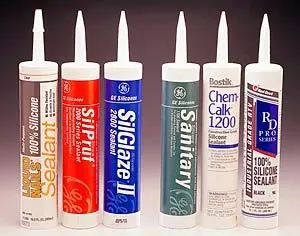
Read the label on a tube of caulk and it’s likely to promise the world: “50 years,” “lifetime durability,” “guaranteed.” Superlatives abound, exclamation points are in order. “Exceptional adhesion,” “permanent flexibility,” “all purpose.” Flip the tube over and read the small print, however, and you’ll find that the warranty is practically worthless because it only covers replacement cost for the caulk itself. The stakes are a lot higher than that if you’re relying on caulk to seal out the weather on a new home or remodel. Faced with a shelf displaying ten different products, each claiming “superior performance” and “adheres to most surfaces,” how do you choose? Researching this article was a chance to retest my old prejudices and preferences, and see how the new formulations compared with the products I used seven years ago when I was still in the trades. I went through almost 50 tubes of sample caulks on a variety of substrates. I concentrated mainly on the high-performance caulks — the ones designed for moving joints and that meet the ASTM C-920 standard (see “”). In the end, my own simple testing did far more to inform me than all of the hours spent talking to technical experts. I formed definite opinions that would influence my buying if I had to caulk a joint tomorrow.
Caulk Not a Cure-All
Before you buy a tube of high-performance caulk, ask yourself why you’re buying it. Is the caulk your main line of defense for keeping out the weather, or do you have some backup protection underneath? Caulking is not a substitute for proper flashing and weatherproofing. For example, no amount of caulking will make a vinyl siding job waterproof — that’s the work of the building paper underneath. Before you buy into the hype and expect a caulk to provide a “permanently flexible, watertight seal” that will “last a lifetime,” stop and think about those warranties.
Caulk Basics
All caulks are formulated starting with a base polymer, sometimes called the “backbone polymer.” To this polymer are added assorted ingredients, including fillers, plasticizers, solvents, adhesion promoters, UV absorbers, pigments, and curing agents, among others. The proportions and types of additives are varied depending on the properties the sealant needs and the various substrates it needs to stick to. The backbone polymer gives a certain identifiable character to the caulk; the additives change the performance in various ways, depending on the manufacturer’s intent. One polyurethane formulation may have increased hardness for use as a pavement control joint, where it will get walked over by high-heel spikes; another one may have increased flexibility but may be softer, making it better for vertical joints where a lot of movement is expected. But both products will exhibit essential polyurethane qualities. There are four polymer types used to manufacture most high-performance caulks: silicones, polyurethanes, latex acrylics, and the solvent-based “block copolymers” — synthetic rubbers, of which Shell’s Kraton is the most popular.
Making Sense of Silicones
Next time you’re walking downtown, look up at one of those sleek glass-clad skyscrapers and consider this: Those huge glass panels may be resting in their frames restrained only by beads of silicone sealant. It’s a scary thought, especially on a windy day. But it’s a testament to the strength of the so-called structural silicones developed for high-rise curtain wall construction — applications that go far beyond the demands of residential construction. Yet the silicones that are available to builders and homeowners have trickled down from the commercial market, and share many of the characteristics of those super-silicones. It’s no wonder that silicones are often touted by caulk companies as “top of the line” and that many builders look for “100% silicone” on the label when they want the best.
Silicones come in two types: neutral cure (the three on the left) and acid cure (the righthand three). Performance varies between the two types, but manufacturers don’t always make the distinction clear. But descend from the world of high-rise structural glazing, and “best” becomes relative. Silicones don’t always live up to expectation in the messy world of home building and remodeling.
No paintable silicone.
For one thing, silicones won’t hold paint — a huge strike against them. Tech support reps for silicone sellers like to say this is because the paint is not as flexible as the silicone, so it breaks down and falls off (in other words, blaming it on the paint). Common sense and experience suggest that the paint just doesn’t stick. In fact, silicone giant GE seems to be giving up the quest for a paintable silicone: For paintability, they’ve added acrylic latexes to their new consumer product line. There are still some paintable silicones on the market, but they’re probably not worth the trouble.
Acid cure vs. neutral cure.
Silicones also seem to be choosy about what they’ll stick to. One issue is that silicones come in two types: acid cure and neutral cure. Acid-curing silicones, which produce acetic acid as the rubber cures, can corrode metal and etch some plastics. Unfortunately, the manufacturers don’t often make the distinction clear. If the tube lists chemical ingredients, look for the word “acetoxy.” If you use a silicone and your eyes and nose get assaulted by the Vinegar from Hell, you’ll know you’ve got an acid-cure. Generally, acid-cure silicones work best on nonporous surfaces like glass, glazed tile, and unfinished aluminum. With most other metals, including anodized aluminum, you should avoid acid-cure silicones (unless you’re willing to locate and apply the right primer). The neutral-cure silicones I tested stuck well to both aluminum and galvanized steel, while one acid-cure peeled right off of the galvanized. The neutral cures also adhered moderately well to wood while the acid cures stripped easily. In general, none of the silicones I tested adhered to wood as well as the other types of caulk, with the exception of GE’s Silpruf.
Dirt and staining.
Silicone caulks pick up dirt by electrostatic attraction. They are also known to stain stones like marble, limestone, and light-colored granites, as well as light-colored concrete. Silicones have the reputation of not sticking to concrete and masonry. The samples I applied to porous concrete and brick bore this out.
Workability.
Silicones are messy to work with. Unfortunately, it is usually recommended that they be dry-tooled. In other words, you shouldn’t use water or a soapy solution on your finger or whatever it is you like to tool with. On the plus side, silicones have an amazing application temperature range — from -35°F to 140°F, making them a good cold-weather choice. Their service temperature range is even greater — from -80°F up to 400°F in some cases. Silicones are the sealant of choice for sealing around metal chimneys; high-temperature formulations are available with service temperatures up to 500°F.
Applications.
If you can get a silicone bead to stick where you want it, you’ve probably got the best seal you can get. No other sealant has the long-term UV and weather resistance, nor the strength. This is a two-edged sword, however. If you’ve ever had to separate a sink that was bedded in silicone from the countertop beneath, you know what I mean. When you use silicone that way, think “permanent.” Also, once you’ve used silicone on a surface, you’re committed to silicones. No other sealant will stick to the oily residue left behind, assuming you can clean the bead off. Until recently, there was no known solvent for silicone. Now a company called Amtex (800/562-6839) makes what it claims is a nontoxic solvent for cleaning either cured or uncured silicone. The stuff’s not cheap — around $27 a quart — but it may be worth trying if all else fails. Silicones are popular in kitchen and bath applications because of their water resistance and superior adhesion to nonporous surfaces. Also, being inorganic, silicone doesn’t support mildew growth, though the additives might. Because of their UV resistance, silicones are great for special glazing applications, especially glass-to-aluminum joints (keep in mind that you may need a primer with other metals). And given their excellent flexibility, silicones are the sealant of choice for EIFS manufacturers, many of whom specify Dow Corning 790, which is available in 13 colors. Primers are often required. Although “window and door” silicones are now being marketed, be careful: If you use silicone around a window or door installation that’s later going to get painted, you might make an enemy of the painter.
Polyurethanes
Polyurethanes are favorites of masons. They stick well to most kinds of masonry without a primer and don’t have the staining problems associated with silicones. In fact, polyurethanes stick reliably to just about everything. This makes them an ideal choice for joints between dissimilar materials — wood to masonry, metal to wood, and so forth. In the adhesion tests I ran, the polyurethanes showed better adhesion in every case than any of the other caulks. In most cases I could hardly get my fingernails under the bead to pull it up. Polyurethane excels as a rugged outdoor caulk. It’s particularly useful in masonry joints and for joining dissimilar materials. Polyurethanes have typically been hard to come by for builders and remodelers who buy through retail lumberyards. This is changing, however, as more and more caulk companies add urethanes to their product lines. ChemRex’s PL line of polyurethanes is even available in Home Depot. One of my favorite products, Sikaflex, is available by credit card in any quantity directly from Sika. Polyurethanes can be applied down to 20°F, depending on the product. They are relatively stiff out of the tube, and can be tooled nicely with a plastic spoon. Sika allows wet tooling with a soapy solution, though many polyurethane manufacturers recommend against it. Since polyurethanes cure by exposure to moisture, wet tooling can facilitate cure in dry climates. Polyurethanes have a typical shelf life of one year, after which they get so stiff in the tube they can’t be gunned. Geocel’s polyurethanes cure by exposure to oxygen instead of moisture, and have a two-year shelf life. Polyurethanes are not naturally UV resistant, but are formulated with UV absorbers to give excellent resistance. They will not corrode metal, and are ideal for general caulking on metal roofs. Like silicones, polyurethanes shrink very little during curing. They come in a limited number of colors, but can be painted after cure.


