
by Charles Wardell
“Twenty years ago, if you were building on the beach, you put in a leach field in the sand and got it permitted whether it worked or not,” recalls Larry Zucchino, a development planner for coastal properties with J. Davis Architects in Raleigh, N.C. “Most municipalities only worried about where the well was.” No more. As America has become more environmentally conscious, states and towns have placed septic systems under closer scrutiny, especially in sensitive coastal areas. And as communities look for ways to grapple with burgeoning populations, wastewater regulations have become a way to limit development.
To complicate things further, builders and developers working near the shore often have to deal with small lots. And because septic systems are land eaters, more developers and builders are turning to a growing class of systems known as alternative treatment units, or ATUs, that take up less space and have cleaner output than conventional systems.
These systems have pros and cons for the builder. On the plus side, an ATU might give a builder more choices in how to use a lot than a conventional system would. On the other hand, the added expense can tax the budget. “You have to understand the environmental and wastewater issues before you can understand how to develop a property and determine whether it’s economically feasible,” says Zucchino. “You have to understand what the treatment options are in your area.”
CONVENTIONAL SEPTIC SYSTEMS
A standard septic tank (top) and leach field (bottom) rely on lots of land and lots of aerated soil to adequately purify a home’s wastewater. Neither land nor such soil is available in many coastal communities, which is driving more municipalities to alternative systems.
CHEMISTRY PROJECTS
Think of a septic system as a small chemical plant. In it, microorganisms slowly clean the water by eating the bad stuff. Different sets of organisms take care of the solid waste and the liquid effluent, and because each type thrives in a different environment, a well-designed system will create optimal environments for each.
Every system uses a combination of aerobic (oxygen-using) and anaerobic (non-oxygen-using) organisms. Anaerobic bacteria grow in the septic tank, where they eat up the feces, food particles, and other organic matter. Their job is to decompose these solids, thus constantly reducing the volume. Anaerobics are the reason the tank doesn’t fill up a lot faster than it does. “A septic tank is a big settling basin,” explains Craig Stead, president of Water Engineering and Technology in Putney, Vt. “Solids drop to the bottom, so what flows out is mostly soluble material.”
While solids sink to the bottom of the tank, liquid wastewater, or effluent, flows out of the top to the leaching field. There, aerobic bacteria (as well as other microorganisms) feed on it, cleaning it further. “In a leaching field, you get a slime layer called a biomat,” says Stead. “It’s basically a bunch of happy bugs that sit there and munch up the contaminants. What comes out the bottom of the stone bed is pretty clear water.”
The strength of that effluent is expressed as biochemical oxygen demand, or BOD. Technically, BOD refers to the oxygen needed by the organisms in the system to break down the sewage. The greater the oxygen demand, the stronger the sewage. The lower the BOD number, the cleaner the effluent.
Another concern is the amount of nitrate put out by a conventional system. Human waste contains organic nitrogen, which is converted to ammonium by the anaerobics in the septic tank. This ammonium is carried by the effluent to the leaching field. There, the aerobic bacteria turn it into liquid nitrate, which is released to the surrounding soil.
If ingested, liquid nitrate can make humans and animals very sick. On the other hand, algae love the stuff, and if too much nitrate enters a confined body of water, it will spawn algae blooms that suck the oxygen out of the water, causing fish kills and dead shellfish beds. While jurisdictions might not see a nitrate increase as a concern on a beach, they are likely to if there’s a high water table, or if the home is on an estuary or wetland. Regulations vary by location, but in general, more and more communities are focusing on nitrogen removal, according Bob Smith, an engineer with Orenco Systems, a company that sells ATUs across the U.S.
ALTERNATIVE SYSTEMS
If the jurisdiction requires treatment to a higher standard than a conventional system can provide, you’ll need to use an ATU. These miniaturized versions of wastewater treatment plants are designed to reduce BOD in the effluent and, in some cases, to convert liquid nitrate to nitrogen gas before the effluent flows to the leaching field. While ATU technology is still in its infancy, there are already a number of models on the market, and they’re designed to work in different environments and to clean different contaminants. Some are installed between the tank and the field, while others replace the tank but include separate compartments for decomposing solids and cleaning the effluent (see “ATU Choices”).
THE ATU
An alternative septic unit, such as the SeptiTech Model M400 residential system, can be used to reduce the size of the leach field by treating the effluent first. Rather than just a settlement tank and pumping station, a Fast system includes a media filter on which microorganisms that digest the waste live.
If you’re building near the beach, it’s likely that ATUs will be in your future, if they aren’t already. Many of the new homes on Cape Cod in Massachusetts, for example, are required to have alternative systems, according to George Heufelder, health director for Barnstable County, Mass., who also oversees the Massachusetts Alternative Septic Systems Testing Center (www.buzzardsbay.org/etimain.htm). “There are 800 such systems on the Cape, and we expect a lot more in the next few years unless towns embrace comprehensive wastewater management.”
The effluent coming out of an ATU is orders of magnitude cleaner than that from a conventional system. Effluent from a conventional system might include 200 to 250 parts per million (ppm) of BOD, 30 to 50 ppm of suspended solids, and 50 ppm of organic nitrogen. By contrast, the SeptiTech system — one example of an ATU — lowers BOD to 10 ppm, solids to 5 to 10 ppm, and organic nitrogen to 2 to 5 ppm, says Dan Ostrye, SeptiTech’s vice president of product development. “In an alternative system, the leach field is a way to get water back into the ground.”
Systems can be tweaked to provide different types of treatment, whether it’s removal of nitrogen or removal of phosphates. (Phosphates are compounds used in detergents and other household cleaning products. They are added to soften water and break apart dirt in fabrics. They also promote plant growth, which is why they are used in fertilizers, but in an effluent they can stimulate algae blooms and are to be avoided near waterways.) “The most powerful thing about the new technologies coming out now is the fact that you can be flexible and use whatever works best for the particular environment,” notes Steve Barry, an ATU distributor in Wilson, N.C. “It really helps for developer and builder to be able to do with a parcel of property what they want to do.” In fact, because the effluent from these systems is so clean, builders may be able to install a much smaller leach field. This gives more flexibility in house placement, leaves room for a backup field, and if the site has difficult soils, it can reduce the amount of soil that needs to be trucked in. Or, at least, leach field reduction is possible in theory. In reality, it varies by state. Heufelder reports that, in Massachusetts, builders need to show that a full-size system could have been installed. “You can’t use these systems to make an unbuildable lot buildable,” he says. Other states allow varying degrees of reduction, so it’s important to check the regulations.
FIXED-MEDIA SYSTEM
In a fixed-media system, liquid effluent, which has already settled for a time in a processing tank, is pumped over a media filter, and microorganisms digest the effluent as it trickles through the filter. The key to the system is creating a home for enough organisms to treat the effluent quickly and in a relatively small space. One example — the AdvanTex system — consists of a pumping station (below one of the fiberglass cylinders, top left) and a fiberglass basin (center rectangular box) filled with a porous textile filter (shown in the open basin, top right). In the finished installation (bottom), the filter, pump, and inspection covers sit flush to the ground, blending into the landscaping.
ATU CONSIDERATIONS
Different ATUs are appropriate for different locations. Variables include not just soil type but also temperature. “Just because a system works in Florida doesn’t mean it will work in New York or New England,” notes Heufelder. “All systems depend on bugs and all bugs work by temperature. When temperatures fall below about 50°F, bugs go to sleep.”
ATUs are also pricey. While a conventional septic system could cost $3,000 to $8,000, an ATU will be at least $10,000 and likely closer to $15,000 or more. Dennis Hallahan, P.E., technical director at Infiltrator Systems in Old Saybrook, Conn., says he has seen costs as high as $30,000 on difficult sites where fill needed to be brought in because of the high water table.
All ATUs require electricity to run a pump. But that doesn’t mean you can’t flush the toilet if there’s a power outage. “If power goes out, you have three to four days of storage time. “Mobile, Alabama, has been hammered by hurricanes in recent years. Most people in hurricane areas leave the area anyway when a hurricane comes. And most people have a generator. You only need to run the pump for a few hours every couple of days,” says Barry.
ATUs also need more upkeep than conventional systems require. A maintenance person typically has to come out twice a year to clean the filter pump and, if necessary, spray off excess sludge collected on the media. Most states require homes with these systems to have a maintenance contract.
THE FUTURE
The future of ATUs lies in more efficient treatment and better monitoring. Heufelder predicts that more and more systems will include remote monitoring and control, allowing the maintenance company to predict problems. “Say you have a pump that normally pumps 330 gallons in 5 minutes. If it suddenly starts taking 10 minutes, you ask what’s wrong. So you check the amperage and see that it is now drawing 9 amps instead of 3. You know that something is jamming the pump.”
SUSPENDED-GROWTH SYSTEMS
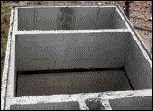
These systems work by bubbling air into the effluent to increase the oxygen available to the bacteria, which speeds up the organisms’ digestion. In the Fast system, for example, solids are trapped in a concrete settlement tank, while effluent flows to a second compartment (shown being lowered into place) with media suspended in it. An air blower located above the tank forces air into the central tube running through the media.
As coastal populations increase, systems will also have to get better at nitrogen removal. The best systems remove 19 milligrams (mg) of nitrogen per liter of water, but Heufelder predicts that will eventually need to get down to 5 mg. No system is rated for that yet.
Towns may also do more to encourage systems that serve clusters of homes. “Towns like shared units because they’re easier to keep track of,” notes Heufelder. Some homeowners like them because they can pay a monthly fee and not worry about it, while others don’t want to be tied to their neighbors.
LEACHING CHAMBERS
While ATU systems don’t always eliminate the leach field, they can reduce its size, and can be made even more efficient with the use of plastic chambers instead of stone. These Infiltrator chambers protect the biomat, while putting the effluent in immediate contact with the soil.
And look for more systems that use the cleaned effluent for irrigation and other purposes. This is already happening on large projects. In July, Zucchino got the site plan approved for Cannons Gate, a coastal development in Moorhead City, N.C., which is on the sound. Each of the development’s 500 single-family homes will have a septic tank for solid waste, along with a pump that sends the effluent to a central treatment plant. This in itself may not be unusual, but the way they’re handling the end product is. “We created a series of ponds,” says Zucchino. “That’s where the treated water will go.” What used to be a land eater has been transformed into an amenity. ~
Charles Wardellwrites about building science and technology from Vineyard Haven, Mass.
ATU CHOICES All ATUs try to increase the amount of aerobic organisms in the system, since more organisms will do more cleaning. Some systems increase their concentration by bubbling air into the effluent, while others use some type of media — from foam blocks to convoluted plastic shapes — to provide more surface area on which the organisms can grow. Several systems that are suitable for single-family use are described here. Which system is appropriate for a given location will depend on a number of factors, including soil type, climate, the type of contaminants that need to be removed, whether or not the system has been approved by the state and locality, and aesthetics. FIXED MEDIA In a fixed-media system (sometimes called a trickling filter), liquid is trickled over a media filter that’s home to the organisms digesting the effluent. AdvanTex. The AdvanTex system re-circulates sewage over a porous textile filter. A pump sprays effluent over the textile, and as it percolates through the filter, the microbes clean it. The pump kicks on for 45 seconds every 15 or 20 minutes, feeding the microbes a controlled diet. Effluent coming out of the bottom of the unit goes to a recirculation valve. Most of it recirculates three to five times before being sent to the leach field. For more information, contact Orenco Systems, Inc., 800-348-9843; www.orenco.com. Bioclere. The Bioclere sprays effluent over a stack of plastic media located inside a fiberglass tank. The media are shaped so that there’s a huge amount of surface area on which organisms can grow. A small fan feeds oxygen to the system. For more information, contact Aquapoint, Inc., 508-998-7577; www.aquapoint.com. Sand Filter. Many sand filters are custom-designed by the engineer according to guidelines set by the state. In most systems, effluent from a septic tank is pumped into a deep bed of sand, which serves as the media on which organisms grow. Depending on the system, the sand filter may be used in lieu of a leaching field, and in other cases it may serve as a treatment before the leaching field. The Ruck system requires that the wastewater flows be separated into black water and gray water. After the waste passes through a black-water septic tank, it flows into the Ruck filter: a multilayered, vented filter with alternating layers of sand and gravel. The filter varies in size and is designed based on expected flow. For more information, contact Innovative Ruck Systems, a division of North Coast Technologies, 800-659-7825; www.irucks.com. SeptiTech. This fixed-media system is managed by a programmable logic controller that manages the process and can be monitored remotely by a maintenance company. A pump sends effluent to the leach field in small, controlled doses, reducing the chance of clogging. For more information, contact SeptiTech, Inc., 207-657-5252; www.septitech.com. Waterloo Biofilter. This system uses 2- x 2-inch expanded foam blocks as a medium on which to grow bacteria. About half the liquid sprayed on the top of the filter bed is returned to the septic tank, while the other half flows to the leaching field. It can be installed above- or belowground. Total nitrogen removal exceeds 55%, while BOD is reduced by 95%. For more information, contact Waterloo Biofilter Systems, 519-856-0757; www.waterloo-biofilter.com. SUSPENDED-GROWTH SYSTEMS These systems work by bubbling air into the effluent, increasing the oxygen available to the bacteria. Combined with ample food from waste, the bacteria have an environment that encourages them to multiply rapidly and consume the waste more quickly. Cromaglass. The Cromaglass system consists of a lightweight fiberglass tank with grade-level access hatches. An 11- x 6-foot tank will serve up to six bedrooms. A discharge pump is used to dose the disposal field six times per day. For more information, contact 570-326-3396; www.cromaglass.com. Fast. The Fast system uses a “fixed activated sludge treatment” process to treat wastewater and remove nitrogen. Solids are trapped in a settling zone, while effluent flows to a second compartment with media suspended in it. An air blower forces oxygen down a central tube to the bottom of the media. As air flows up through the media, it carries the wastewater with it. The wastewater is recirculated many times. The only moving part is the air blower, which is located aboveground and is easy to replace if necessary. For more information, contact Bio-Microbics, 800-753-3278; www.biomicrobics.com. Jet. With this system, one unit with two chambers does anaerobic and aerobic treatment. Jet combines the aeration with plastic media that support the growth of aerobic bacteria. It can be paired with an optional sand filter. For more information, contact the distributor: Clearwater Recovery, 781-878-3849; www.clearwaterrecovery.com. Singulair. As with the Jet system, Singulair puts the anaerobic and aerobic treatment chambers in a single unit. Aerobic bacteria do their work in a pretreatment chamber. From there, effluent flows first to an extended aeration chamber and then to a synthetic filter system that filters out any solids that might have gotten through. For more information, contact Siegmund Group, 401-785-3110; www.siegmundgroup.com. LEACHING CHAMBERS Both fixed-media and suspended-growth systems often rely on plastic chambers in place of conventional pipe-and-stone leach fields. Since the chambers don’t require stone, the chambers put the effluent in immediate in contact with the soil. For more information, contact Infiltrator Systems, 800-718-2754; www.infiltratorsystems.com. |


