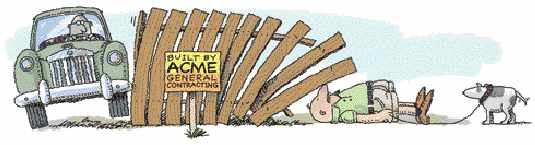
Say a GC signs a contract to build a fence for a homeowner. After the job is done, the homeowner hits the fence with his car but does not repair the damage. A couple of weeks later the fence falls on a neighbor who is walking down the sidewalk. Who is liable for the neighbor’s injury?
Most people would say the homeowner is liable — but that doesn’t mean the contractor can’t be drawn into an expensive legal battle. If he built the fence properly, his level of exposure will depend on whether the construction contract contains an indemnity clause and what the clause says.
What Is Indemnification?
An indemnification clause (also called a hold-harmless clause) allocates risk between the parties to a contract. Its purpose is to clearly state which party is responsible for which risk. If one party (the indemnitor) causes a problem and another party (the indemnitee) gets drawn into it, the first party agrees to be responsible for the problem on behalf of both.
In construction contracts, the contractor typically indemnifies the customer for the contractor’s defective work. In subcontracts, it is common for the subcontractor to indemnify the contractor for the subcontractor’s defective work. Contracts can also be written so that the customer indemnifies the contractor for problems caused by the customer.
Indemnification is necessary because in today’s world people don’t restrict themselves to suing the responsible party — they sue anyone who could possibly pay.
The attorney for the neighbor who was injured by the falling fence will tell him to sue not only the homeowner but also the contractor, the sub who painted the fence, and maybe even the lumberyard that supplied material for it. That way, if the homeowner can’t pay or the court says he is not liable, those other people may be able to pay.
Owner Indemnifies Contractor
So how might an indemnification clause help the contractor who is being sued for something caused by the negligence of the homeowner?
The contracts I prepare for clients often contain the following provision: “Owner shall defend, indemnify, and hold harmless the Contractor, and its subcontractors, from and against any and all claims, demands, causes of action, damages, liabilities, losses, and expenses arising from the project and/or the contract to the extent caused by the fault of Owner or its consultants, design professionals, or agents.”
If the contractor who built the fence has this provision in the contract and is named in a lawsuit by the injured neighbor, he can “tender” the defense of the lawsuit to the homeowner. The homeowner (or his insurer) must then handle the lawsuit on behalf of both, pay for the attorney, and pay all damages.
Tendering a defense puts the indemnitor (in this case the homeowner) on notice that he is contractually obligated to pay the attorney fees and any damages that the indemnitee (in this case the contractor) is forced to pay as a result of the lawsuit.
Sub Indemnifies Contractor
A second example involves a subcontract between a general contractor and a roofing subcontractor. The sub makes a mistake installing the roof, the roof leaks, and the owner sues the roofing sub and the general contractor.
Who pays the legal fees and any damages that result from this lawsuit? The subcontractor does, if the subcontract contains an indemnity clause in which the sub agrees to indemnify the contractor. In that case the contractor makes a tender to the sub, and the sub is obligated to handle the lawsuit on behalf of both and pay all damages and attorney fees.
Here’s an example of such an indemnity clause: “Subcontractor shall defend, indemnify, and hold harmless the Contractor from and against any and all claims, demands, causes of action, damages, liabilities, losses, and expenses arising from the project and/or the contract to the extent caused by the fault of Subcontractor or its consultants, design professionals or agents.”
Contractor Indemnifies Homeowner
Sometimes innocent homeowners get drawn into lawsuits that result from something that happened on their property during construction — something they may have had nothing to do with. To protect the homeowner, many contracts include the following language (or something similar): “Contractor shall defend, indemnify, and hold harmless the Owner, but not any engineering or design professional, consultant, or other agent of Owner, from and against all liability to any third party for bodily injury, death, or tangible property damage caused by the negligent acts or omissions of the Contractor.”
This clause shields the homeowner from being sued for problems caused by the negligence of the contractor. It specifically excludes problems that result from faulty design work by the owner’s architect or engineer.
Insurance Issues
If you are sued or someone who you indemnified tenders his defense to you because he is being sued, your insurance company may pay the legal fees and any damages levied. But don’t assume that it will. Your insurance policy may contain fine print requiring you to obtain certain assurances from the other people involved in the project.
Your insurance company may expect you to get your subs and clients to carry a certain type and amount of insurance. It may also expect your contract to contain certain indemnification provisions whereby the homeowner and subs indemnify you.
If you neglect to take care of these details, the terms of your insurance policy could be voided, and when trouble comes you’ll be on your own. So work with a good insurance agent who specializes in construction; get him to review the indemnification parts of your contract documents to make sure they comply with the terms of the policy.
In Every Single Contract
Every construction contract should contain provisions for indemnification. If indemnification is not addressed and someone decides to sue, innocent parties may be dragged into a fight they shouldn’t be part of. Even if they avoid paying damages, they may still face large legal fees. But if these innocent parties have been indemnified, then the person who indemnified them will have to pay the lawyer and judgment or settlement.
In the absence of an express contractual agreement, many states will “imply” indemnity — meaning that it’s a statutory right parties can sue to enforce. However, it’s still better to have an indemnification provision in the contract because an explicit contractual requirement is usually easier to enforce than a right implied by statute.
Consult With an Attorney
Indemnification is a slippery concept, and not every attorney understands how it works in construction contracts. But legal fees being what they are, you cannot afford not to address indemnification in your contracts.
It pays to get this right, which is why I strongly advise contractors to have their contracts reviewed by a lawyer who specializes in construction law and is familiar with the laws in his particular state.
Bryant H. Byrnes is an attorney in Oakland, Calif., who specializes in construction law.