Q. What is the best way to seal hairline cracks in a concrete driveway? The products I’ve found at home centers seem too thick, and my client is concerned that the cracks will get worse during the winter months.?
A. Bill Palmer, former editor of Concrete Construction magazine and president of Complete Construction Consultants in Lyons, Colo., responds: Cracks seldom degrade from freeze-thaw action, since water within them isn’t confined and therefore can’t cause damage when it freezes. In addition, most “hairline” cracks are surface cracks; they don’t go all the way through the slab, so water can’t get through and degrade the subbase. For cracks less than .04 inch wide (about the thickness of a standard paper clip wire), the aggregate interlock will prevent any differential movement across them, and repair is unnecessary. So if these truly are hairline cracks, the best approach is probably to do nothing: Whatever crack-repair technique you use will look worse than the crack.
Even a crack wide enough to allow water all the way through the slab shouldn’t cause any damage if there’s a well-compacted and well-drained subbase; without that, uneven settlement could occur around the crack. But keep in mind that cracks this size are active — they widen in cold weather and narrow in warm weather — so any sealant must have enough elasticity to handle the movement.
If you do decide to seal the cracks, the best solution for the narrow ones you describe is to seal the entire slab. Make sure the surface is very clean, then apply a good solvent-based acrylic sealer with a pump sprayer. Don’t put it on too thickly, though — it’s best to apply it in two thinner coats — and don’t apply it if the temperature is less than 50°F or greater than 90°F.
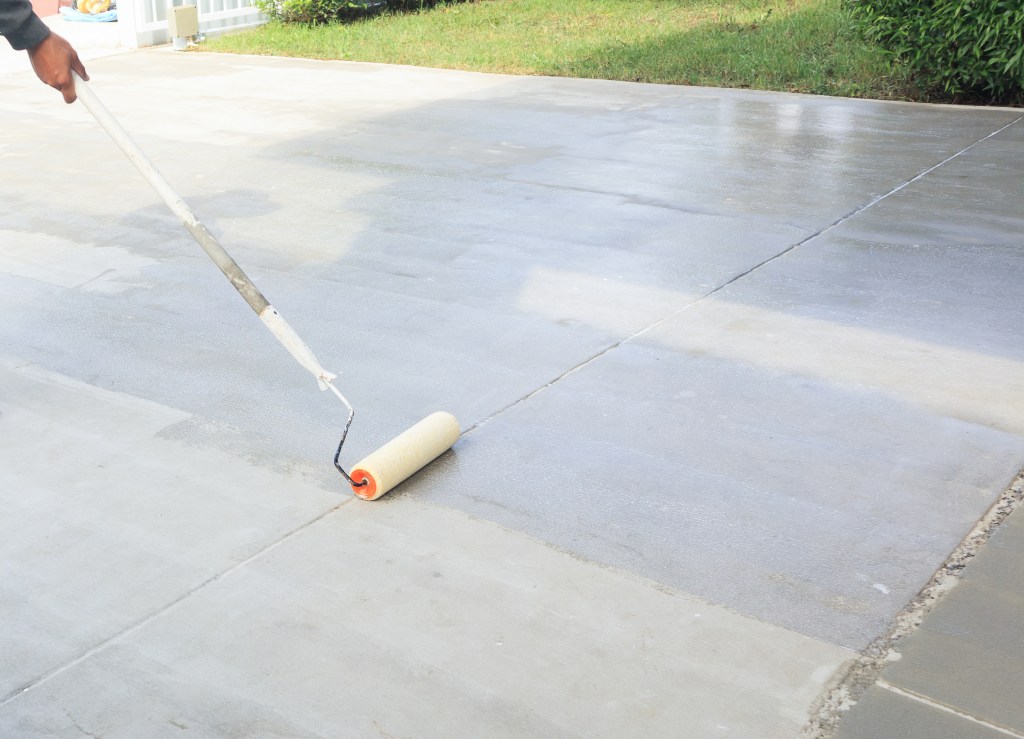
For a broom-finish surface texture, work the sealer into the surface with a roller. (Sealers come in both glossy and matte finishes.) Add some grit — a product such as H&C’s SharkGrip (www.hcconcrete.com) should work — to the mix if the surface seems too slippery.