
Before
When homeowners contact us about creating a bigger kitchen, we almost always end up building an addition. That was the expectation for this job, too, until we arrived at the 1970s ranch and saw the large deck across the back of the house where the kitchen is located — not to mention the landscaped yard, steeply sloping site, and walkout basement. The client — an avid cook — wanted more room, more storage, and a better flow for frequent entertaining. Given the site limitations, we quickly turned our efforts toward reconfiguring the existing space rather than adding on.
Shifting Boundaries
During a previous remodel, the owners had removed the upper portion of the walls around a staircase to the lower level. While this created an inviting connection among the living room, dining room, and entry, it left the kitchen feeling cut off from the rest of the house. Compounding that sense of isolation was a buffet bar and soffit between the kitchen and dining room that separated the cook from her guests.
Before
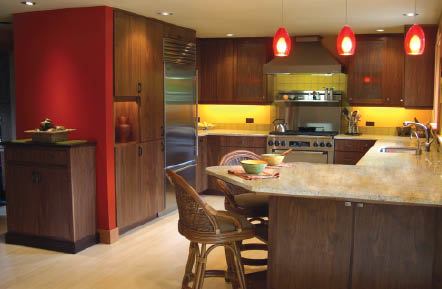
We began our room-stretching plan by demolishing the coat closet next to the basement stairs and building a new, narrower one farther down the hall. This lengthened the kitchen’s footprint by about 3 feet and granted more direct access from the entry.
A long, 36-inch-deep hallway closet that the owners said they no longer needed gave us even more space. We reframed it to accommodate a built-in bookcase on the hallway side, which still left 26 inches for the kitchen — plenty of room to extend the cabinets and create a partial recess for the refrigerator. Next to the refrigerator — behind the new coat closet — we built a shallow pantry.
Doors and Windows
To lengthen the working leg of the kitchen, we replaced the sliding door with a second kitchen window; this allowed us to continue the counter (and lower cabinets) along the exterior wall toward the dining room. A peninsula provides a convenient sitting area for guests.
Because the deck plays such an important role when this couple entertains, we added a third opening in the dining room wall and replaced the sliders with outswing French doors, maximizing the interior’s connection to the backyard.
Tying It All Together
Finally, to unify the kitchen, dining, and living areas, we replaced the original mixture of carpet and tile with bamboo flooring and installed clear-finished vertical-grain fir doors and trim throughout all three spaces. We also had the cabinetmaker build two freestanding cabinets to match the new walnut cabinetry in the kitchen.
Kathie Maughan Francis owns Maughan Design, a design-build remodeling company in Portland, Ore.


