
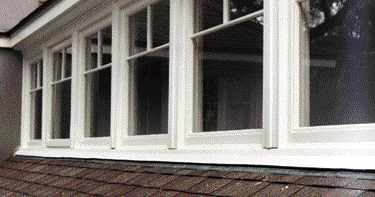
New Orleans is a great place to be a restoration carpenter. With 62 inches of annual rainfall and humidity levels that hover around 90 percent for much of the year, I’m guaranteed a steady stream of jobs repairing rotted windows and doors. Much of my work involves 100-plus-year-old homes; fortunately, given the high quality of their old-growth wood, I can make most of these repairs with a little epoxy.
But the millwork in newer homes is often a different story. Some of my clients with relatively new homes require extensive repairs after only eight or 10 years. While fighting rot in this region’s climate sometimes feels like a losing battle, I’ve developed some techniques — and adopted some specialized products — to help new millwork and repairs on existing windows and doors last as long as possible.
Protect Vulnerable Wood
One of the major reasons newer doors and windows start rotting so quickly, I believe, is that the quick-growing white pine (or its variants) used in most factory-made doors and windows is not suitable for the Deep South. If the wood contains any treatment at all, it’s a water-repellent, not a preservative, so when this fast-growing pine starts going bad, it takes off at a gallop. That is why I carefully back-prime everything I can on new doors and windows, seal all end grain with paint or special epoxy coatings, and raise the units slightly so they’re not sitting directly on horizontal surfaces that could hold water. Since the bottom 16 inches of jambs and casings are especially vulnerable, I focus most of my attention on this area.
If I have enough time and new units to justify building a dipping trough, I first soak the bottom 3 to 4 inches of each unit in a borax solution such as Tim-bor or Bora-Care (Wood Care Systems, 800/827-3480, www.ewoodcare.com. Then I seal these areas with West System 105 Epoxy Resin and 207 Special-Coating Hardener (West System, 866/937-8797, www.westsystem.com) or with Corlar 25P or 26P two-part epoxy coatings (DuPont, 800/438-3876, www.performancecoatings.dupont.com.
The two Corlar products are similar, but 25P — an epoxy mastic — contains more solids and goes on thicker than 26P. The 25P is great for protecting end grain, and I use it for applications like porch flooring, where a thicker coat is an advantage. The thinner 26P penetrates and brushes out better; I use it as the primer for almost all of my rot-repair work. One drawback to Corlar 26P, though, is its induction time. After mixing, you have to let it sit for about an hour. 25P doesn’t require the wait.
(Note: DuPont has changed the names of all its industrial coatings. Corlar 25P is now Corlar 2.1 ST and Corlar 26P is Corlar 2.8 HG. However, the former names are still commonly used at the dealer level.)
Both types of Corlar are mixed one-to-one with their activators and thinned with MEK (methyl ethyl ketone). I buy the epoxy base and its activator in gallon containers from a DuPont Industrial Coatings dealer for about $85, which makes two gallons of the coating. And I always wear a respirator and nitrile gloves while I’m using these substances.
I use Corlar 26P to coat the bottoms of frames and casings, usually up to about the first finger joint. Where finger joints are within 12 inches of a horizontal surface, I carve out a small “V” directly over the joint with a utility knife and skim it over with WoodEpox epoxy putty (Abatron, 800/445-1754, www.abatron.com).
I also like to pry factory-installed brick mold away from frames just enough to coat the back side of the bottom inch or two of the molding. Then I feather out the top edge and rough up the dried epoxy with 220-grit sandpaper, so an alkyd primer will bond.
Sometimes I use West System 105/207 epoxy in place of the Corlar because, depending on the hardener used, it dries in as little as a half-hour, making it a better choice when I have only one or two repairs to make. Otherwise, I prefer the Corlar because it sands more easily and has a longer working time.
Let Air In and Water Out
Whenever possible, I try to install new doors and windows in such a way that they have a chance to dry out. For example, I like to attach 1/4-inch-thick pressure-treated shims to the bottom of door thresholds, or place door and window units on strips of Cor-A-Vent S-400 (Cor-A-Vent, 800/837-8368, www.cor-a-vent.com). Designed primarily as a soffit vent, Cor-A-Vent S-400 is made from a 1-inch-tall by 11/2-inch-wide stack of plastic corrugations held together with large staples. After prying apart the staples, you end up with six individual corrugations. Each corrugation can be used singly to create a 1/8-inch-high vent channel, or the stack can be left as high as needed. Because Cor-A-Vent is made from rigid plastic, it also offers some structural support. To keep swarming Formosan and dry-wood termites from crawling through the holes, I wrap a piece of aluminum screen around the back of the Cor-A-Vent before installing it.
When I’m working on a new installation and the door threshold has to sit on the floor for some reason, I commonly trim 1/8 inch to 1/4 inch off the jamb bottoms so they’re not touching the subfloor, making them less likely to wick water. I don’t remove the jambs from the threshold; I just take a little off the bottoms with a circular saw (or, if the door is already in place, a reciprocating saw). After coating the end cuts with Corlar 25P, I fill this gap with Cor-A-Vent or bronze screening (Blaine Window Hardware, 800/678-1919, www.blainewindow.com) to keep out bugs and create a combination weep and vent at the bottom.
On both new installations and repairs, I’ll frequently remove the brick mold and cut it 1/8 inch to 1/4 inch short, then attach screening to the trimmed and coated bottoms, doubling it over and stapling it in place with stainless steel staples. Folding the screening over a round pencil before installation gives it a nice shape.
On repair jobs where removing the casing would be difficult, I trim it in place with a Fein MultiMaster, then pry it loose enough to back-prime the bottom inch or two with Corlar 25P. Then I insert a rolled piece of bronze screening or Cor-A-Vent.
Rot-Proofing Doors
Since the untreated wood stock under the aluminum threshold found on many inexpensive doors is bound to cause problems later on, I’ll often replace it with pressure-treated stock or a piece of fiber-composite decking before installing the door. This isn’t as much trouble as it sounds. After removing the sill from the door unit, I pry loose the rot-prone pine filler and replace it with a duplicate made from pressure-treated stock, which I secure to the aluminum sill with small stainless-steel screws.
On metal exterior doors, the wood perimeter — especially at the bottom — will cause problems if exposed to water. If the door has a sweep with a solid plastic top, this further traps moisture inside the door. On both new doors and ones that I’m repairing, I usually pry the weather sweep loose at the ends, so I can epoxy-seal the end grain on the stiles and on the joint where the stiles meet the bottom rail. Then I bed the top of the sweep in caulking.
If I’m working on a number of similar doors, I remove their sweeps entirely and cut slots into their solid tops to promote drying, using a 1/8-inch straight-cutting bit in a die grinder guided by a jig. (You could also use a small router or laminate trimmer.) Another option is to drill a series of holes into the base of the sweep before remounting it.
To provide ventilation to the interior of the bottom rails, I drill 3/8-inch-diameter holes on 6-inch or 8-inch centers in the bottom rail from the interior side of the door. I cover the holes with 3/8-inch thimble vents (Midget Louver Co., 800/643-4381, www.midgetlouver.com.
Handy Protection
A good way to prevent rot at the bottom of doors and windows is with Impel Rods (Wood Care Systems, 800/827-3480, www.ewoodcare.com). Inserted into drilled holes, the compressed borax pellets remain inert as long as they stay dry; when they get wet, they slowly dissolve, protecting the wood from rot. The manufacturer claims they last a minimum of eight years.
Though expensive (a 24-count box of my favorite 1/3-by-1-inch size sells for $25), these little jewels offer protection in locations that would otherwise be very hard to address. For example, I’ll insert two or three of them into a single hole drilled in each door stile, and use two or three more in another pair of holes drilled in the bottom rail. I also install rods at the bottom of jambs and casings, and in window sash and sill horns, covering the holes with either wood plugs and polyurethane glue or with WoodEpox. These rods allow you to put protection where it’s needed most. If a rot-damaged area is addressed soon enough, you can usually repair it with epoxy and install the rods without removing the piece.
Window sash are like small doors: No matter how they operate, their bottom corners are vulnerable to rot. If their sash are fixed, I insert short Impel rods into face surfaces to protect the stiles’ bottom end grain and the rails’ side end grain.
Special Solutions for Windows
The area where jambs and casings meet window sills is a potential trouble spot. In new construction or where it’s possible to trim the casing short, I leave a 1/4-inch to 1/8-inch gap where the casing meets the sill and fill it with Cor-A-Vent or screening. Another option is to drain these joint intersections with 1/4-inch angled weep holes that come out just behind the casing and out the bottom of the sill just past the siding.
In locations with especially severe weather, I also drill a series of 1/4-inch holes in the bottom rail of sash to drain away any water that penetrates behind stops. I epoxy-coat drilled holes with a long cotton or foam swab or with a 1/4-inch flux or artist’s brush, and then cap them with a small thimble vent.
To make a long-lasting caulk joint on long horizontal joints — for example, where a subsill meets a sill — I cut a slot with a special tool called a corner grooving machine that’s designed for installing weather stripping (Resource Conservation Technology, 410/366-1146, www.conservationtechnology.com). Instead of foam backer rod, I use bulb weather stripping from the same company to fill the slot before caulking, which gives the joint flexibility and improves adhesion.
If any repairs to the sash are needed, I use either Abatron’s LiquidWood/WoodEpox system or West System adhesive epoxy, depending on how structural the repair needs to be (West System is stronger, but harder to sand). After making repairs and sanding everything, I apply a coat of West System 105/207 epoxy and a coat of DuPont Corlar 26P epoxy enamel. The 26P is applied when the 105/207 goes into the green stage — that is, when it is tack-free, but not fully hard — which eliminates the need to key sand the fully hardened 105/207 for good adhesion of the subsequent coat. This technique also works when using West 105 with alkyd or latex primers.
Replacing Window Stops
Some factory wood windows come with wooden glazing stops on the exterior. The ones I’ve seen aren’t back-primed, and neither are the sash, a recipe for disaster in my climate. If the windows are getting enough weather for me to be there making repairs, I figure that at the very least I should pull off the bottom stops for inspection. If they are in good shape, I back-prime both surfaces with epoxy and reinstall them using stainless steel brads. If the stops show even a little rot, they go into the trash can.
While it would be best to replace all of the factory stops, the top and side ones are generally in much better shape because they dry more easily. Granted, it would make sense to remove them, too, for back-priming, but the factory usually attaches them with staples, which are often rust-encrusted, making it difficult — if not impossible — to extract the thin stops without breaking them. If there is no obvious damage, I just leave them in place.
Discarded stops could be replaced with glazing putty, but wood stops look and perform better, so I usually make new ones out of mahogany. To aid drainage, I give them a steeper 10- or 15-degree pitch and increase their width as much as possible. After sanding the stops, I apply one coat of West epoxy and one coat of Corlar 26P to all sides. To eliminate the water pockets that miter joints create, I slide the bottom stop under the sides, essentially making a coped joint at the corners. I use a piece of new stop to mark the side stops for trimming, then cut them in place with a sharp utility knife. As I install the stops, I coat any exposed end grain with Corlar 25P epoxy. Gently bending the new stop upward in the middle lets it slip into place.
If windows have true divided lights, the mullions are a weak link. Since most failures occur when the putty pulls away from the glass, the upward-facing mullions are most at risk. Wherever I find failed glazing compound, I remove it, coat the underlying wood with epoxy, and replace the putty with custom-made wood stops.
I used to bed new stops in glazing putty, but lately I’ve been using Resource Conservation Technology’s glazing gaskets, because I’ve never found a glazing putty that lasts more than two years.
After filling brad holes with epoxy putty and sanding, I give the top surfaces of the new stops another coat of 26P. When it’s no longer tacky, I apply a coat of alkyd or latex primer so I don’t have to key sand. (A word of caution: If you apply primer too soon, it will puddle and you’ll have to key sand and apply another coat.) Then I caulk the front edges with polyurethane and, after the final top coat, run a bead of Dow 795 sealant (Dow Corning, 989/496-7881, www.dowcorning.com) where the stops meet glass. If I haven’t used glazing gaskets for some reason, I apply 1/8-inch Scotch Fine Line masking tape (3M, 888/364-3577, www.3m.com) to the glass as a bond breaker.
It’s worth mentioning that all this extra effort to prevent doors and windows from rotting away is largely unnecessary when the building has sufficient overhangs or some other protective cover for doors and windows — something I’m always stressing to architects and designers.
Michael Davisis a restoration carpenter in New Orleans.


