
Abrahamse & Co. employs more than 30 tradespeople; we work on projects ranging from custom homes to large office buildings and churches. But when we started in business 31 years ago, it was just three guys and a pickup truck. Like many small contractors, we were fairly relaxed about safety issues, more or less expecting everyone to take care of himself.
Over the years, as our company grew, our awareness of safety issues expanded as well: We felt we were doing a good job of following safe work guidelines. Then, in 1989, a laborer slipped off the bottom rung of a scaffold and fractured a vertebra. Even though he fell from a height of less than 2 feet, he suffered a serious spinal injury that ultimately resulted in insurance claims of more than $150,000.
Because we’d had a few minor claims previously, this accident was all it took for our workers’ comp carrier to cancel our policies. Our costs for continued coverage went through the roof. Fortunately, we learned that these rates could be softened if we implemented a viable safety program, subject to periodic monitoring — including surprise site inspections — by an agent of the insurance provider.
Getting Started
We decided to ask one of our project managers to assume the role of safety officer. He would direct a companywide overview taking stock of where our weaknesses might lie and what improvements we should make. His most important job was to establish a companywide culture of safety.
From the beginning our safety program has been a team effort. We told the safety officer to recruit two field workers to serve as safety coordinators; their job is to ensure that our safety policies are followed in the workplace, and they’re paid extra for accepting this level of responsibility.
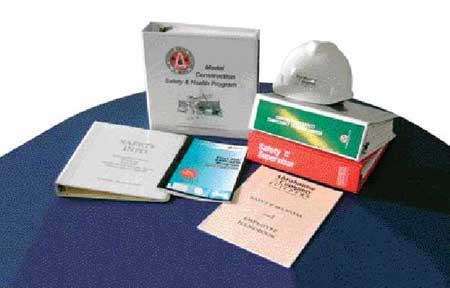
Working together, the three staff members drafted our “Safety Manual and Employee Handbook”, which clearly spells out the company’s policies concerning personal-protection equipment, power tools, scaffolding, site work, and other issues of general workplace safety. Insurance companies consider such a handbook the foundation of a viable safety program. All our employees receive a copy of this booklet, which also sets out company policy on troublesome issues like absenteeism, drugs, and sexual harassment.
Our membership in the Associated General Contractors of America (703/548-3118, www.agc.org) proved to be valuable during the drafting of our handbook; contractor groups can provide a wealth of resources for improving worker safety and health. If you’re not a member of the AGC, NAHB, or the like, a Google search using the words “job-site safety” will get you more information than you need to get started.
One of the earliest tasks assigned to the safety team was to perform an assessment of all the company’s tools and equipment. Anything found to be substandard was either repaired or removed from service. We got rid of all of our wood-pole pump-jack scaffolding and replaced it with more reliable aluminum poles, planks, and guardrails. We also banned plastic fuel containers from our job sites; now we permit only spillproof, self-closing metal containers.
As the team members assessed our tools, they also recorded their condition and location, plus scheduled maintenance or replacement dates. This tool catalog has also proved its worth on those few occasions when our sites have been burglarized, because good documentation streamlines the process of applying for insurance compensation.
Job-Site Scrutiny
Although our two safety coordinators spend the majority of their time working in the field like any other tradespeople, they’re also expected to sniff out — and correct — unsafe procedures and equipment. In addition, they’re charged with conducting quarterly inspections of all electrical cords and equipment and marking them with color-coded tape in accordance with OSHA directives. This practice lets a worker (or an inspector) know at a glance whether a piece of equipment is certified to be in safe condition.
To guard against complacency, the safety coordinators periodically conduct surprise job-site inspections and submit written reports of their findings to the safety officer and the individual job supervisor.
Supervisors are critical to the success of our safety program. Each is expected to have a full understanding of how to properly erect frame-type scaffolding — including the appropriate use of guard rails and access ladders — and how to set up roof ladders and ridge-line fall-protection rigging. Every supervisor maintains a binder of MSDS (material safety data sheets) containing emergency info on all products used on a given project.
Because we know that accidents can happen even on the safest job site, critical information — the location of the nearest emergency room, 911 directions to the job site, employees’ emergency contact numbers — is written down in the supervisor’s job log. All supervisors receive mandatory first-aid and CPR training (any interested employee can also take these courses at company expense). And every job site has a properly equipped first-aid kit and a fully charged fire extinguisher, both of which are readily available in a convenient, well-known location.
We’re strict about personal safety equipment, too. We require hard hats and stiff-soled shoes on every job site; new employees are furnished with hard hats (we retain a $5 deposit), disposable safety glasses, earplugs, and dust masks. For hazardous operations we provide whatever safety equipment the job calls for. To make sure we never run short of a potentially life-saving item, we have converted a closet at our company headquarters into a stockroom for first-aid and safety supplies.
Of course, if subs don’t work safely, all of these precautions will have little effect, so we include language in our contracts requiring subcontractor personnel to adhere to the company safety standards.
Continuing Education
Despite our best efforts, construction will always be hazardous work. That’s why, like most conscientious builders, we’re constantly on the lookout for even better and safer methods. We subscribe to all the respected trade publications and send representatives to various local and national trade shows; everyone makes it part of his or her job to pass along good information to supervisors and field staff. We hold quarterly meetings for supervisors, during which we seek input from the field on how to improve operations.
We network with other builders, primarily through memberships in trade organizations like AGC and NAHB; there’s no need to reinvent the wheel when we’re all facing the same kinds of challenges. Instead of always sending the president of the company to chapter meetings, we ask supervisors and project managers to represent us. This encourages individual involvement and underlines our commitment to the concept of safety and community in the trade.
Manufacturers are another source of useful information. For instance, the Wood Truss Council of America and the Truss Plate Institute jointly produce an excellent manual that clearly spells out the proper procedures for safely handling, installing, and bracing wood trusses. We give all supervisors a copy of this handbook (608/274-4849, www.sbcindustry.com) and insist that they follow it to the letter.
Regular Safety Meetings
At our weekly management meetings, the safety officer reports on any problems and successes he’s encountered in the field over the previous week. We take note of what’s working and what isn’t, and use that knowledge to upgrade operations on our jobs. In addition, each supervisor conducts a weekly “toolbox” safety meeting. Attendance is mandatory for our employees and optional for our subcontractors’ employees. Everyone who attends signs in on the lesson sheet; this adds to our documentation that a viable safety program is in force.
Rather than struggle to come up with relevant topics, we subscribe to a service that provides prepared “toolbox safety meetings”. For a modest fee, we can choose from more than 400 prewritten safety meetings covering a range of subjects, including ladder safety, proper lifting, and general job-site manage-ment (877/201-8923, www.safetyservicescompany.com). Each week a different crew member reads the lesson and then we discuss how we can apply the information in the real world.
If we’ve had an accident of any sort in the previous week, we forgo the canned topic and talk about the accident, exploring ways to avoid problems in the future.
Staff Buy-In
Since there’s no formal apprenticeship in the building trades these days, we mine the skills and experiences that exist right under our noses by recruiting senior staff members to provide specific training on the safe operation of dangerous tools and equipment. Beyond lessons learned, this type of mentoring fosters respect among the workers and supports the team spirit so conducive to a safe work environment and a healthy company.
To keep up with the latest safety trends and legal requirements, we’ve paid for a number of field workers to attend OSHA training courses and become certified as “OSHA Competent.” Topics covered by the two-day course include fall protection, electrical grounding, and proper setup for ladders and scaffolding. Sending a worker through the training costs about $200 plus wages, but the knowledge gained spreads throughout the company, making it a valuable investment.
Ultimately, no safety program can succeed without the personal involvement of every employee. A company policy, a safety manual, well-stocked first-aid kits, fully charged fire extinguishers — important as they are, these safety measures aren’t worth much without the interest and participation of the people with their hands in the work. It’s taken us years to get our safety program to where it is now, and it remains a work-in-progress, but we don’t doubt for a minute that the effort’s paid off. We have an excellent safety record. We’re considered one of the best builders to work for in our region. And our workers’ comp premiums are way down.
Gerry Sackett is project manager for Abrahamse & Co., Builders, in Charlottesville, Va.


