
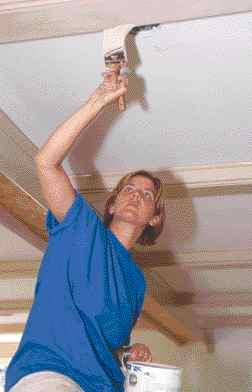
On New Year’s Day, painters in many northeastern states woke up with more than a hangover. New regulations that significantly reduce the allowable content of volatile organic compounds (VOCs) in most paints and stains took effect on January 1 in the states of New York, New Jersey, Pennsylvania, Maryland, and Delaware, as well as in the District of Columbia and 10 counties in Northern Virginia. In laymen’s terms, what this means is that many popular oil-based coatings will effectively disappear from those regions.
The new laws stem from a collective effort known as the Ozone Transport Commission (OTC) that aims to reduce air pollution in the heavily congested Northeast Corridor. The OTC includes a total of 13 northeastern and Mid-Atlantic states, all of which are expected to adopt the same VOC restrictions within a year or two.
These restrictions, officially known as the OTC Model Rule for Architectural Coatings, are based on regulations that have been in effect in California since January 2003. The remainder of the country is not affected, at least for now.
Why Clamp Down on Paint?
VOCs include hydrocarbons and other organic chemicals that contribute to smog when they’re released into the air. The vast majority of VOCs come from automobiles and power plants; paints are a small but significant part of the problem. “In our state of Delaware alone, the rule will achieve a reduction of about two tons of VOCs per day,” says Gene Pettingill, an environmental engineer with that state’s Department of Natural Resources and Environmental Conservation.
Paints release VOCs when the solvents or additives evaporate as the paint dries. Oil, or alkyd-based, paints typically contain high concentrations of VOCs because the solvent (paint thinner) is a VOC. Latex paints are less problematic because the solvent (water) is not a VOC, but some of the additives are.
“We’re not banning oil-based paint,” insists Daniel S. Brinsko, an environmental engineer with the New York State Department of Environmental Conservation. “Companies can choose to reformulate their paints to meet these criteria.” Samuel Cabot, a manufacturer of exterior stains and wood-care products, is hoping to produce an oil-based stain that would have an ultra-low VOC content of 100 grams per liter.
But Cabot is in the minority. For years now, major players in the industry, such as Benjamin Moore and Sherwin-Williams, have focused all of their research and development efforts on improving waterborne paints.
Oil Paints, Not Primers
One or another form of government has been pressuring paint companies to lower VOCs for years. The OTC model rule is essentially a more restrictive version of the law that the federal government adopted in 1998. Both are complex documents that include VOC limits for more than 50 categories of architectural coatings. But there is one major difference: Under the federal law, most paints and stains are permitted a VOC content that ranges between 380 and 550 grams per liter, whereas the OTC reduces the VOC allowance to 250 grams per liter or less, a number that’s very difficult to achieve with oil.
Volatile Organic Compound (VOC) Limits for Paints and Stains [in grams of VOC per liter of coating] | |||
Coating Category | U.S. EPA | California Suggested Control Measure (SCM) | Northeast Ozone Transport Commission (OTC) |
•Flat coatings: | |||
Exterior coatings | 250 | 100 | 100 |
Interior coatings | 250 | 100 | 100 |
•Non-Flat coatings: | |||
Exterior coatings | 380 | 150 | 150 |
Interior coatings | 380 | 150 | 150 |
•Non-Flat high gloss coatings | NC | 250 | 250 |
•Primer and undercoaters | 350 | 200 | 200 |
•Specialty Primers, Sealers, and Undercoaters | NC | 350 | 350 |
•Stains: | |||
All | NC | 250 | 250 |
Clear and semitransparent | 550 | | |
Opaque | 350 | | |
•Varnishes | 450 | 350 | 350 |
•Wood Preservatives: | |||
All | | 350 | 350 |
Below-ground, clear | 550 | | |
Below-ground, semitransparent | 550 | | |
In 1998, the federal government set VOC limits for more than 50 varieties of architectural coatings. In recent years, the state of California and the northeastern Ozone Transport Commission states have lowered many of those limits. This chart represents the residential coatings most affected by the change.
Up to now, manufacturers of oil paints and stains have been able to lower their VOC content largely by substituting synthetic oils (alkyds) for natural oils. So that’s been done. But now what? Unless Cabot or someone else invents an effective low-VOC solvent, the only option is to add solids that compromise performance. “Can you make a 250-gram oil-based stain?” asks Jeff Spillane, senior marketing manager for Benjamin Moore. “The answer is yes, but not one that meets our quality standards.” Consequently, most manufacturers have decided not to reformulate their oil-based products to meet these lower VOC standards.
In addition to paints and solid-color stains, semitransparent pigmented stains (such as Minwax) and clear wood preservatives are big losers under these regulations.
Oil-based primers, which are limited to a VOC content of 200 grams per liter, would also appear to be doomed, but here there’s a big loophole: A separate category, “specialty primers,” applies to any stain-blocking primer, including any exterior product that’s formulated to resist tannin-bleed. Specialty primers are allowed 350 grams per liter of VOC, a limit most primers currently meet.
More loopholes. If you’re still painting with oil, don’t panic. None of these coatings are going to disappear tomorrow. Retailers in the affected regions are allowed to continue to sell all “noncompliant” coatings manufactured before the law went into effect. In addition, any of these coatings that are packaged in aerosol cans or that are used for shop-applied finishes are exempt from the law. Perhaps most important, the law includes a “touch-up” loophole that allows any noncompliant coating to continue to be sold as long as it’s packaged in quart-sized (or smaller) containers.
If you’re convinced that you can’t find a satisfactory waterborne substitute for a particular paint, the worst-case scenario is that you’ll have to open four times as many cans — and spend more money, of course. Fortunately, because they’ve had to supply the California market for the last two years, all of the major paint manufacturers offer a full line of high-quality, waterborne alternatives to their oil-based coatings.
Exterior Waterborne Paints Already Outperforming Oils
Sales of oil-based paint, stains, and primers have been shrinking for years, and this is not merely the result of government interference or homeowners who prefer water cleanup. “It’s just old technology vs. new technology,” says Paul Kowalik, a district manager for Sherwin-Williams. “We and other large paint manufacturers have developed waterborne coatings that meet or exceed the performance of most of the oil products that are out there.”
Latex top coat. Even the crustiest old-school painters have generally conceded the value of waterborne house paint (if not primer). “We’ve known for decades that the best top-coat paints are the acrylic latex paints,” says Bill Feist, an independent consultant who worked for 20 years as a wood-finishing researcher for the USDA Forest Products Laboratory.
Compared with oils, latex paints enjoy a longer life span when exposed to the elements because they remain flexible and “breathe,” allowing trapped moisture to escape. Latexes are also more mildew-resistant and don’t tend to yellow or chalk the way oils do.
Latex primer. Unlike paints, waterborne primers are not as popular as the oil-based varieties. Despite significant advances in acrylic latex technology, oil-based primers are still more effective at preventing bleed-through stains from tannin-rich woods like cedar, redwood, and cypress; they also adhere better to dusty, chalky, and waxy surfaces.
While acknowledging that oil primers offer certain advantages, Bill Feist recommends acrylics for most situations: “If you don’t have to worry about any special adhesion or significant bleed-through problems, you will get a better performing paint system by combining an acrylic latex stain-blocking primer with an acrylic latex top coating. The all-latex systems have superior durability because they tend to have less tendency to start checking and cracking.”
Even though oil-based primers are not going away, John Stauffer, technical and training director at the Rohm and Haas Paint Quality Institute, believes that a waterborne primer should be every painter’s first choice: “A heavy coat of a good stain-blocking acrylic latex primer applied to a clean, dry surface will contribute to a finish coat that resists mildew growth and long-term cracking better than it would if an oil primer were used.”
Applied Right, Interior Latexes Finish Like Oil
Another application for which oil-based paint remains in strong demand is glossy interior surfaces, such as woodwork and wall surfaces in kitchens and baths. Painters prefer oil for these highly visible applications because its slow-drying properties permit a long working time and enable the paint to lay out smooth as glass without visible brush marks.
Unlike primers, oil-based paints get no reprieve under the OTC, so painters who don’t want to buy all of their materials in quarts will have to switch. By now, most major manufacturers have come out with waterborne versions of their premium interior gloss paints. But many painters who’ve tried them for the first time have been disappointed with the results.
Many painters use an additive like Floetrol (Flood Co., www.floodco.com) to extend the working life of latex paint and to reduce brush marks. Paint manufacturers try to discourage putting anything other than a brush into their products — all of them forbid adding any type of thinner, for example — but most grudgingly condone this practice, as long as the user follows the instructions provided by the additive manufacturer.
Not everyone believes that latex paint needs to be modified, however. “It’s not the paint, it’s the brush,” says Duffy Hoffman, a painting contractor in Pipersville, Pa. The Paint Quality Institute’s Stauffer agrees with that sentiment. To achieve oil-like quality with a glossy waterborne paint, Stauffer recommends using a topnotch straight nylon bristle brush and changing brushes often. “As soon as you notice that it’s not maintaining its shape, you need to drop it in water [for later cleaning] and pick up another brush,” he says.
For a less complicated alternative, Stauffer suggests using a high-quality nylon-polyester blend. This type of brush will last all day before it needs cleaning, but it won’t produce as fine a finish. Stauffer has other suggestions for achieving oil-comparable quality with waterborne paints:
Predampen the brush. Shake out the water thoroughly before dipping it in any paint.
Put on a lot of paint. When latex is spread too thin, it gets ‘ropy’ and does not flow into a smooth, uniform appearance. You want to apply as much paint as you can without having it sag.
Don’t overbrush it. Put the paint on with as few strokes as possible, and keep moving.
Waterborne Paints Require Careful Prep
Paint manufacturers strongly recommend that all of their products be applied over a sound, clean, dry substrate, but many pros have learned that oil-based paints will stick to almost anything. Waterborne paints are not nearly as forgiving. With these products, it’s more important than ever to read and follow the manufacturer’s application instructions.
Exteriors. “Ninety-nine percent of customer complaints fall into two categories: poor surface prep or moisture-related issues,” says Peter Hope, technical specialist for Samuel Cabot. He urges painters to remove dirt and mildew with a professional-grade housecleaning detergent that includes bleach. He also recommends cleaning small sections at a time and always working from the bottom up. “If you start from the top down,” he says, “all of the dirt and contamination that you dislodge will reattach as soon as it hits a dry surface below.”
Waterborne paints do not bond well to wet or moist surfaces, so they should not be applied if it’s excessively humid or if rain is expected within a few hours. To know for sure that wood is dry enough to paint, Hope highly recommends using a moisture meter to verify that the moisture content is 15 percent or less. “A painting contractor without a moisture meter is like a carpenter without a level,” he says.
Interiors. Although waterborne paints don’t face nearly as many adhesion challenges indoors, getting a new coat of latex to stick to an existing gloss oil finish has always been a problem. “If you don’t prep it correctly, it’s like painting over Teflon,” says Brian Doherty, a painting contractor in Richmond, Va.
To guarantee that his paint doesn’t peel off in sheets, Doherty first makes sure that the surface is clean — kitchens and baths, for example, usually require scrubbing with a strong household detergent to remove grease and mildew. Then he vigorously sands the surface (using 150-grit paper) to degloss the paint. After sanding, he wipes the surface with a damp cloth to pick up the dust. Finally, to ensure a solid bond between the two disparate layers of paint, he primes the surface with a fast-drying acrylic latex primer like Benjamin Moore’s Fresh Start.
What About the Future?
Painters in California have had to use low-VOC paints for the last two years and most have adapted. Julie Street, a painting contractor in Sunnyvale, Calif., says she has accepted the products, but her challenge is training her employees to use them correctly. “Because of the VOC restrictions,” she says, “I’m more dependent on a skilled work force that isn’t there.”
Street is fortunate that she’s not working in Southern California. In its continuing effort to clean up the smoggiest air in the country, the South Coast Air Quality Management District, which includes Los Angeles, has announced plans to reduce the VOC limit for paint to 50 grams per liter in 2006 — a number that not even an acrylic currently meets.
Except for California and the OTC states, no other states have expressed an interest in reducing VOCs in paints. But that could change. This year the EPA tightened the rules by which it measures ground-level ozone (also known as smog), and consequently more areas of the country have found themselves out of compliance with federal air-quality standards. Some of these regions may decide to crack down on paint.
Tom O’Brienis a carpenter and writer in New Milford, Conn.


