
Q. I have to rewire an old home that has well-maintained plaster walls throughout. I’d like to do this without gutting the interior. Any tips for wire-snaking?
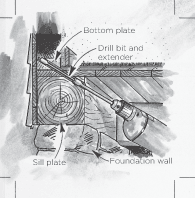
A. When rewiring an old house, I’ll wire the first floor by working up from the cellar (Illustration A), then run a few feeds up to the attic and wire the second floor by working down from there, using drill bit extenders, fish tapes, and a tone generator as needed. It’s usually easy to find interior wall top plates in the attic just by moving aside the insulation (Illustration B). By drilling at an angle from inside rooms, you can usually get through top and bottom plates and into stud cavities (Illustrations C & D). When I have to run wires horizontally through studs, I’ll try to minimize repair work by creating just one hole at the front edge of each stud (Illustration E).
While doing the job, try to coordinate with other crews working in the house at the same time. If, for instance, the plumber has to open a wall anyway, you may as well run your wires before it’s closed up again.
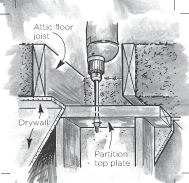
B. Finding partition walls from the attic is usually easy – just lift the insulation and look for the top plates.
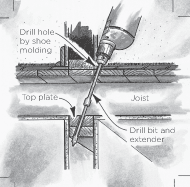
C. By removing the shoe molding at the edge of a carpeted room, you can drill an inconspicuous hole through the floor.
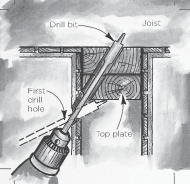
D. After drilling one hole to find the bottom edge of the top plate, you can drill at an angle that will pop the bit through the center of the wall in the attic.
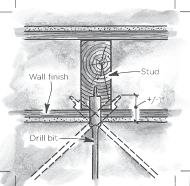
E. To run a wire across a stud or joist, drill three times, using the same entry hole: one straight in and one each at a tight angle into each bay


