Limited liability corporations (LLCs) have become “hot” during the past decade, with more and more businesses adopting the form. What’s the appeal?
The biggest reason to switch from a plain-vanilla sole proprietorship is to limit liability, as the name says. If you’re a sole proprietor, both your business and your personal assets are at risk if someone sues you and wins a judgment against you. Incorporating your business as an LLC puts a wall around personal assets such as your house, retirement account, or kid’s college savings. Payment for business debts or legal judgments can only be satisfied from capital paid into your business. An LLC won’t protect your assets if you personally guarantee a debt, however. For example, a lot of loans and lease agreements you might be asked to sign on behalf of your company contain language stipulating that you will personally guarantee the debt. If you sign one of those things, you lose the protection afforded by the LLC.
How It Works
Under the LLC format, shareholders, or owners, are called “members.” Each member gets a percentage ownership, which can be decided any way you choose. Most one- or two-member LLCs manage themselves, but you’re free to hire outside management help if members are too busy working to keep a careful eye on the big picture.
Unlike a traditional corporation (“C” or “subchapter S”), an LLC doesn’t have to slavishly match profits or losses to the capital each member puts in. A member who’s contributed 40% of operating capital could, for example, take 50% of the profits, depending on your setup.
Tax simplicity. You don’t have to file a separate business return with an LLC. Profits and losses can be reported on Schedule C of your individual tax return. If there’s more than one person in your LLC, one more piece of paper is required — form 1065, which tells the IRS how much each person earned. Also, there’s no “double taxation” — taxing both your business and you as an individual — as there is with a traditional “C” corporation.
The Downside
Of course, some aspects of operating as an LLC are less appealing than others. A lot depends on your goals and the amount of time you’re willing to spend on corporate housekeeping. Here are some things to keep in mind when deciding if an LLC is right for you.
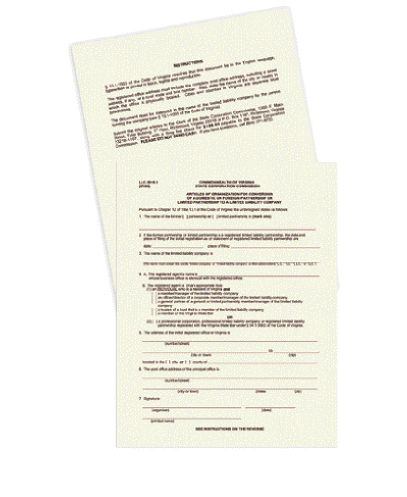
Paperwork. Every LLC has to write an operating agreement and file forms with the state corporation commission or secretary of state. This includes legal papers such as “articles of organization” or a “certificate of formation.” The forms would include the LLC’s name, address, agent for service of process, and the names and addresses of managers. Most states post the rules and required forms online.
You’ll need to write an operating agreement listing the rights and responsibilities of members. In a regular corporation, these would be contained in the bylaws. Items typically covered would include each member’s percentage interest, how you’ll allocate profits and losses, rules for meetings and voting, and “buy-sell” arrangements for members who leave the LLC.
Offering benefits. You’ll also need to decide how important it is to have fringe benefits. Unlike a “C” corporation, an LLC cannot deduct benefits like health insurance and a retirement plan as business expenses. Incentives like stock bonuses don’t work well under the LLC format, because there’s no stock. Of course, in a small company, that may not matter at all.
Unlike a “C” corporation, an LLC is a “pass-through entity,” the same as a partnership or sole proprietorship. Members of LLCs have to pay Medicare and Social Security tax on their entire share of the earnings. This includes salary and profits, even if the profits are not distributed to you. Self-employment taxes for 2003 are 15.3% up to $87,000 and 2.9% of everything above that amount. Members who are not active in the business may not be subject to this tax.
Something to Think About
An LLC is not for everybody. Only you, with the help of a lawyer and accountant familiar with your business, can pick the best blueprint for your company. Look at your own needs, talk with other contractors, and run the numbers. You need to decide if liability protection and flexibility in running the business and allocating income have enough value to offset the tax consequences (if there are any) and added paperwork. Then follow through so your setup is legal.
Joan E. Lisante is an attorney and freelance writer who lives in the Washington, D.C., area.
| For More Information on LLCs |
Form Your Own Limited Liability Company Book and disk, by attorney Anthony Mancuso (Nolo, 3rd edition, 2002), $44.99 A good all-around limited liability corporation source, including an attorney-search feature |