
Q. We had to cut a few glass tiles to complete a backsplash. Even though we used a diamond glass blade in our tile saw, fine chips are visible on the cut edges. What’s the trick to cutting glass tile?
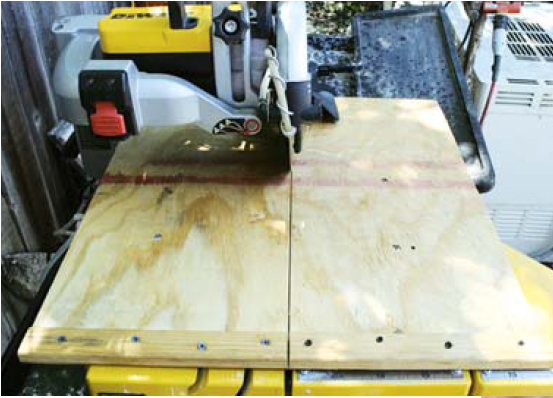
A. Contributing editor Michael Byrne, an industry consultant in Los Olivos, Calif., responds: Unless its finish approximates the finish of the uncut edges, the cut edge of a transparent glass tile can be glaringly obvious. To minimize chipping, I use a smooth-running wet saw equipped with a blade made specifically for cutting glass, such as the MK-215GL (800/421-5830, mkdiamond.com). So that there is plenty of clean cooling water, I fit the saw with a second pump that has its own feed line (this is in addition to the saw’s built-in pump). I also reduce vibration and support the kerf edges by clamping a 3/4-inch plywood table to the saw bed, which provides backing and reduces the chipping that tends to occur at the tail end of the cut, where the tile body is at its weakest (see photos). I feed the tile into the diamond wheel very slowly, easing up even more as I near the end of the cut.
Most glass blades leave a surface finish in the 200- to 400-grit range; subsequent grinding and polishing are required until the edge finish comes close to the tile’s original finish and luster. Production installers use wet-bath disc or vertical belt sanders, but you can also get satisfactory results with sanding blocks and fine grades of wet sandpaper. Start with a coarser grit and work your way up to 1,500-grit paper, using plenty of clean water.
Approximating the edge finish is one part of achieving a successful cut; another is getting the installation right. Since most cuts are located on the perimeter of an installation, they normally border movement joints, which are made with backer rod and sealant. To make sure the backer rod isn’t visible through the translucent glass tile, I coat the adjacent cut edges with thinset mortar. If you do chip the color coating that’s applied to the backs of some glass tiles, the best way to repair it is with paint or epoxy provided by the tile manufacturer. You can sometimes get a good color match with automobile touch-up paints. But whatever you do, don’t use nail polish, because it can react with cementitious materials like thinset mortar and grout and spoil the edge treatment.


