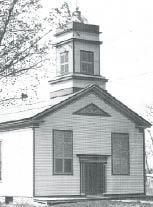
As part of a recent restoration project, my partner and I were hired to restore an elaborate triangular window in the gable end of 150-year-old Howden Hall in Bristol, Vt. The problem was, there was no actual window left to restore; all we had for reference was an old sepia postcard. But after we removed the aluminum vent that stood in its place — plus nearly 57,000 pounds of pigeon waste, contaminated cellulose, and sawdust insulation that had accumulated in the attic — we discovered buried treasure: a big pile of broken glass underneath the window opening and a single intact triangular pane.
With the postcard and paper copies of the glass pane for reference, I drew a full-scale model of the 10-foot-wide window’s outside dimensions on a sheet of plywood, then milled the parts from clear pine stock with cope-and-stick shaper cutters.
I assembled the big triangular frame using biscuits, aliphatic glue, and an epoxy-coated screw in each joint. Then I installed the long mullions, making sure all members lined up with the witness marks I had made during the dry fit. While the short mullions were probably mortise-and-tenoned into the long mullions on the original window, I didn’t have the equipment or time to be historically accurate. To keep the mullions from moving, I used a little construction adhesive and a pair of short brads pressed into the intersections at opposing angles.
After sanding and priming the frame, I disassembled an old storm window containing wave and bubble glass and cut, set, and glazed the panes. Then I applied two coats of oil-based paint, and the unit was ready for installation. A sheet of housewrap stapled inside-out behind it gives the window a uniform gray appearance from the outside.
Ted Lylis is a carpenter in Bristol, Vt.