Our company does electrical and general contracting in Northern
California. In 1999, customers started asking us to install
standby generators because they were concerned that the
upcoming Y2K event would lead to widespread power outages. We
installed several units that year, found we liked doing it, and
have since come to specialize in installing and maintaining
standby power systems in homes and businesses.
A standby generator is permanently wired to the building's
electrical system. If the utility power goes down, an
electronic control mechanism starts the generator and, after
about 25 seconds, signals a transfer switch to disconnect the
building from the grid and connect it to generator power. When
the utility power comes back on, the transfer switch reconnects
the house to the grid; after a short cool-down period, the
generator turns off.
Choosing the Right System
Before we can install an electrical generator, we need to find
out what the client expects the system to do.
Standby or prime? The first question we ask is whether the
client plans to use the system for emergency use only (standby
power) or on a regular basis (prime power). Most of our
customers are looking for the former — a way to produce
their own electricity on those rare occasions when the utility
power is down. For these systems, we recommend generators that
run on propane or natural gas.
But we've also installed power systems for people who live off
the grid, by choice or because the house is so far back from
the road the utility wants a lot of money to run power lines
in. These customers usually want generators for prime-power
uses, such as charging the backup batteries for solar- or
wind-powered systems. In these cases, when the system is likely
to run frequently or for long periods of time, we suggest
diesel-powered units; they're more durable and the
manufacturers will warranty them for prime-power applications
(see sidebar).
Whole or partial? We also need to find out the size
of the house and whether the client expects the generator to
power all or just some of the circuits (see illustration). A
whole-house system — one that powers all the circuits
— costs more because it requires a larger generator and
transfer switch than a partial system. Most people opt for a
partial system that powers vital circuits, like the ones for
the furnace, refrigerator, sump pump, well pump, freezer, and
some of the lights.
In a partial system, the transfer switch is installed
between a two-pole breaker in the main load center and a
separate emergency load center. In a whole-house system, the
transfer switch must be installed between the main service
disconnect and all the loads in the building.
Sizing the Generator
To determine the size of the generator for an emergency backup
system, we look at the circuits the client wants to run and
then add up the loads they are likely to carry. For a
whole-house backup system, sizing is a little more complicated:
We have to add up the existing loads and anticipate future
ones. If the client is thinking about installing a sauna or
spa, for instance, that's something we'd need to know
about.
A household's loads vary with the time of day and from day to
day, so if we want to know for sure how much power clients use,
we connect a recording ammeter to the power service and measure
power usage over some period of time.
A partial system typically provides about 25 percent of the
electricity normally used. The generator for such a system
would likely be between 7 kw (7,000 watts) and 13 kw in size.
For a whole-house system, a 13-kw unit is the absolute bottom
end. In most cases a whole-house system requires a unit able to
produce between 15 kw and 25 kw (see Figure 1). Even that might
not be enough if the house is very large and has central air
conditioning, electric heat, an elevator, or anything else that
consumes a lot of electricity.
Figure 1. Most residential generators are
air-cooled and burn propane or natural gas. A small standby
system might have a 7-kw generator (top), while a large one
might have a 13-kw unit (the minimum size for a whole-house
system). This whole-house system has a 16-kw generator
(bottom).
If the generator is too small to produce the necessary amount
of power, a circuit breaker at the generator will trip and cut
off power to the house. The owner then has to reduce the load
(by turning off lights or appliances) and reset the breaker.
One way to avoid this problem is to oversize the system —
but larger equipment is more expensive to buy and fuel. A
better solution is to buy a generator designed to temporarily
shed excess loads, or to install an optional load control
module (LCM) or air conditioner control module (ACCM). These
devices prioritize loads and automatically shut down (then
later reconnect) selected circuits when the generator can't
meet demand.
Altitude. Another issue to consider is altitude. We work in the
foothills of the Sierra Nevada mountains, and many of our
clients live at altitudes between 3,000 and 7,000 feet. The
motors in generators lose about 3 percent efficiency for every
1,000 feet above sea level. At 7,000 feet, they lose 21
percent. If we didn't take this factor into account, we could
undersize the system.
Locating the Generator
Generators can be installed outdoors or in. We nearly always do
outdoor installations; they're simpler and don't waste indoor
space. However, we have installed units indoors in areas
subject to deep snowpack, which can block the air intakes to
the motor.
Most standby generators are designed to be installed outdoors
only. Those that can be installed indoors — usually in an
outbuilding or detached garage — must be connected to an
exhaust pipe run to the exterior and provided with a specified
amount of combustion air and cooling air (both intake and
exhaust).
Transfer Switch
The electricity from the generator enters the building's
electrical system through a transfer switch (Figure 2).
Required by code, this switch prevents electricity from
backfeeding into the grid and injuring the people who are
working to restore power.
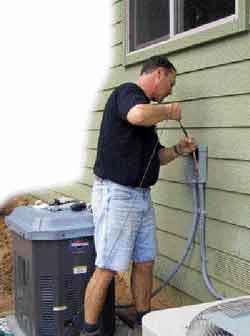
Figure 2. An electrician connects a wire
from the main load center to the transfer switch in a panel
that contains the load center for the emergency circuits. The
thick wires tagged "T" run to the load center above, and the
smaller red and black wires on the right go to the generator.
The blues are control wires.
We get a lot of calls from homeowners who have already
purchased a generator and want us to install it for them. They
often buy the wrong-sized unit and nearly always get the wrong
transfer switch. The most common mistake is buying a switch
with a NEMA 1 (indoor use only) rating. In this part of the
country, service panels (and transfer switches) are frequently
installed outdoors, and for that application the switch needs a
NEMA 3R rating.
How it works. To understand how an automatic transfer switch
works, picture a switch that has six contacts: two on top, two
on the bottom, and two that swing from pivots on the back. Each
pair of contacts equals 240 volts (two 120-volt legs).
Typically, the upper contacts will connect to the utility, the
lower contacts to the generator, and the pivoting contacts to
the loads. When the pivoting contacts swing up, they land on
the upper contacts and complete the circuit to the utility.
When they swing down, they land on the lower contacts and
complete the circuit to the generator. Since there are only two
positions — up and down — the loads can be
connected to either the utility or the generator, but not to
both at the same time.
In a small standby system, where arcing is not a major concern,
the transfer switch may rely on a simple magnetic relay to flip
back and forth between utility and generator. In a larger
system, the transfer switch is operated by one or more
solenoids.
Control mechanism. In most cases, the enclosure that houses the
transfer switch also contains an electronic controller (Figure
3). The controller monitors the utility, and if it senses a
loss of power (or a large drop in voltage) it signals the
generator to start. (A time lag of several seconds prevents
nuisance starts.) Once the generator is up and running, the
controller signals the transfer switch to switch from utility
to generator power. When the utility power comes back on, the
voltage may be low because of the number of motors and
appliances starting up at the same time. So, instead of
immediately switching to utility power, the controller waits
until the power is stable — usually a 60-second delay
— before making the switch and shutting down the
generator.


Figure 3. At top, the electrician attaches
a white control wire to a fuse block connected to the
electronic controller above. The controller tells the generator
and the whole-house transfer switch — the device with
large black wires coming out of it — when to operate. At
the generator (bottom), the control wire is screwed to a
terminal on the system control panel.
Partial and whole-house systems are wired differently. In a
partial system, the wires from the emergency circuits —
the ones selected to run on generator power — must be
disconnected from their breakers in the main panel and spliced
to new wires that run to breakers in a separate load center
(Figure 4). The load center is usually installed in the same
enclosure as the transfer switch and connects to the switch,
which in turn connects to both the generator and a two-pole
breaker in the main panel. Under normal conditions, utility
power flows through the breaker and transfer switch on its way
to the load center.


Figure 4. In the photo (top), the new
panel on the left contains an emergency load center, transfer
switch, and controller for a partial system, and the one on the
right is an existing load center. To convert some of the
existing circuits to emergency circuits, the author removes
their wires from the breakers (middle) and connects them to
wires that run to breakers in the new load center
(bottom).
When the utility power goes down, the transfer switch
disconnects from the main panel and the generator comes on to
power only those circuits in the load center. Later, when the
utility power comes back on and is stable, the transfer switch
reconnects the load center to the main panel, then turns off
the generator.
A 7-kw generator is usually paired with a 100-amp transfer
switch and a load center with space for eight to 10 circuits. A
larger system usually has a 200-amp transfer switch and room
for 12 to 16 circuits.
Whole-House Transfer
In a whole-house system, the transfer switch is connected to
the generator and installed between the meter main disconnect
and the circuit breakers in the distribution center of the
service panel or a separate load center. Under normal
circumstances, utility power passes through the switch on its
way to the panel. But when the utility power goes down, the
controller turns on the generator, disconnects from the meter,
and connects to generator power. When the utility power comes
back on, the controller disconnects the transfer switch from
the generator and reconnects it to the grid.
This is a simple installation in new construction, but it can
be tricky in older homes where the meter is installed in the
service panel. If the meter socket is connected to the
distribution side of the panel with cables, the transfer switch
can be installed between the meter main service disconnect and
the distribution center. But if the meter socket is hard-bussed
(permanently connected with metal bars) to the distribution
side of the panel, it's impossible to put the transfer switch
where it belongs without installing a new service panel.
Usually, we remove the hard-bussed panel — but on one
recent job we kept it, installed a new panel next to it, and
connected the two with primary cables that ran through a
transfer switch; then we relocated the existing circuits to the
new panel. This allowed us to keep the existing meter and
service drop.
If the new panel is close to where the old one had been, it may
be possible to run the existing circuit wires into it. If not,
the wires must be disconnected from their breakers and spliced
to new wires, then run to breakers in the new service panel or
load center (Figure 5).
Figure 5. Since the load center in the
existing panel was hard-bussed to the meter (top), the author
rerouted the existing circuit wires to an electrical gutter (at
bottom of photo), where he spliced them to new wires that run
to a new load center on the left. A whole-house transfer switch
(bottom left) is inside the building on the other side of the
wall. The large wires on top go to the utility via the main
service disconnect in the existing panel, the large pair at the
bottom go to the new load center, and the wires in the conduit
go to the generator, where they connect to the generator's
breaker (bottom right).
Maintenance
Standby generators require regular maintenance. The oil in
units with air-cooled engines should be changed after the first
10 or 20 hours of use, then once every 50 hours of operation
(Figure 6). If that sounds like overkill, compare it with your
car: At the same engine speed, your car would be going 100 mph.
Fifty hours of driving would cover 5,000 miles.
Figure 6. The electrician removes the
cover of a 7-kw air-cooled unit and checks the motor's oil
level. Air-cooled generators need an oil change after every 50
hours of operation.
Water-cooled engines — especially diesels — hold up
better and can go much longer between oil changes.
Some generators come with built-in hour meters that measure the
hours of operation. If a generator doesn't have such a meter
and we sign a maintenance agreement with the owner, we install
one so we can keep track.
Exercise. If you let a car sit for six months, it probably
won't start the next time you try to drive it. The same is true
of generators, which is why standby units typically start up on
their own once a week and run for about 15 minutes. The
controls on some models allow you to adjust the time and
frequency of these exercise periods.
Interconnect box. Although it's not strictly necessary, we like
to install an interconnect box between the generator and
transfer switch. A terminal strip inside the box connects to
the control wires of the generator. For us, this strip is a
convenient place to check the output of the generator in hertz
and volts during service calls.
Larry Schmitt and his son Scott operate
Guildhall Enterprises in Grass Valley, Calif.