
“Small and smart” is the guiding principle of Criner Construction Co. — but during the 30 years I’ve been in business, staying smart has been the taller order. There are two parts to this challenge. The first is keeping up with new technologies, products, and code requirements. The second — and more difficult — is keeping my crew working from the same playbook. Each of my four lead carpenters comes from a different construction background. While that gives us a lot of great experience to draw from, having products installed in four different ways can cause headaches — in everything from estimating to warranty work.
The best way to address this problem, we eventually decided, was to create our own company “best practice” manual — a set of procedures for installing all the parts of a home, from doors and windows to roofing and siding, that everyone would follow and that could be revised as needed to keep up with the latest thinking. The manual would also outline critical business procedures, like the steps involved in starting or finishing a job.
We had been talking about this project for some time when JLC published its Field Guide to Residential Construction. It was just the motivation we needed. Although I liked JLC’s systematic approach, some of the advice didn’t fit how we build in our climate, using our particular building materials and according to our local code. So we decided to use the Field Guide as the starting point for developing our own guidelines.
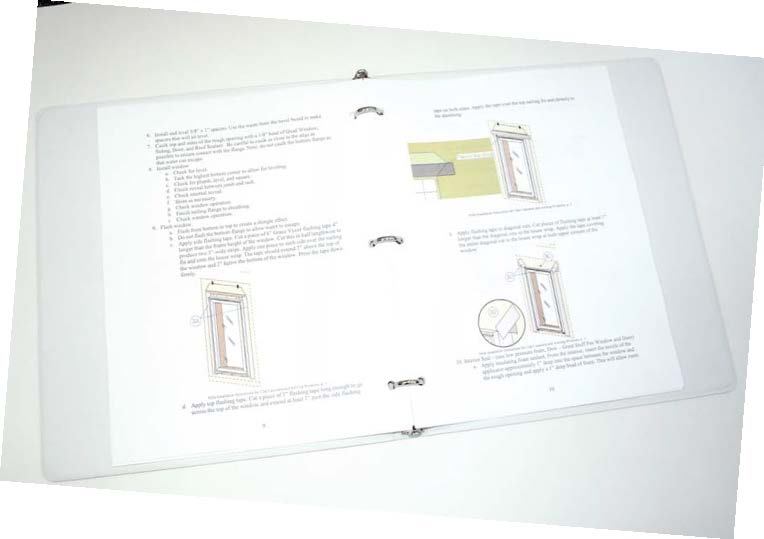
We began the project by tackling the two areas that had caused us problems or led to callbacks: window installation and roof flashing. A year later we had a half-dozen sections completed; within months we were reaping tangible benefits. We call our manual The Criner Way: A Manual of Best Practice for Criner Construction Co. It’s a work in progress, a three-ring binder that we add to a section at a time.
Best Not Always Easy to Define
Writing a manual is like any project — it needs a project manager. I gave that responsibility to our designer, Ben Rooker, because he’s comfortable in both the field and the office, and with research and writing. His general approach is to write a draft, submit it to our field crews for review, and then rewrite it according to their feedback.
For each section, he starts by gathering input from our lead carpenters, the JLC Field Guide, Web sites, trade journals, and manufacturers’ literature. For example, he used Pella’s installation instructions as the basis for the window-installation section, but supplemented it with JLC’s advice to place a bevel on the sill of the rough opening. Once the first draft is complete, he and I meet with our production manager, carpenters, and helpers. We review the draft procedure line by line, then open the floor for discussion. Some of these exchanges can get quite lively, for the simple reason that there is little agreement in the industry about best practice.
Take door sills, for instance. The JLC Field Guide might call for a metal pan or Z-flashing, while a trade-journal article may advise a one-piece rubber flashing. One door manufacturer might call for a two-piece rubber flashing, whereas another may not specify anything at all. We have to decide which combination of methods gives us the best result without voiding the warranty. These issues can take time to iron out.
Show and Tell
They can also require a bit of show and tell. That was the case with window flashing, which in addition to shedding water must prevent wicking, capillary suction, and vapor pressure. Because every lead carpenter seemed to have a different idea about how best to flash a window, we decided to mock up a small wall section and install a window that had been lying around the shop. We spent a couple of hours trying different flashing methods before settling on one that everyone agreed to use. Giving all of our carpenters a hand in the outcome creates a great sense of buy-in.
When we first started the manual, we had special meetings to review each section. These became difficult to schedule, so now we include a 15-minute best-practice discussion at our weekly shop meeting. We hold it at the beginning of the session, when there’s plenty of energy; but we stick to the time limit to keep the overall meeting from running too long. Developing standard procedures using this approach takes a bit longer, but the discipline of short weekly discussions has made best practice a part of our company’s DNA.
Ben takes notes at these meetings, and when we do come to agreement on a procedure, he writes it up to reflect the company’s best judgment as a whole. Then we distribute final copies to all the field employees, who keep them in their binders. Every employee gets a manual.
Tangible Benefits
We haven’t been doing this long enough to calculate its effects on the bottom line, but we have noticed a reduction in callbacks. We’ve seen other improvements too.
Our regular best-practice discussions have helped build a culture of progress and learning. There’s less resistance to new materials and methods, and our carpenters are more willing to ask each other for help solving problems.
The discussions educate our helpers, who someday may become our leads. As part of our discussion on moisture, for instance, we posted signs in the meeting room explaining how moisture moves through a building assembly. Although a lot has been written on this topic, most of what we read refers to heating or cooling climates. Because we build in Virginia — a mixed climate where things are a little more complicated — clarification was needed.
Not surprisingly, having procedures in place has made us more efficient. We spend less times debating solutions in the field. Our estimating is more accurate and our work more consistent. Writing specifications is easier because we know exactly how things will be done; when a customer asks a question about window installation, everyone in the company now gives the same answer. And if we do have a problem down the line, we won’t be guessing at how something was installed.
We’ve also clarified our quality expectations. For example, we couldn’t get prebent step flashing as large as the JLC Field Guide recommends, but we were using a self-adhering rubber membrane behind the step flashing, as advised by both the guide and the shingle manufacturer. Ultimately we decided that the smaller flashing along with the rubber membrane was sufficient.
Saving Time
These discussions have also helped us identify what products we use most and therefore need to stock in the shop. We now keep supplies of Great Stuff Pro Window & Door Foam and OSI Pro-Series Quad Sealant on hand. We got our supplier to stock the Grace Vycor we use so we no longer have to special-order it. And we’ve identified specialty tools we needed to buy, such as a pair of DeWalt shears for fiber-cement siding.
We’re even starting to think ahead. I’ve read articles about flashing windows in a wall with a rain screen, but we still need to address how this is done in our mixed climate and coastal location. So we’re talking about how to deal with that problem before we encounter it; this should prevent callbacks for leaky windows — or worse, rotten walls.
A company doesn’t necessarily have to go through the effort of writing a manual to get these benefits. The key is to establish the habit of regularly discussing best practice. Just a quick conversation about one section of the Field Guide at every company meeting can be enough to force you and your staff to think through installation issues, and to establish the importance of best practice as a company value.
There’s no doubt in my mind that — regardless of their impact on the company’s bottom line — our best-practice discussions are helping us close the gap between advances in the industry and our own production process. In other words, they’re helping us stay small and smart.
Robert Criner is owner and president of Criner Construction Co. in Yorktown, Va.


