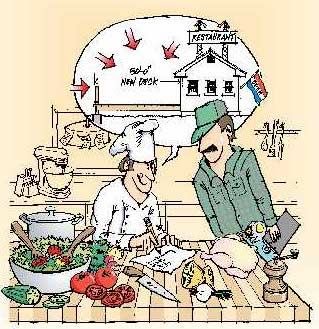
Let’s suppose you’re hired by a local restaurant to build a deck off the dining room so that customers can eat outside and enjoy the view. Your bid comes in at $30,000, and the owner accepts it.
After it’s built, you call the building inspector for a final inspection. When he sees the deck, he decides that it’s not to code and will never carry the weight of a bunch of tables and customers. According to the inspector, you need to add some beams. So you put them in and pass the inspection, but the extra work adds $5,000 to the final bill.
Implied Warranty
At the end of the job, you hand the property owner a bill for $35,000, and he says, “Hey, that extra $5,000 was warranty work. You violated your implied warranty that your work will be up to code.” Since according to him you didn’t do it right the first time, he hands you a check for only $30,000.
Can you collect that extra $5,000? Bearing in mind that different states have different rules — and even when the rules are the same they may be expressed differently — the answer is (as usual) that it depends.
First, you did in fact give your customer an implied warranty that your work will meet the building codes. “Implied” means you provided the warranty even if you never said a word about it. But does that implied warranty mean you’re stuck, and that you don’t have a prayer of collecting for the extra work necessary to get the project approved by the building inspector? Not always.
Is It an Architect’s Design?
If there were architects involved, it was their responsibility to make sure the design conformed to the local codes. Even the AIA (American Institute of Architects) standard contract says that. Architects are the design professionals; they’re the ones who know how to do this.
Attempt to shift responsibility. But some architects write a clause into the building contract that says you, the contractor, are required to construct the project “according to applicable codes.” Does a clause like this in the prime contract mean that you, not the architect, have to eat the $5,000 charge?
That depends on how hidden the structural flaw that created the problem actually was. Even if the contract tries to shift responsibility to the contractor, most jurisdictions will hold the contractor liable only for work that he “should have known” didn’t meet code.
So, as a general rule, this kind of contract language won’t get the architect off the hook for the subtle engineering flaws architects are supposed to know how to avoid. Of course, the extent to which the engineering flaw was subtle — or obvious — is a question of fact that a jury or arbitrator may have to decide.
Useful protective clause. If you are offered a contract with the language described above, add a clause or an addendum that states, “The contractor is not responsible for work that does not comply with the building code if that work does comply with the building plans and design that were provided to the contractor.”
“If you, as an experienced person in the construction trade, should have realized there was a problem with the design, then you could be held responsible.” |
Is It the Owner’s Design?
But suppose there isn’t an architect involved. Instead, the restaurant owner draws the plan on the back of a napkin. He says that’s what he wants, and if you don’t want the job he’ll find someone else. You do want the job but are nervous about building something designed by a guy who runs a restaurant.
Here’s what to do: In your original contracts and proposals, include language that specifically says you are relying on the owner’s plans and you are not assuming any responsibility for the adequacy of those plans, or for those plans meeting building codes.
But will that language get you off the hook? Not every time.
Should have known better. For example, it won’t get you off the hook for the things you should have noticed — say, that the span of the joists is adequate only for residential use, not for commercial loading.
Any “patent” flaw, which is a legal term that includes both the flaws you actually did notice and those you should have noticed, is your problem. If you, as an experienced person in the construction trade, should have realized there was a problem with this design, then you could be held responsible for that problem. And if you do notice a problem along the way, you need to inform everyone about it, because no contract clause can protect you when you knowingly do something wrong.
So what should you do in this situation while you’re still negotiating with the restaurant owner? You need to limit your implied warranty that this design will meet building code by stating specifically in your documents that you are relying on the owner’s plans. You also need to take a hard look at whether or not this napkin design is safe. If that deck collapses and people are hurt, contract language might protect you from the property owner, who was too greedy to pay for necessary work, but it will not protect you from the injured customers.
has practiced and taught law for more than 25 years. She’s the author of The Contractor’s Plain-English Legal Guide (www.craftsman-book.com).