
My husband, Bob, and I run a design-build remodeling company in California’s Silicon Valley. Many of our customers are engineers, so they expect cabinets to be highly functional and designed to fit their specific needs, in addition to being beautiful. Our in-house designers work closely with local cabinet shops to produce a tailored product. By rethinking standard configurations, they’re able to create unusual storage solutions and make use of space that normally goes to waste.
Leftover Inches Put to Good Use
Problem: What can you do with an extra 6 inches in a run of cabinets?
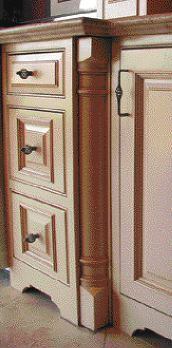
Solutions: With custom cabinets, you can turn extra inches into specialized storage that’s tailored to your clients’ needs. In this kitchen, storage was added by turning decorative pilasters into pullouts for cooking supplies.
The same idea was used in the upper cabinets, where spaces that were too narrow for standard cabinet boxes were turned into pullout spice racks on either side of the stove.
In another kitchen, drawers added between the dishwasher and sink are just big enough to hold foil or wrap and are close to the workspace where they’ll be used. The space they occupy is so narrow that it would be hard to use it for anything else.
Bathroom vanities often lay out with just a little extra space — and aren’t there always a bunch of small items that clutter up the counters?
We use the extra space by building tiny drawers for articles like makeup, hair accessories, and medicine bottles. The bottom drawer is narrow but deep enough for extra shampoo bottles or bathroom cleaner.
Keeping the Cookbooks Close
Problem: Where should those cookbooks go? They need to be handy but out of the way, so they aren’t constantly splattered.
Solution: If you have an extra 9 inches or so on the kitchen island, think about putting bookshelves on the ends instead of the usual blank panels. The client could also use this space to display a collection of salt shakers or decorative tableware. One client, a professional chef, requested a utensil storage rack on the island end because it was within easy reach of the range.
Clutter Cabinet
Problem: Where can the client post the grocery list, appointment reminders, and the kid’s soccer schedule instead of on the refrigerator?
Solution: We like to use something we call a “clutter concealing cabinet,” a shallow unit with storage and even a bulletin board inside. The bulletin board can be on the back wall of the cabinet or on the inside face of one of the doors. Phone books can be stored in a vertical rack, and pens and office supplies can be stored on shallow shelves.
If your client’s daughter is the reincarnation of Rembrandt, you can provide a display board covered with fabric elsewhere for the art. The client can pin things up inside the frame, and it will look like a planned piece of artwork. A less expensive option is to use homasote for the bulletin board and paint it to match the wall.


