
As the owner of a custom mill shop that works exclusively for Baud Builders in Narragansett, R.I., I’m always on the lookout for ways to deliver the highest quality woodwork as expediently as possible.
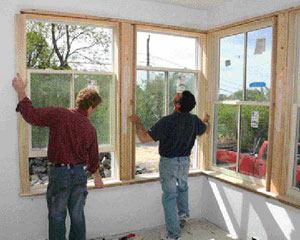
On the new-house project shown in this article, for instance, I took on trim installation for 58 windows. Although the house had both double-hung and casement windows, they were all getting the same trim treatment — making it the perfect opportunity to use a measuring and cutting system I’ve developed over the years.
You might look at the fabrication work involved here and wonder, “Why bother? Why not just buy the material and turn a pair of carpenters loose for a couple of weeks?”
The reason is that there are advantages to my method that you won’t get with conventional site carpentry. Most important is the quality of the installation: The parts fit together quickly and accurately, with no joints opening up down the road.
Also, we can get to work on the trim even before the wallboard-and-plaster phase starts. Site installation takes a few days, rather than weeks. And even if you’re not fitted out with a millwork shop, most of the tools and techniques I describe are totally transferable to the job site.
Taking Stock
The design for the trim includ-ed nominal 1-inch-by-4-inch square-butted side casings, a 1-inch-by-6-inch head casing with a 3/8-inch parting bead along its inner edge, and a 5/4 sill with a 1-inch-by-4-inch apron.
Pine extension jambs were supplied with the window order and were 5/8 inch thick.
I drew the components at full scale and included a 3/16-inch-deep relief plough on the back of the casing material to accommodate irregularities in the skim-coat plaster walls. The trim was to be painted, so we specified the stock in poplar. We ordered the material custom-milled from a local molding supplier and had it delivered to the shop.
At the job site, I measured each window, noting the interior distance between the head and sill and between the side jambs, and assigned each a number that denoted size and type; this job had five casement sizes, numbered 1 through 5, and five double-hung sizes, numbered 6 through 10. Then I labeled each window with a piece of masking tape stuck to the glass.
I recorded each window’s number, type, jamb interior width and height dimensions, quantity, and any special considerations such as proximity to a corner or another window or door unit. And — as always — I took digital photos of details, including all combination configurations; these would give me a reliable visual reference back at the shop.
Next, I had to determine a standard width for the extension jambs. I first gauged the distance from the window jambs to the face of the wall studs by scribing a scrap of wood. I ended up with a series of lines that averaged 2 7/16 inches. I added 9/16 inch for the thickness of the gypsum board and plaster skim coat, which resulted in a final “standard” jamb extension width of 3 inches.
Each window trim package had nine individual pieces — extensions, head, bead, stool, and casings. With 58 windows, that meant I had a total of 522 pieces to process.
Since one of my primary concerns is efficiency, from this point on I made no further use of a tape measure, other than to transfer the site measurements to a master layout stick.
Cutting to the Layout Stick
On this job, my layout stick was a length of 1-by about 2 inches wide and slightly longer than my longest trim dimension. I clamped it to an auxiliary bed on my chop saw with a stop block under the clamp.
When I use a layout stick, I don’t set the end flush with the saw blade. That’s because there are several offsets to take into consideration: the reveal between the window jamb and the extension jamb; the reveal between the extension jambs and the casing; the overhang of the parting bead beyond the side casings; the stool horns that extend beyond the apron; and the thickness of the side extension jambs, which rest on top of the sill piece.
To keep track of these differences, I make a pair of “offset sticks,” one for the casements and one for the double-hung windows. These hold the marks for the various offsets.
I cut a small reference kerf on the correct side of each offset line to avoid error, aligning it with a kerf cut into the auxiliary bed of the miter saw.
I hold the offset stick against the bed, with the saw kerf properly aligned, then slide the layout stick till it bumps the offset stick. I clamp the layout stick to the fence, then place the stop block on the correct line for whatever component I’m cutting.
Color-coding provides a quick way to sort and keep track of all the parts during assembly and installation.
For example, here I used a red marker to label the casement head and apron layout marks, and a green marker to label what I call the legs, or side components. I used blue and black markers to label the comparable double-hung marks.
Every component receives a label.
As I cut each component, I lay out the pieces side by side, facedown on a worktable. Once I’m done cutting, I label the identical pieces with the appropriately colored marker; I do this all at once, across their backs.
Ganging Material Is More Efficient
Breaking the whole process down into the smallest repetitive steps, rather than treating a single component to two or three operations one piece at a time, is key to saving time and eliminating confusion.
This is the order of my cutting operations:
• Rip the jamb stock slightly on the heavy side and gang-feed it on edge through my planer to take it to a uniform finished width of 3 inches.
• Cut extension head jambs to length
(I cut several extra pieces to serve as spreaders during jamb assembly).
• Rout a 3/8-inch-wide groove in the head jambs to receive the parting bead.
• Cut extension side jambs to length.
• Cut stool stock to length.
• Cut head casings to length.
• Cut aprons to length.
• Cut parting bead.
Note that I don’t cut my side casings to length yet. I wait until I’ve assembled the extension jambs, sill, and parting bead to double-check the exact dimension.
Assembly
For this particular project, I first assembled the extension jamb sets.
Holding the pieces down against the worktable to align the edges and square up the joint, I glued the sides to the head with a couple of spots of Titebond HiPurformer (Franklin International, 800/669-4583, www.titebond.com). This polyurethane hot-melt adhesive has a 30-second set time and a bond strength of 1,360 psi after 24 hours.
I also drove a couple of 2-inch trim-head screws in at each end for good measure.
Routing Bullnose Profile
Next, I milled the bullnose profiles on the sill and parting bead with table-mounted routers. I own enough routers to dedicate individual tools for each bit. Since the routers have custom polycarbonate bases attached, I can simply drop them into a matching recess in the tabletop. When I’m done with one bit operation, I switch routers.
Rounding the end grain on a piece of trim tends to break the grain out, so I always profile the ends first, then the edges. A zero-clearance fence reduces grain blowout, and a good exhaust port prevents chip buildup between the cutter and stock. Chips interfere with the cutting action and cause irregular milling.
To make the fence, I began by carefully pushing it straight across the running bit, freehand. Then I glued it to a square of 3/4-inch MDF that I’d drilled with a clearance hole for the bit. Finally, I hot-melt-glued the MDF to the router base. The MDF base allows me to use a stock sled made from the same material to guide the workpiece across the cutter during end milling.


