
Q.
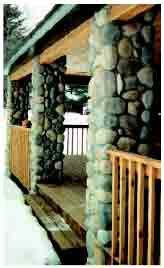
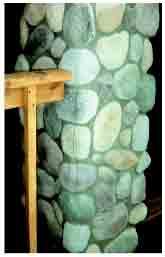
Last spring I completed a house with manufactured stone columns on the porches on both the north and south sides. The columns on the south porch have cracked at the corners (see photos), while the columns on the north porch are fine. The cracks are only on the two outside corners of each column, not the house side. The cracking occurred right away and hasn’t gotten worse.
The columns support LVL beams across the top. Above the LVL are monotrusses whose bottom chords also support the porch ceilings. On the north side, the ceiling is 6 feet wide; the south ceiling is 10 feet wide. The porch ceilings are tongue-and-groove boards, with no venting.
Any ideas about why I’m getting these cracks?
A. Steve Thomas, who worked for 15 years in the stucco and masonry industries, responds: First, in my opinion, you’ve done nothing wrong in not turning the corner with your lath. I’m not familiar with your mix, but the work looks very proper, given the photos you provided. The north-facing porch (with a 6-foot bottom chord and no “seasonal” sun hammering) as well as the chimney escaped scot-free. So you have to look at conditions that exist only on the south (sunny) side.
Your notes indicate that the stonework was done in the spring, so I assume that the framing took place over the winter months, when it was cold and snowy.
It’s conceivable that when the sun started beating down on the porch roof in the spring, moisture trapped in the unvented porch ceiling all winter started to “cook off” and shrunk the 10-foot-long bottom chord of the partial truss that makes up your porch roof. It’s possible that the leverage exerted as it shrank flexed the south (outboard) faces of the columns that support the porch, and that that movement was adequate to cause a fracture at the area of maximum extension — on the outside face of the column but not the inside. Presumably, the north porch didn’t react the same way because it’s not in the direct hot sun, plus the bottom truss chord/porch ceiling is only 6 feet long.
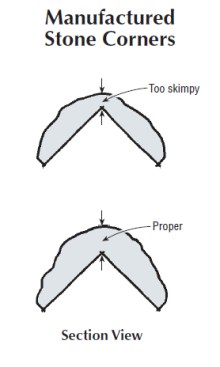
It’s possible, too, that the stone corners themselves are a minor player in this scenario. I’ve been involved in stone manufacturing, and corners are no fun to make. An outside 90-degree corner with inadequate “beef” — for lack of a better word — is much more likely to cause problems than a thicker product (see illustration). I’m not intending to criticize your stone vendor, but it might not hurt to eyeball a box of his corners and see which category they fall into.
Also, I assume you’ve had the stone manufacturer’s rep out to look at the job. If your installation details and mortar mix are endorsed by the manufacturer for your climate, I wouldn’t change your process.


