
- Q. I’ve been told that I can provide “instant” hot water to my second-floor bathroom sink by installing a return hot-water line to my water heater in the basement. Would I need to install a circulating pump with this system?
A. Joseph Stoddard responds: In the situation you describe, you can get acceptable results without a pump. The hot water “passive recirculation” loop is a technique I learned from an old plumber years ago. I’ve successfully used this technique a number of times when the bathroom is located above the hot-water heater. By providing a return piping run to the hot-water tank, a natural circulation (called a thermosiphon) is created. The cooler water in the upstairs bath sinks back towards the hot-water heater, and the hot water from the heater rises and replaces it.
I’ve had acceptable results using 1/2-inch-diameter copper return lines, but would caution against using a smaller-diameter return: It might not allow enough water to circulate through the loop.
To install a passive recirculating system:
1. Turn the power off to an electric water heater, and close the gas supply valve to a gas water heater. Shut off the water supply to the hot-water heater.
2. Drain the heater and the related hot-water lines, and remove the drain cock at the bottom of the hot-water heater.
3. Install a threaded tee stud between the tank and the drain cock (see illustration, left). To prevent bi-metal corrosion, the tee stud should be made from the same piping material used to connect the drain cock to the tank. Replace the drain cock in the end of the tee stud assembly.
4. Install a tee connection in the sink’s hot-water supply line. This tee should be installed in the supply line as high as possible.
5. Run the return pipe from the tee at the high point back to the tee at the hot-water tank, and test for leaks.
Insulate as much of the supply side piping as possible, but leave the return loop uninsulated. This will reduce standby heat loss and also help maintain the temperature differential that “fuels” this passive recirculation loop.
Standby Hot Water Without a Pump
2 MIN READ
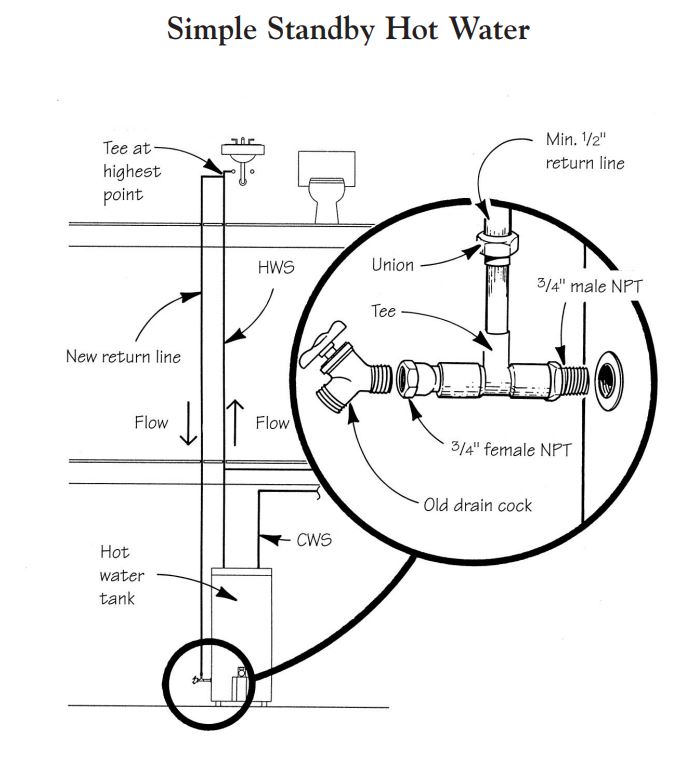
When a sink is located above the hot-water heater, you can provide instant hot water at the sink with a simple passive thermosiphon loop, plumbed with standard fittings.


