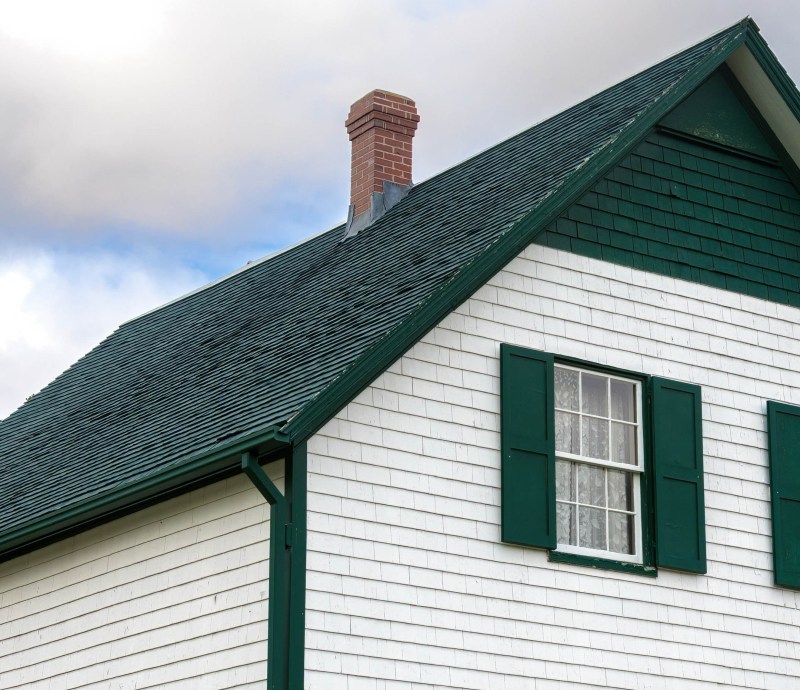
The roof can be one of the most defining elements of a house: Look at any child’s drawing, where a strong triangle atop a box is likely to say “home.”
The way the roof terminates at the eaves and rake contributes greatly to both the practical function and aesthetic effect of the roof.
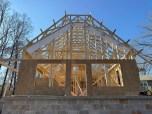
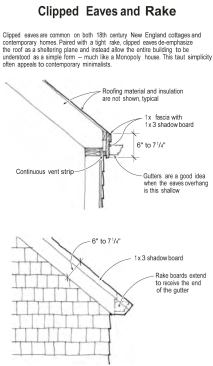
There are two basic types of eaves and rakes: clipped and extended. Clipped eaves and rakes project no farther beyond the exterior wall than necessary to cover the frieze trim. Extended eaves and rakes project 6 to 8 inches for a short overhang, one foot for a moderate extension, and 18 inches to as much as 3 feet for a more dramatic effect.
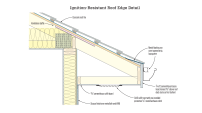
Extended eaves and rakes can be either closed or open — depending on whether the rafter tails or lookouts are enclosed with a soffit. If open, the rafter tails can be shaped and trimmed with a shadow board, or the shadow board can be omitted.
Often the design of the eaves drives the rake design. There are some useful rules of thumb to guide eaves-rake pairings (but, as always, there will be exceptions).
To start, consider a rake that is similar to the eaves you’ve selected. If the eaves are extended and open, an extended, open rake may be a good choice. The rake needn’t extend as far as the eaves; that could prove excessive in many cases. There’s nothing wrong with an 18-inch eaves overhang coupled with an 8-inch rake overhang, for example. Rarely, though, is it desirable for the rake extension to exceed that of the eaves.
Likewise, clipped eaves generally work well with a clipped rake — an overhanging rake with clipped eaves might appear somewhat awkward. On the other hand (here’s an exception), a clipped rake can work with extended eaves.
When extended eaves have a level soffit, extra care should be taken to resolve the intersection with a clipped rake. On the flip side, when extended eaves with a level soffit are paired with a similarly extended closed rake, the result can have a heavy, boxy look.