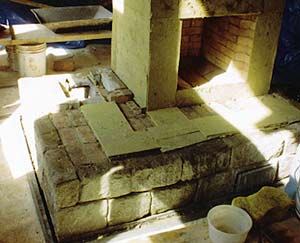
Builders are beginning to hear more complaints that traditional masonry fireplaces leak smoke and burn too much wood for too little heat output. The fact is, open site-built masonry fireplaces have always been filthy, smoky, and inefficient, but these drawbacks were less noticeable in drafty, uninsulated houses. Today’s tighter homes, however, are less forgiving, and their occupants are less tolerant. In addition, many modern fireplaces are used strictly as a design element, and many designers have no training in what makes one work. On top of that, many of the masons and other heating contractors who build fireplaces carry over outdated design traditions that are at the root of performance problems. It doesn’t have to be that way. Building scientists now understand why traditional fireplace designs perform poorly, and masons, manufacturers, and hearth installers have responded with new products and techniques that eliminate past problems. In this article, I’ll discuss the common causes of fireplace problems, and propose solutions for masonry fireplaces and heaters, as well as less expensive, efficient wood-burning metal fireplaces.
Why Fireplaces Fail
When it comes to traditional open masonry fireplaces, masons have perpetuated outdated ideas about the smoke shelf, the mysteries of the smoke chamber, and the need for wide, but shallow-throat dampers. Today, it is clear that all three of these features work against successful fireplace performance (see Figure 1). Figure 1. Traditional fireplaces leak smoke into living space and don’t produce heat efficiently. The curving smoke chamber, the throat damper, and the smoke shelf all decrease the stability of the chimney draft. The smoke shelf and shallow-throat damper both act as obstacles to straight exhaust flow. And the smoke chamber actually reduces the strength of a chimney’s draft by slowing and cooling the fireplace exhaust. The performance of many brick fireplaces can be improved immediately by removing the throat damper and smoke shelf, and installing a chain-operated damper at the top of the chimney. The results are a smooth, straight path for the exhaust and less smoking when a fire burns.