A few years ago, I invited a couple to my home for dinner so that we could discuss plans for the new house they wanted to build. The husband had used a wheelchair for years, ever since an automobile accident at age 18. My 20-year-old home is not barrier-free, and it was an eye-opening experience to try to help him up the front steps and then watch him navigate our narrow doors and hallways in his wheelchair. The real moment of truth came after dinner, when he asked to use the rest room. Fortunately, the door to our first-floor bath was just wide enough that I didn’t have to resort to a chain saw.
That evening taught me in a very personal way the challenges that a wheelchair user faces. I decided then and there to build homes that all of my customers could use and enjoy, regardless of their age or physical ability.
A Universal Need
Even though I am now a strong advocate of universal design, I don’t push the idea any harder than I push, say, pedestal sinks in half-baths. But I do try to educate my customers about the usefulness of features like zero-step entries and wide doors and halls — and I include even young and able-bodied customers in this conversation. All of us will be touched by a disability sometime during our lives. A child might be born with a disability or break a leg playing football, or a parent might become permanently disabled in an accident. Or perhaps a friend in a wheelchair will want to visit.
U.S. Census Bureau statistics support my point: 51.2 million people in the U.S. — or about 18 percent of the population — have a long-lasting disability. The Commerce Department estimates that by 2050 the number of persons worldwide aged 60 years or older will grow to almost 2 billion, and the population of older persons will be larger than the number of children for the first time in human history.
No-Step Entry
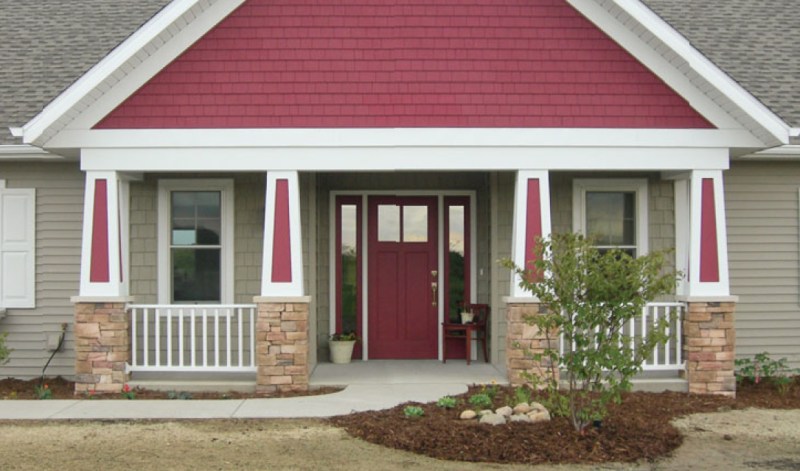
Zero-step entries are one of our most popular upgrades. With advanced planning, they’re not difficult to build, and they add only $800 to $1,500 to the overall budget, depending on the size of the home and the design of the entryway (see photos below). Not every client will choose this option, partly because it changes the look of the home. It seems to work better with ranch-style and other single-level homes than with multistory homes. Still, most of my customers embrace the idea. (My crew does, too, because it makes hauling tools and construction materials in and out of the house a lot easier.)
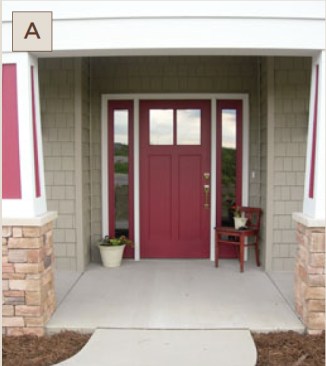
Raising the grade to floor level eliminates the front step.
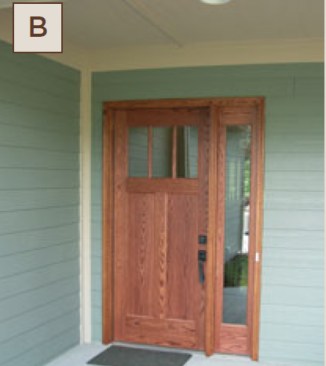
This provides a smooth, rampless transition.
ADA requirements. To meet American Disabilities Act (ADA) requirements, thresholds must not exceed 3/4 inch in height for exterior sliding doors or 1/2 inch for other types of doors. Changes in level up to 1/4 inch can be vertical and do not need a beveled edge.
Door openings must provide at least 32 inches of clear open area. This usually means a 36-inch-wide door, unless the door is able to swings all the way open, clear of the opening and the hinge side of the door is completely out of the way.
To prevent water damage, the entry should have overhead protection and the porch or walkway leading up to it should be sloped for positive drainage. But make sure that recessed entrances are wide enough. If the face of door is recessed more than 8 inches, you must provide at least 18 inches of clearance on the latchside of the door. That is, the recessed opening must be at least 18 inches wider than the door rough opening. This allows a person to maneuver a wheelchair to operate the door latch. Most of the recessed openings we build are much wider than this minimum.
Floor framing solution. While it’s possible to build a zero-step entry with standard platform framing, this usually involves bringing the exterior grade up against the band joist to create a sloping entry. Careful flashing is needed to prevent insect infestation and rot.
Click here for larger version.
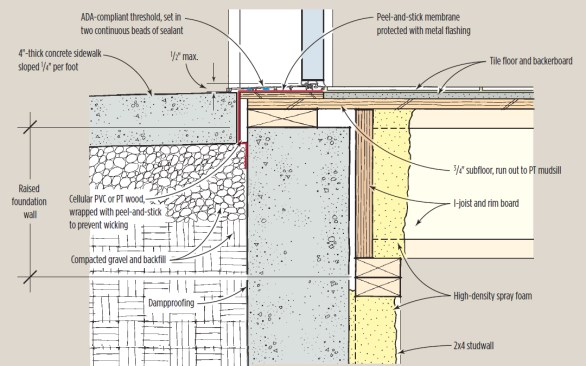
Increasing foundation wall heights near the entry by a foot and recessing the floor framing allow the finished grade to be raised to floor level while protecting the framing against rot.
I prefer a different approach. I place the tops of the floor joists at the same elevation as the top of the mudsill by adding height to the foundation wall and framing a bearing wall inside the basement perimeter (Figure 2 below). This method is more expensive, but it eliminates the need to push dirt up against the wood framing and allows me to put the entry door and garage door at the same level, creating a no-step passage between the garage and the house.
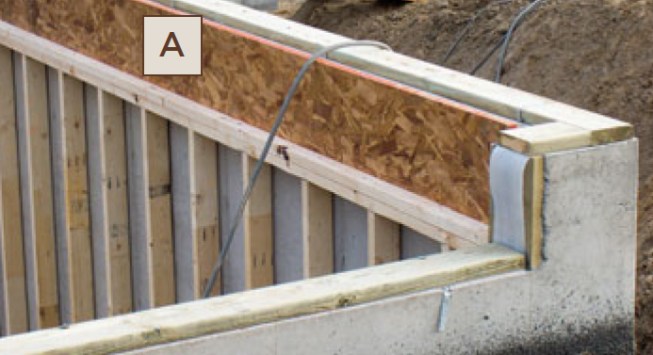
Instead of bearing on the sills, the joists are supported by 2×4 walls framed within the foundation walls.
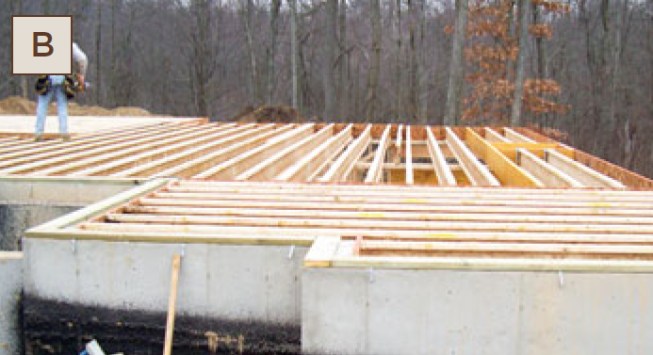
The floor system is then framed with I-joists, whose tops are flush with the mud sill.
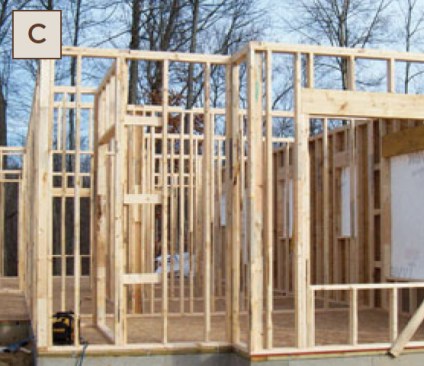
On this 2,400-square-foot house, the additional framing and concrete work added about $850 to the budget.
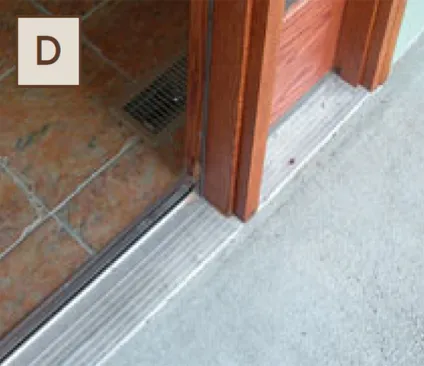
An ADA-compliant barrier-free threshold with a low curb completes the zerostep entry.
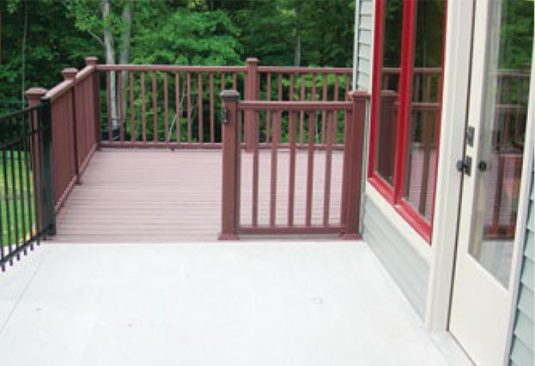
The zero-step concept can also be applied to decks and outdoor living spaces.
Other Resources
NAHB offers CAPS (Certified Aging-In-Place Specialist) training, a great source of knowledge that has increased my credibility with prospective customers. The Living in Place Institute also offers CLIPP (Certified Living in Place Professional), which has gained traction in recent years as a reliable source for building professionals to gain the understanding needed to make homes accessible, comfortable and safe for all occupants regardless of age or ability.
Other organizations I’ve found to be helpful are Disability Advocates of Kent County, the Center for Universal Design at North Carolina State University, and our local chapter of the Center for Independent Living (dnmichigan.org). Also, even though the Americans with Disabilities Act (ADA; ada.gov) doesn’t apply to residential construction, it can be an important resource during the design-build process. And it’s always a good idea to have a conversation with your local building official about relevant code matters.