The design – which we playfully called the 'Kava Hut' – was insp…
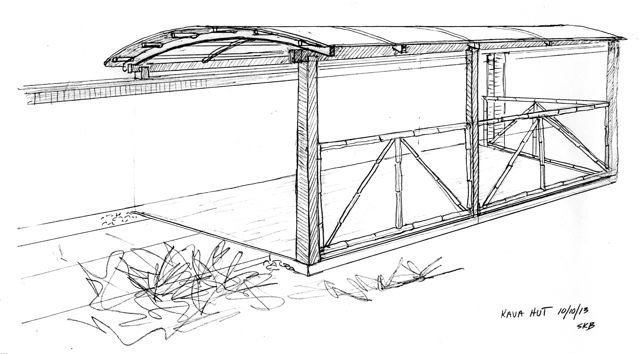
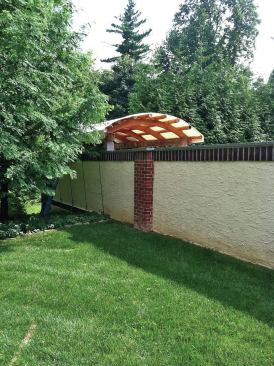
The design – which we playfully called the 'Kava Hut' – was inspired by a book about life in the South Pacific, and had to accommodate an existing masonry wall, as shown in the sketch. I reviewed the structural details with an engineer (danielsengineers.com) before beginning construction.
Scott Bailey
I needed to learn some special joinery and lashing techniques to…
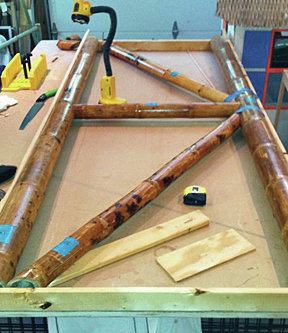
I needed to learn some special joinery and lashing techniques to build the railing, and found that the special bamboo saw that I acquired (from japanwoodworker.com) was instrumental in cutting the poles cleanly without damage to the cut edge. To make the job easier, I built a flat table with a frame set to the exact size of the railing.
Scott Bailey
Lashings of chocolate-colored natural hemp cordage hold the rail…
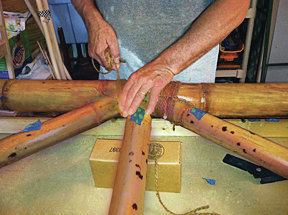
Lashings of chocolate-colored natural hemp cordage hold the rail pieces together.
Scott Bailey
I traced the ends of the top and bottom rails onto mahogany vert…
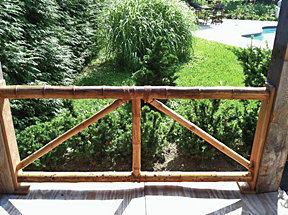
I traced the ends of the top and bottom rails onto mahogany verticals and cut out the shape to allow the rails to slip into the verticals. Then I screwed the verticals into the posts. The railings were finished with three coats of Sikkens Cetol marine varnish.
Scott Bailey
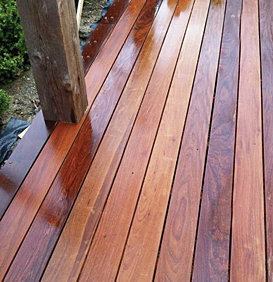
We used IpeClip hidden fasteners (deckwise.com) to attach the ip…
We used IpeClip hidden fasteners (deckwise.com) to attach the ipe decking to the framing, so we had to use a biscuit cutter to cut the needed grooves. We protected the decking until all construction was completed with ¼” plywood, and finished the ipe with natural creamed beeswax (briwaxmidwest.com).
Scott Bailey
The original plan was to use metal roofing, but we learned that …
The original plan was to use metal roofing, but we learned that the panels could not be made to conform to the arch. Instead, a local shop (futurelineautotops.com) fabricated the roof using Stamoid vinyl-coated polyester fabric, which is often used for auto and marine upholstery.
Scott Bailey
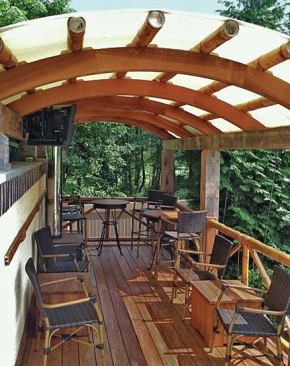
The kava hut's fabric roof is translucent, so it's shaded but no…
The kava hut's fabric roof is translucent, so it's shaded but not dark inside.
Scott Bailey
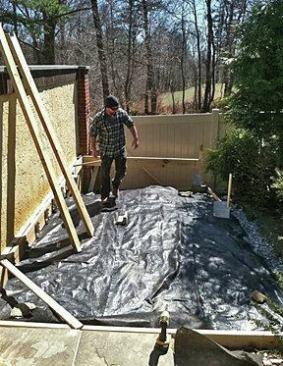
We created a gentle slope to the soil and a swale to carry away …
We created a gentle slope to the soil and a swale to carry away any ground water or rain away from the deck frame. Then we covered the soil with heavy landscaping cloth and some stone.
We tried to repurpose as many materials as possible, both for ch…
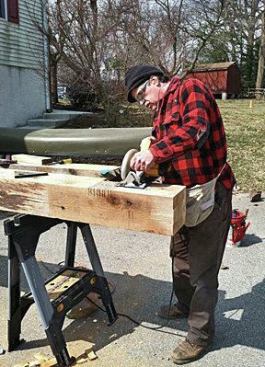
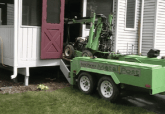
We tried to repurpose as many materials as possible, both for character and sustainability. Luckily we had a good source from a stockpile of a former custom builder, where we found 8”x8”x17’ cedar posts and 4”x7”x17’ beams
Scott Bailey
We located the joists just above the soil level, and let the ban…
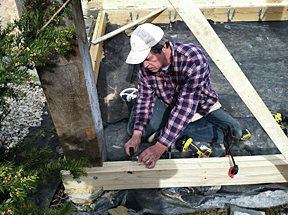
We located the joists just above the soil level, and let the band joist into the repurposed 8”x8” cedar posts (we held the band joist off the masonry wall with pressure treated spacers).
Scott Bailey
The arches were fabricated by a local millwork shop (taguelumber…
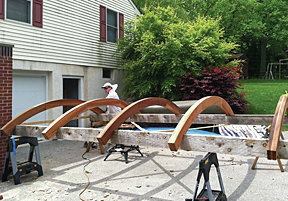
The arches were fabricated by a local millwork shop (taguelumber.com) from western red cedar.
Scott Bailey
When we installed the beams, we connected one of them to the top…
When we installed the beams, we connected one of them to the top of the masonry wall with stainless steel all-thread that was epoxied through the slate capstones and into the concrete-filled top course of block. We fastened the beam on the opposite side to the posts using stainless steel all-thread and barrel nuts placed into the posts and concealed with dowels.
Scott Bailey
The arches are fastened to the beams with heavy-duty angle brack…
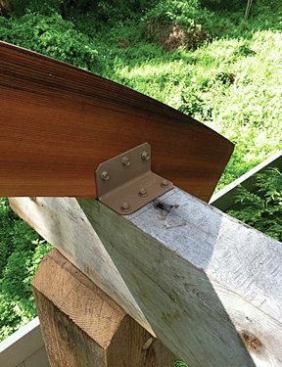
The arches are fastened to the beams with heavy-duty angle brackets.
Scott Bailey
I joined the rafters to the arches by first cutting an access ho…
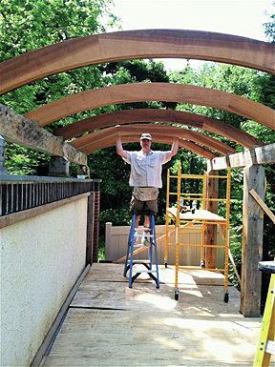
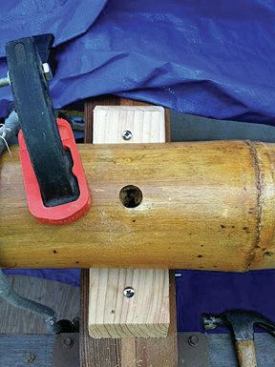
I joined the rafters to the arches by first cutting an access hole through the top, and then running a self-tapping screw through the lower section and into the arches. I placed 1½” cedar stops on either side of the rafters to help hold them in place.
Scott Bailey
All the structural-grade bamboo poles we used on the project wer…
All the structural-grade bamboo poles we used on the project were grown in South America and acquired from Guadua Bamboo (koolbambbo.com), a Florida firm. They shipped the bamboo to us by truck.
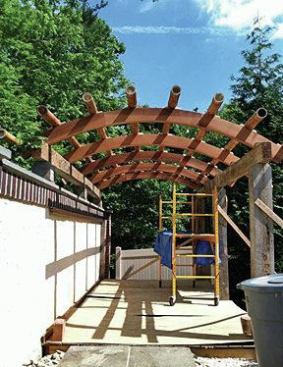
I don’t think my client has ever gone to Polynesia, much less tried its famous kava (a root used to create a mild narcotic drink). But he liked the idea of a casual socializing area with a tropical flavor and—using a book on life in the South Pacific islands for reference—asked me to design and build a sheltered pool-side deck with a similar feel.
I repurposed as many materials as possible, for character and for sustainability, to build the 8-by-16-foot structure. I found some beautifully weathered 17-foot-long cedar 8×8 posts and 4×7 beams and a stack of unused ipe decking in the stockpile of a former custom builder and had a local shop laminate arches from new select western red cedar.
To fasten the structural-grade bamboo purlins to the arches, I cut access holes through the top edge, then ran self-tapping structural screws through the lower edge into the framing. Cedar stops fastened to the arches on either side of the purlins help hold the bamboo in place (see slideshow).
I researched bamboo joinery and lashing techniques to create railings that were strong but looked casual. For example, I used a special saw to cope the ends of the bamboo cleanly and used a flat table with a frame set to the exact size of the railing to assemble the pieces prior to installation. The ends of the top and bottom rails fit into mahogany verticals, while lashings of chocolate-colored natural hemp cordage hold the rail pieces together. I finished the railings with three coats of marine varnish, then screwed the verticals to the posts (see slideshow).
The hut’s canopy was fabricated from a marine textile called Stamoid, a vinyl-coated polyester material. Not only is the canopy translucent, it’s also quieter in the rain than metal roofing. The fabricator fitted battens into the perimeter of the canopy to maintain its shape and provide anchor points for adjustable cables that hold the canopy slightly taut, even in high winds.