Q. The clients on an upcoming project are interested in installing fiber-cement siding, but they’re concerned about how the butt joints will look. While they don’t expect the tight-fitting seams characteristic of wooden clapboards, they also don’t like the look of wide caulked joints. Is there a better way to detail these joints?
A.Mark Parlee, a general contractor in Des Moines, Iowa, responds: In my experience, water that gets trapped against fiber-cement siding can be absorbed by the material, causing joints to swell and shrink during freeze/thaw cycles.
On our jobs, we typically don’t leave gaps for caulk at butt joints, because this detail can contribute to the problem. Instead, we snug the joints up tight and protect the seams with a piece of metal flashing installed behind each joint.
This metal spline laps over the siding course below, so any water that penetrates the joint gets channeled out. The splines wouldn’t be hard to make on site, but our local lumberyard stocks painted 6-inch-by-12-inch painted aluminum flashing (white on one side, brown on the other) that’s perfect for this application.
We try to use factory edges with all our butt joints, though sometimes they’re a little rough. We’ve found that we can tighten up these joints and make them less visible by scraping away excess material on the back of the factory edge with a utility knife.
When we do have to use a cut edge in the field, we make it a point to prime the edge first to minimize water absorption. Keep in mind that we’re talking about fiber-cement siding here, not cedar clapboards: It shrinks and swells, and so do the gaps at the joints. But by eliminating the caulk and giving water a quick route out, we can make the butt joints look pretty good.
Do Fiber-Cement Butt Joints Have to Be Caulked?
2 MIN READ
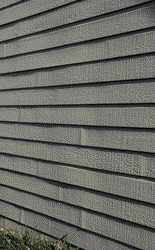
Caulk is usually used with fiber-cement siding to prevent water intrusion at the butt joints. However, this detail may not be effective at sealing the ends, allowing water to be absorbed and swell the board ends.