Emanuel Silva does not mind the jobs other contractors turn down.
Replacing a few windows. Tying new clapboards into old siding. Repairing porch details. Swapping out basement columns. Coming back six months later for another door, another room, another phase of work.
“A lot of guys wouldn’t want to do what I do,” says Silva, owner of Silva Lightning Builders in North Andover, Mass.
That’s because the work is fussy and requires a degree of patience Silva is uniquely suited for. His specialty: careful repairs, done in phases, with the owner himself on the job from start to finish.
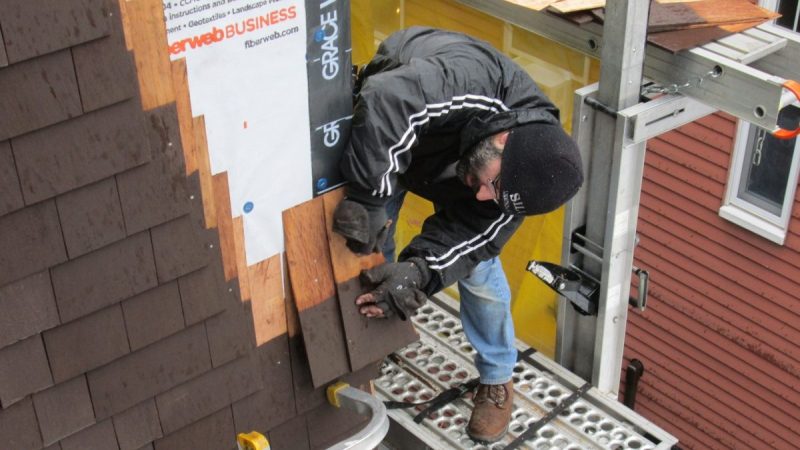
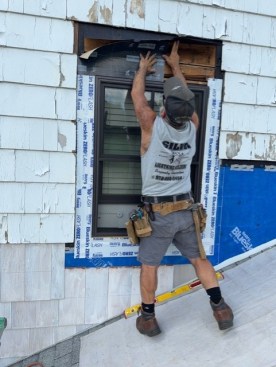
Much of that work happens on older houses around Massachusetts. On one recent window job, Silva had to remove only the wood shingles needed around the opening, pull nails from behind without breaking the surrounding shingles, flash the opening properly, and tie the new work back into the old.
“You only pull off what you need to pull off,” he says. “You have to stagger them a little bit. Then you have to flash back behind it.”
Matching the siding is part material knowledge and part judgment. Many of the older homes he works on have red cedar shingles or clapboards with tight exposures. When Silva opens a box of new shingles, he does not simply start installing. He sorts through the pieces, matching widths and lengths so the patch does not call attention to itself.
“You take one thing at a time,” he says. “If you do a step, do it right.”
That approach also shapes the way Silva looks at old houses. They are rarely square, level, or easy, but they often show a level of care he respects.
“It makes you think a lot more than a simple house built 20 years ago,” he says. Think tight siding exposures, plaster walls, detailed trim, inlaid floors, and old porch assemblies all require a slower hand.
For Silva, staying small is what makes that possible. He has worked solo for the past eight years and prefers it that way. Even when he has a helper, the work still goes through his hands. He does not want to spend his days managing crews or chasing quality control. He wants to be the one setting up, doing the work, and making the decisions.
“When I’m small and I’m on the job site, I can control what I do,” he says. “I’m all about quality over quantity.”
That control matters because many of the problems he finds are not immediately obvious to homeowners. Caulked window heads, missing or incorrect flashing, rotted trim, sagging beams, rusted basement columns, and poorly detailed siding-to-roof intersections can look like small repairs until the assembly is opened up.
Silva tries to explain those risks early. If a roof should be replaced before a skylight goes in, he says so. If a porch is too far gone to patch cleanly, he says that, too. If basement columns are failing beneath a future bathroom renovation, he wants the owner to understand the sequence before investing upstairs.
“You’ve got to tell them ahead of time what’s going on,” he says. “Most of the time, they appreciate it.”
His pricing follows the same plainspoken logic. Silva is not a fan of time-and-materials work because he says it can put homeowners in the position of watching every hour. Instead, he prices what he can see, breaks down the work in his own way, and includes contract language for hidden conditions. If he runs a day or two long, he can live with that.
“I know at the end of the day, the client’s happy with the work,” he says.
Those clients often call again. Silva says small jobs frequently become long-term relationships: a front door one year, siding later, then a kitchen, porch, or tile job down the road. In that sense, small jobs are the beginning of a relationship.
“The small jobs always end up getting me more work,” he says.
Silva would rather repair what can be repaired, replace what truly needs replacing, and leave behind work that looks like it belongs.
“Just taking the time to show things and do things,” he says. “To me, that’s the lost art.”