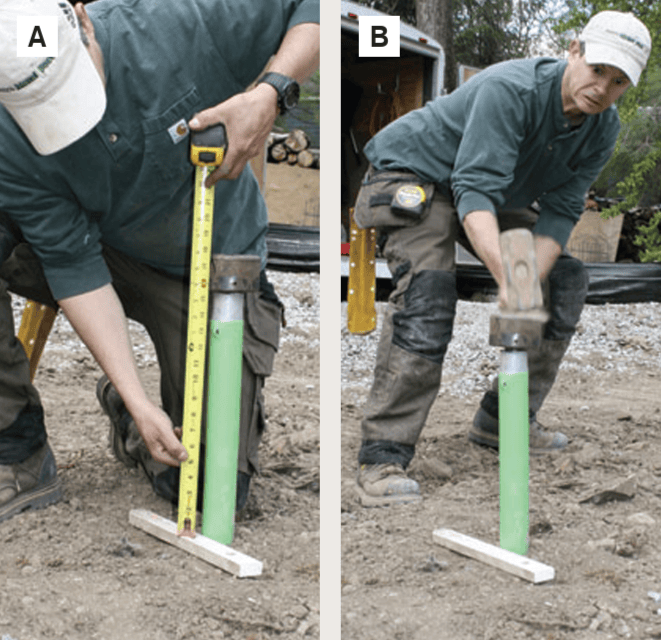
Load testing a helical pile is far simpler than it sounds. The height of the pile above grade is measured (A). Next, a cap is inserted into the pile to protect its top. This cap is slammed five times with a sledge hammer (B), and the pile’s height is measured again. The sledge’s weight is specific to the size of the pile — a heavier hammer is used with bigger piles. The amount that the pile sinks indicates the soil bearing capacity, which an engineer will verify.
The dynamic loading imposed by an impact load is surprisingly large and correlates to the static load a pile can handle. Load testing, as opposed to taking a torque reading, is done in several instances. One is when the pile bottoms out on a large rock. Another is when the soil is particularly slippery — wet clay, for instance. With slippery soil, the bearing capacity can be higher than torque readings would suggest because the soil is lubricating the helix and reducing the force required to turn it.
Return to main article.