
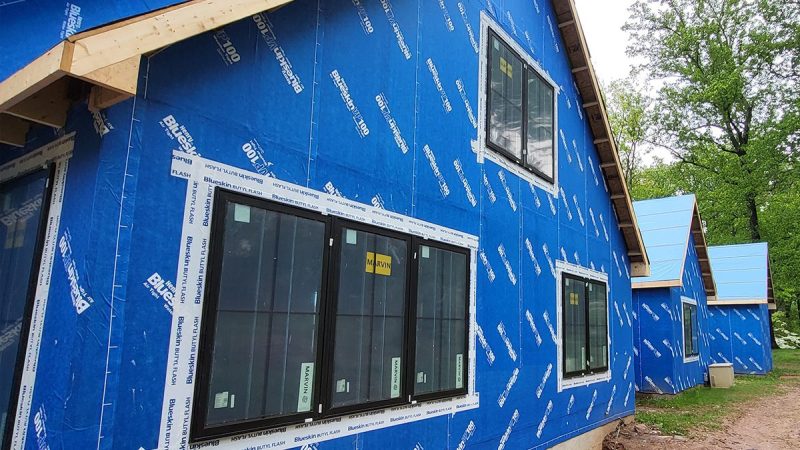
A building enclosure is the most important line of defense against outside elements and the comfort of everyone inside. Your wall assembly has to do a lot: resist water intrusion, manage moisture and condensation, and stop heat or cooling from escaping through air leakage. You’ll need multiple products to achieve full protection—a weather-resistive barrier (WRB), flashing, sealant, and sometimes insulation.
“As a distributor, one of the biggest challenges we face is helping our customers navigate the number of choices involved in building a complete envelope system,” says Tina Breen, VP of Sales and Marketing at Manufacturers Reserve Supply. “Contractors are making decisions across multiple components on every job.”
Picking the right products means working through a few questions:
- Performance. Which products are the right fit for your climate zone and code requirements?
- Availability. Can you get everything from one distributor and have it on site when you need it?
- Compatibility. Do the products work together as a complete system, and is installation straightforward?
- Support. Will the manufacturer be there when you have questions—before the job, during install, and when something unexpected comes up?
- Warranty. If something goes wrong, what coverage do you have, and how hard is it to actually get help?
If you bring in products from multiple manufacturers, the questions get harder. Say an installation question involves two products. Which manufacturer do you call? If something goes wrong, which product is responsible—and who’s on the hook? There’s rarely a clean answer.
The Benefits of One Manufacturer
Go to one manufacturer for all three (or four) components and those questions answer themselves.
Product selection support. With one manufacturer’s WRB, flashing, and sealant (and potentially insulation) in the spec, you have a single source who knows exactly how those products work together—and can tell you which combination is right for your climate zone, cladding type, and code requirements.
“If a project is in the planning and drawing stage, our team can help answer: Which WRB product should I use for this wall assembly and cladding type? Which flashing details apply at windows, wall penetrations, and terminations? Should I add insulation if I’m in climate zone 6, 7, or 8?” says Tom Baiada, product manager for Henry, a Carlisle Company. “Bringing us in early allows our team to ensure everything is well-defined before installation begins—the contractor already knows what they’re installing meets code, meets the design requirements, and will have ongoing manufacturer support.”
Training and troubleshooting. Many multifamily projects begin with a mock wall session where all the trades come together to plan the installation sequence and make sure they understand their roles. A single manufacturer who knows all the products can walk through the complete wall assembly from the start. “If a crew arrives on site already knowing what they need to do and how to install the products, the job goes faster,” Baiada says. “If they get there unsure of the details, there’s a learning curve.”
Whether you’re building a custom home, a townhouse, or a larger multifamily project, complex architectural details will come up that aren’t in any install guide. When complications arise during the build, a single call to one manufacturer who already knows the project cuts through the confusion—no more separate calls to separate contacts about separate products.
Warranty support. With a mixed-manufacturer assembly, diagnosing a failure gets complicated fast. “If there’s water intrusion at a window, someone has to open up the wall,” Baiada says. “If there’s a flashing product from one manufacturer and a WRB from another, it becomes a gray area: who’s responsible, who do you call? With a single manufacturer, they can reference the install guides, talk through how it was installed, and really troubleshoot.
“Contractors have more confidence installing a complete system, knowing it’s backed by one manufacturer, and it reduces risk on the jobsite,” Breen says.
Enclosure Protection That’s Easy as 1-2-3 (and Sometimes 4)
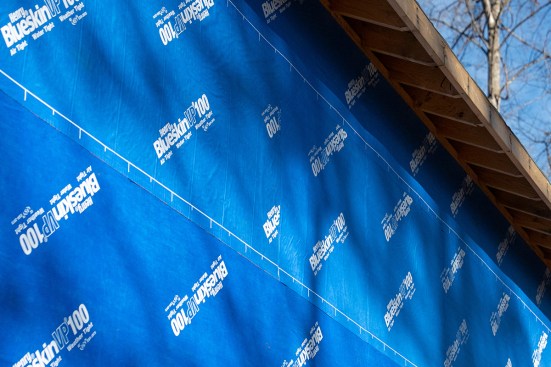
Henry’s 1-2-3 Moisture Control System is built around exactly this principle. The system’s three components—WRB, flashing, and sealant—come from one manufacturer, backed by a single warranty. Henry offers:
- A range of WRB options across different price points, performance levels, cladding types, and climate zones.
- Self-adhered or liquid flashing with installation details to match.
- Sealant to complete window installations and any details where WRB and flashing interact.
Henry works to make sure distributors and retailers carry their full product line, so sourcing is simpler and you’re not waiting on materials from multiple suppliers to show up before the job can move forward. “Their 1-2-3 system means a contractor can walk into a lumberyard, quickly grab the house wrap, flashing, tape, and sealants they need, and get back to the jobsite without having to hunt for products or second-guess their selections,” Breen says.
For projects in colder climates—or where energy codes require additional thermal performance—there’s a fourth component: insulation. Henry’s 30-year warranty extends to cover the complete assembly from the bottom plate of the wall up to the roof line. The company’s Blueskin VPTech product combines continuous insulation and a WRB with integrated flaps, combining what would otherwise be two separate installation steps. “In climate zones where you need R5 or R10 continuous insulation, you can get WRB and insulation all in one,” Baiada says. “That can meaningfully reduce cycle time.”
Henry provides support before, during, and after the build. Field reps can come in at the design stage to help spec the right products for your climate and cladding type, attend mock wall sessions to walk all the trades through the installation sequence, and offer guidance during the build when questions come up—or warranty-backed help with any problems down the line. “The earlier we can be involved, the more support we can offer,” Baiada says. “That way, the project is already in our systems—it’s very different from a cold call from the field where we’d have to start from scratch.”
One Point of Contact for Built-In Simplicity
Having one manufacturer who knows your project, knows your products, and can be reached with a single call is the kind of simplicity worth building into your process from the start.
Learn more about Henry’s 1-2-3 Moisture Control System at henry.com.