Heat pumps are refrigeration- cycle devices that use electricity…
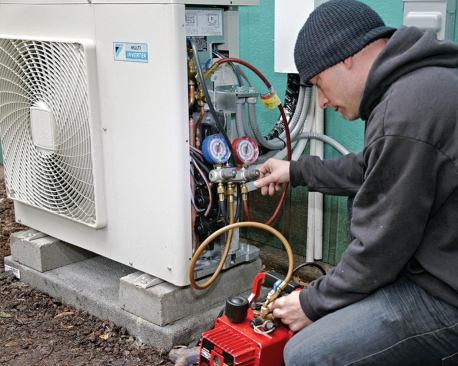
Heat pumps are refrigeration- cycle devices that use electricity to move and concentrate heat energy and can be used for both heating and cooling. Although electricity is required to run a compressor ,the energy needed to deliver a given quantity of heat with a heat pump is typically a fraction of what it would take to provide the same amount of heat with resistance baseboard heaters or wall-hung units.
Ductless heat pumps deliver cooled or heated air with one or mor…
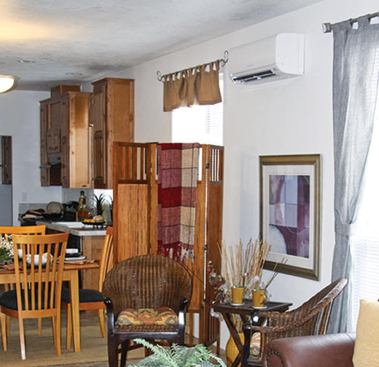
Ductless heat pumps deliver cooled or heated air with one or more indoor fan-coil units. For this home’s single-zone system, the surface-mounted indoor unit has been placed in a central area of the living space to distribute the conditioned air as widely as possible.
Unlike most hvac equipment, which cycles on and off as a thermos…
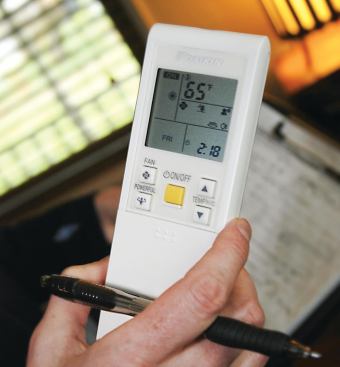
Unlike most hvac equipment, which cycles on and off as a thermostat calls for heating or cooling, inverter-driven ductless heat pumps ordinarily run continuously, adjusting their output as needed to maintain a constant indoor temperature. A remote supplied with each indoor unit controls temperature, blower speed, and the position of the vent louvers.
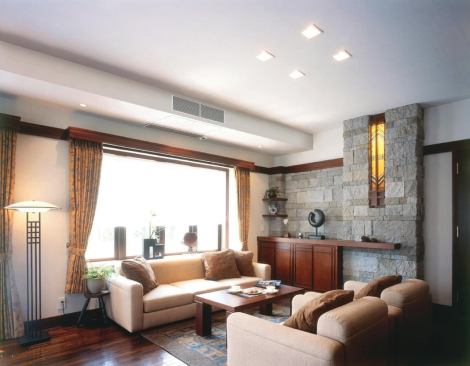
Although indoor units are most often mounted high on a wall, som…
Although indoor units are most often mounted high on a wall, some models are designed to be concealed in a soffit as shown above.
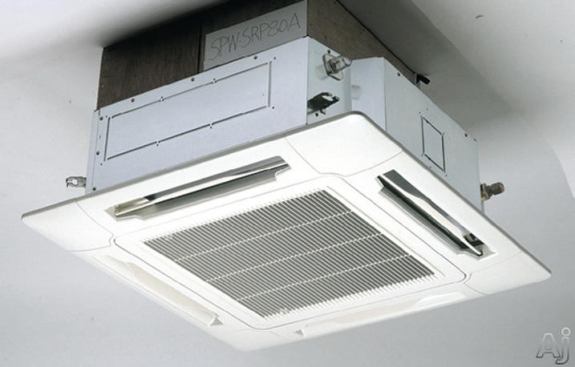
The ductless heat pump unit pictured here is designed to be flus…
The ductless heat pump unit pictured here is designed to be flush-mounted in a dropped ceiling.
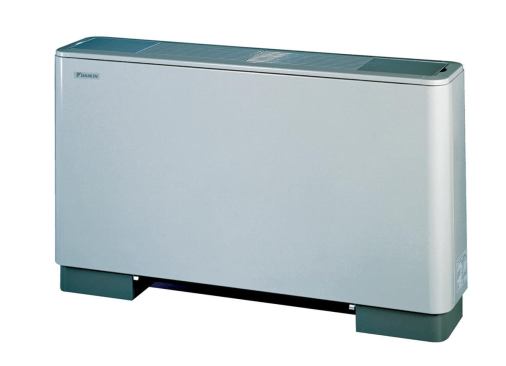
This ductless heat pump is designed for floor mounting.
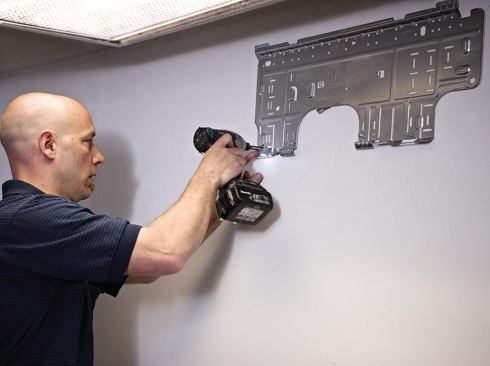
The mounting bracket of a wall-mounted indoor unit is screwed to…
The mounting bracket of a wall-mounted indoor unit is screwed to the studs.
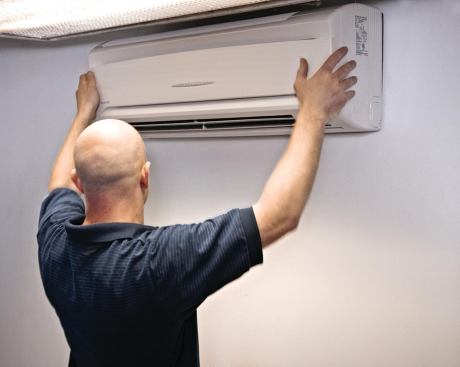
The indoor unit is mounted to the wall bracket.
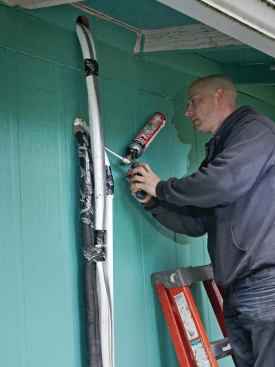
Stubs for refrigerant lines, a condensate drain, and an electric…
Stubs for refrigerant lines, a condensate drain, and an electric line pass through a hole in the exterior wall. The 2-9/16-inch hole is later filled with canned closed-cell foam and waterproofed with caulk.
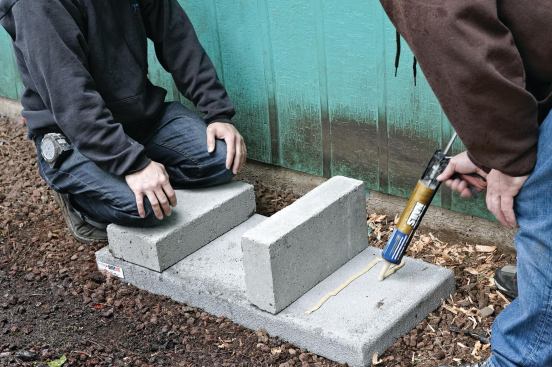
Concrete riser blocks — which elevate the outdoor unit to prov…
Concrete riser blocks — which elevate the outdoor unit to provide drainage — are fastened to the pad with construction adhesive.
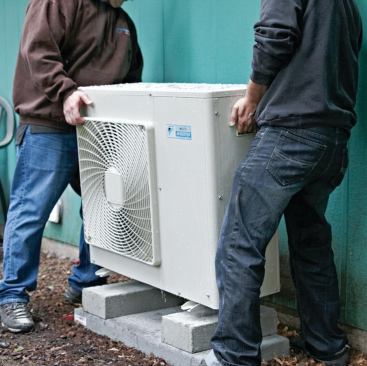
The outdoor unit is put in position on the risers.
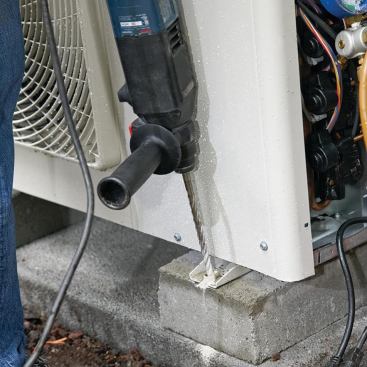
The outdoor unit is fastened to the risers with Tapcon screws.
If no suitable position for a ground mount is available, the uni…
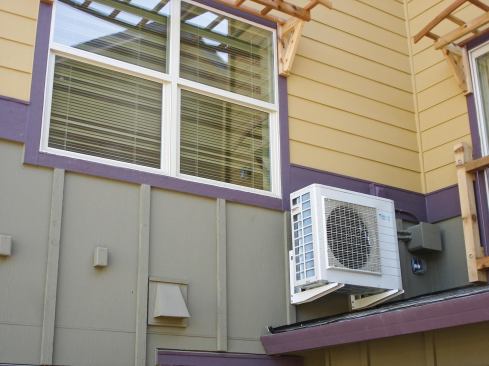
If no suitable position for a ground mount is available, the unit can be wall-mounted on a manufactured bracket.
Refrigerant lines and wiring on the exterior wall are protected …
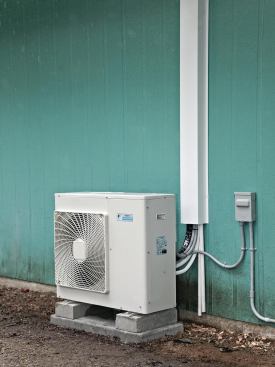
Refrigerant lines and wiring on the exterior wall are protected with a vinyl or sheet-metal cover. Condensate drain tubes are visible at lower right.
Planning the Installation
There’s a variety of great DHP products on the market today, and we’ve installed quite a few brands over the years. But we rely mostly on Mitsubishi, Daikin, and Fujitsu, all of which offer multiple sizes and models with different features. In deciding which DHP to use for a given installation, we base our choice on the specific combination of features needed, not the nameplate.
Planning the layout. In zoned systems with a fan coil in every room, placement of the units can be fairly flexible. But in a single-zone system, it’s critical to put the indoor unit where it will best distribute conditioned air to the desired rooms. Ideally, it should go fairly high on a wall so furniture and other obstructions don’t interfere with circulation of the conditioned air, and in as central a location as possible. Recessed-ceiling and low-wall units are also available for applications where a high wall location isn’t possible, or for customers who just prefer their appearance (Figure 4).
All indoor fan coils have adjustable louvers to direct the flow of conditioned air as needed. Some models allow the user to choose an oscillating setting that will sweep the airflow back and forth or set the louvers in one position (so they blow air in the direction of a hallway, for example, to help heat or cool outlying areas of the house). This feature can usually be operated with a remote.
Some DHPs from Mitsubishi include a feature the company calls “i-see,” which uses a roaming infrared sensor to locate the coldest or hottest part of the room and then adjust the louvers to blow conditioned air in that direction. That sounds good, and we find that it can work well in a system with a fan coil in every room. But we recommend against using this feature in single-zone systems, because the sensor tends to direct the airflow continuously toward a window or other localized cold spot, defeating the goal of moving as much conditioned air as possible to other rooms in the house.